Table of Contents
A tankless water heater heats water as it flows through the unit, using a gas burner or electric elements, without storing water in a tank. It saves space and avoids standby energy loss, but costs more upfront and needs correct sizing to prevent running short.
A tankless water heater works on a completely different principle than the tank sitting in most basements and utility closets, and that difference shapes everything from its price tag to how it handles a house full of guests taking back-to-back showers. This article explains what a tankless water heater actually is, its real advantages and disadvantages, the different types available, and how sizing works, since getting that wrong is the single most common reason people end up unhappy with one. By the end, you’ll know whether a tankless unit is likely to be a good match for your home.
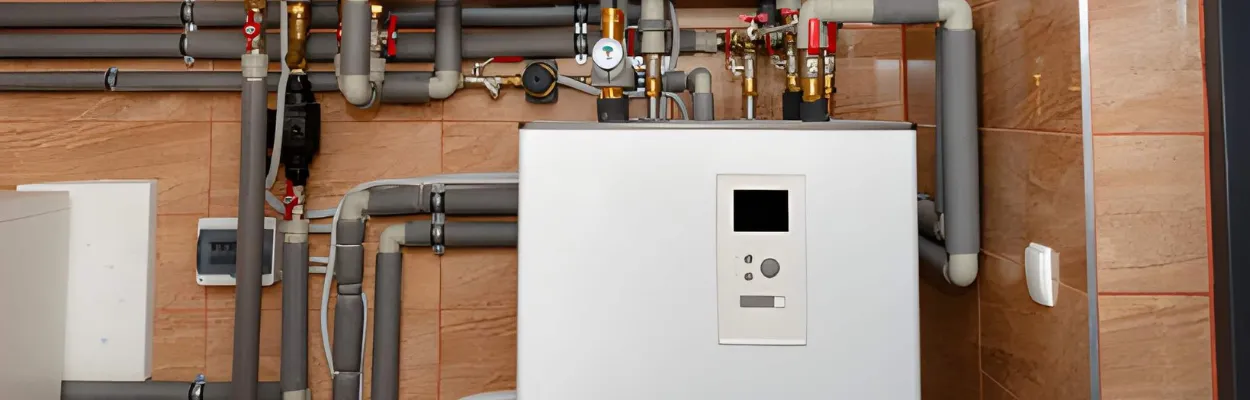
A tankless water heater is an appliance that heats water instantly as it flows through the unit, rather than storing a pre-heated supply in a tank.
When a hot water tap opens, a flow sensor detects the demand and activates the unit’s heat source, either a gas burner or electric heating elements, which warms the water through a heat exchanger as it passes by. Because there’s no standing tank to keep hot around the clock, a tankless unit only uses energy while water is actually flowing, and it can be mounted on a wall since it doesn’t need the floor space a storage tank requires.
Tankless Water Heater at a Glance
The table below summarizes the core facts about tankless water heaters covered in this guide.
Use it as a quick reference before reading the full advantages, disadvantages, and sizing breakdown further down the page.
| Detail | Description |
|---|---|
| How it heats water | Instantly, as water flows through a heat exchanger |
| Typical upfront cost | $1,000 to $3,000 including installation |
| Typical lifespan | Roughly 15 to 20 years |
| Sizing measurement | Gallons per minute (GPM), not storage volume |
| Main advantage | No standby energy loss and a continuous hot water supply |
| Main disadvantage | Higher upfront cost and a real risk of undersizing |
What Are the Advantages of a Tankless Water Heater?
The main advantages of a tankless water heater are no standby energy loss, a continuous hot water supply, a smaller footprint, and a longer typical lifespan than tank models.
These advantages all stem from the same core design choice: heating water only when it’s actually needed, rather than maintaining a large standing supply around the clock.
- No standby energy loss. The unit only uses energy while water is flowing, avoiding the continuous reheating a tank requires to stay at temperature.
- Continuous hot water supply. As long as demand stays within the unit’s rated flow rate, you won’t run out of hot water the way a tank can when its stored supply is depleted.
- Smaller footprint. Without a storage tank, a tankless unit can be wall-mounted, freeing up floor space that a traditional tank would otherwise occupy.
- Longer typical lifespan. Tankless units commonly last 15 to 20 years, compared to roughly 10 to 15 years for most tank water heaters.
- Precise temperature control. Many tankless models include digital controls that let you set an exact target temperature, rather than the single dial setting typical of a tank.
What Are the Disadvantages of a Tankless Water Heater?
The main disadvantages of a tankless water heater are a higher upfront cost, the risk of undersizing, and installation that can require electrical or gas line upgrades.
These drawbacks are largely the trade-off for the efficiency and space savings the technology offers, and most of them can be managed with proper sizing and installation planning.
- Higher upfront cost. A tankless unit typically costs $1,000 to $3,000 installed, more than the $700 to $2,000 typical for a comparable tank water heater.
- Risk of undersizing. An undersized unit can produce a “cold water sandwich,” a burst of cold water in the middle of a shower or task when demand exceeds the unit’s heating capacity.
- Minimum activation flow required. Most units need a small minimum flow, often around 0.4 to 0.6 GPM, to activate, so a very low trickle at a faucet may not trigger hot water at all.
- Possible electrical or gas upgrades. Electric tankless units often require a substantial electrical panel capacity, sometimes around 200 amps, while gas units may need a larger gas line and dedicated venting.
- Performance varies by climate and season. Incoming groundwater temperature affects how much flow a unit can deliver at your target temperature, meaning the same unit can perform differently in winter than in summer.
- Gas models generally need more maintenance. Periodic descaling, especially in areas with hard water, helps prevent mineral buildup inside the heat exchanger.
What Are the Types of Tankless Water Heaters?
The main types of tankless water heaters are non-condensing and condensing models, and each is available in either gas or electric versions.
These two dimensions, combustion venting technology and energy source, are largely independent of each other, so a buyer typically chooses along both axes based on efficiency goals and existing home infrastructure.
Non-condensing vs. condensing:
- Non-condensing units were the original tankless design. They vent exhaust gases while they’re still hot, run at roughly 80 to 85 percent efficiency, and require metal venting to safely handle that heat.
- Condensing units use a second heat exchanger to capture additional heat from the exhaust before it’s vented, reaching roughly 90 to 96 percent efficiency. They typically cost $300 to $500 more upfront but can use less expensive plastic venting and often recover the cost difference within two to three years through energy savings.
Gas vs. electric:
- Gas tankless units generally handle higher flow demands, often 8 GPM or more, making them a common choice for larger households, but they cost more upfront due to venting and gas line requirements.
- Electric tankless units are typically better suited to smaller households with GPM needs under 8, are measured in kilowatts rather than BTUs, and don’t require venting, though larger units can demand significant electrical capacity.
How Do You Size a Tankless Water Heater?
Sizing a tankless water heater means matching the unit’s flow rate, measured in gallons per minute (GPM), to your household’s peak simultaneous hot water demand at your coldest expected incoming water temperature.
This is fundamentally different from sizing a tank, which is based on storage volume rather than real-time flow capacity, and getting it wrong is one of the most common sources of dissatisfaction with a tankless system.
- Add up peak simultaneous flow. List the fixtures likely to run at the same time and add their typical flow rates: a shower runs about 2 to 2.5 GPM, a kitchen faucet about 1.5 GPM, and a tub filler around 4 GPM.
- Determine your temperature rise. Subtract your coldest expected incoming groundwater temperature from your target output temperature, commonly 120°F, to find how many degrees the unit needs to raise the water.
- Check manufacturer GPM ratings at that temperature rise. A unit’s maximum advertised flow rate typically assumes a smaller temperature rise than colder climates actually require, so always check the specific rating at your calculated rise, not just the headline number.
- Avoid both undersizing and oversizing. Undersizing risks a cold water sandwich and inconsistent temperatures; oversizing adds unnecessary upfront cost without improving performance, since the unit will never need its full capacity.
A typical household needs roughly 6 to 8 GPM of capacity to run a shower and a kitchen faucet at the same time, with larger families sometimes needing 8 to 10 GPM to cover multiple simultaneous uses. A licensed plumber can calculate your specific peak demand and recommend a properly sized unit.
How Does a Tankless Water Heater Compare to a Tank Model?
A tankless water heater generally costs more upfront but offers better efficiency, a smaller footprint, and a longer lifespan compared to a tank model.
The better choice depends on your budget, available space, and how long you plan to stay in the home, since the tankless cost premium is typically recovered over time rather than immediately.
| Factor | Tankless | Tank |
|---|---|---|
| Typical upfront cost | $1,000 – $3,000 | $700 – $2,000 |
| Typical lifespan | 15 – 20 years | 10 – 15 years |
| Standby energy loss | No | Yes, continuous |
| Footprint | Smaller, wall-mounted | Larger, floor-mounted |
| Hot water supply | Continuous, limited by flow rate | Limited to tank capacity |
| Sizing risk | Undersizing causes performance issues | Undersized tank simply runs out sooner |
Who Is a Tankless Water Heater Best For?
A tankless water heater is generally the best fit for homeowners who plan to stay in the home long enough to recoup the higher upfront cost, have limited installation space, or want a continuous hot water supply without worrying about running out.
It also tends to suit smaller homes or apartments where floor space is at a premium, and households willing to invest in proper sizing upfront to avoid the cold water sandwich problem that comes with an undersized unit. It’s generally a less ideal fit for a tight immediate budget, a short expected ownership period, or a situation where the existing electrical or gas infrastructure would need significant upgrades to support the unit.
Safety Guidance
A tankless water heater is generally safe when properly sized and installed, but a few safety points are specific to its design.
These are worth confirming with any installer before work begins.
- Gas tankless units require proper venting, since combustion byproducts must be safely directed outside the home; never attempt to modify or bypass venting yourself.
- Electric tankless units can require substantial electrical capacity. Confirm your home’s panel can safely support the unit before installation, and have any panel upgrade done by a licensed electrician.
- If you smell gas near a gas tankless unit, leave the area and contact your gas utility or emergency services from a safe location.
- Don’t attempt gas line, venting, or electrical installation yourself. This work is typically regulated and best handled by a licensed professional familiar with tankless-specific requirements.
Frequently Asked Questions
Here are the questions homeowners most often ask about tankless water heaters, along with direct answers.
Is a tankless water heater worth the higher upfront cost?
For homeowners planning to stay in the home ten or more years, the higher upfront cost is often offset over time by lower energy bills and a longer lifespan compared to a tank model. For a shorter ownership timeline or tighter budget, a tank water heater may be more cost-effective in the near term.
What is a “cold water sandwich” with a tankless water heater?
It’s a burst of cold water that occurs mid-use, typically caused by an undersized unit that can’t keep up with demand, or by a brief delay as the unit reactivates after a pause in flow. Proper sizing based on your household’s peak GPM demand is the main way to avoid it.
What’s the difference between condensing and non-condensing tankless water heaters?
Condensing units capture additional heat from the exhaust before venting, reaching roughly 90 to 96 percent efficiency and allowing less expensive plastic venting, though they cost more upfront. Non-condensing units are simpler and less expensive initially but run at around 80 to 85 percent efficiency and require metal venting.
Do tankless water heaters really provide unlimited hot water?
Within the unit’s rated flow capacity, yes, since it heats water continuously rather than drawing from a limited stored supply. If demand exceeds that rated capacity, such as running several showers and a dishwasher simultaneously, the unit can struggle to keep up, which is why correct sizing matters.
Can I install a tankless water heater to replace my tank myself?
This isn’t generally recommended as a DIY project. Tankless installation often involves gas line sizing, specialized venting, or significant electrical capacity requirements that go beyond a simple swap, and improper installation can create a safety hazard or void the manufacturer’s warranty.
How do I know what size tankless water heater I need?
Sizing depends on your household’s peak simultaneous hot water demand in GPM and the temperature rise needed based on your coldest incoming water temperature. A licensed plumber can calculate this specific to your home, or many manufacturers offer sizing tools that factor in household size, bathroom count, and region.
Getting Help Choosing a Tankless Water Heater
If you’re considering a tankless water heater, a licensed plumber can calculate your household’s actual peak demand, assess your existing gas or electrical setup, and recommend a properly sized unit before you buy.