Table of Contents
Drain snaking clears clogs by feeding a flexible metal cable into a pipe. The cable’s auger tip breaks apart or hooks the blockage so it can be removed or pushed through. Most jobs cost $100 to $300, depending on the drain and clog location.
A slow sink or a toilet that won’t drain is one of the most common plumbing problems in any home. Before you call a plumber, it helps to know what drain snaking actually is, how the process works, and what a fair price looks like. This guide walks through the tools plumbers use, the steps involved in a typical service call, when snaking is the right fix versus when a different method is needed, and the real factors that shape the final bill.
What Is Drain Snaking?
Drain snaking, also called augering, is a method plumbers use to clear a clog by pushing a flexible metal cable through a drain until it reaches the blockage. The cable has a cutting head on the end designed to break through the blockage mechanically, working by direct contact between the head and the obstruction.
The cable is stored on a spool or reel and fed into the pipe by hand crank or motor. As the plumber feeds the cable in, it either breaks the clog apart so the material can flush through, or it hooks the object and pulls it back out. This makes snaking useful both for greasy or fibrous buildup and for solid objects stuck in the line.
How Does the Drain Snaking Process Work?
The drain snaking process follows a set order: locate the clog, feed the cable to it, break up or retrieve the blockage, then test the drain. Each step matters because skipping one can leave a clog partly cleared or damage the pipe.
Plumbers rarely skip straight to the cable. A short conversation about the symptoms and a quick look at the fixture usually comes first, since the entry point and cable length depend on what type of drain is involved.
Step 1: Identify the Clog Location
The plumber asks what the drain is doing (slow, gurgling, backed up) and checks the fixture to judge whether the clog is close to the surface or deeper in the line. This decides which tool and cable length to use.
Step 2: Insert the Cable
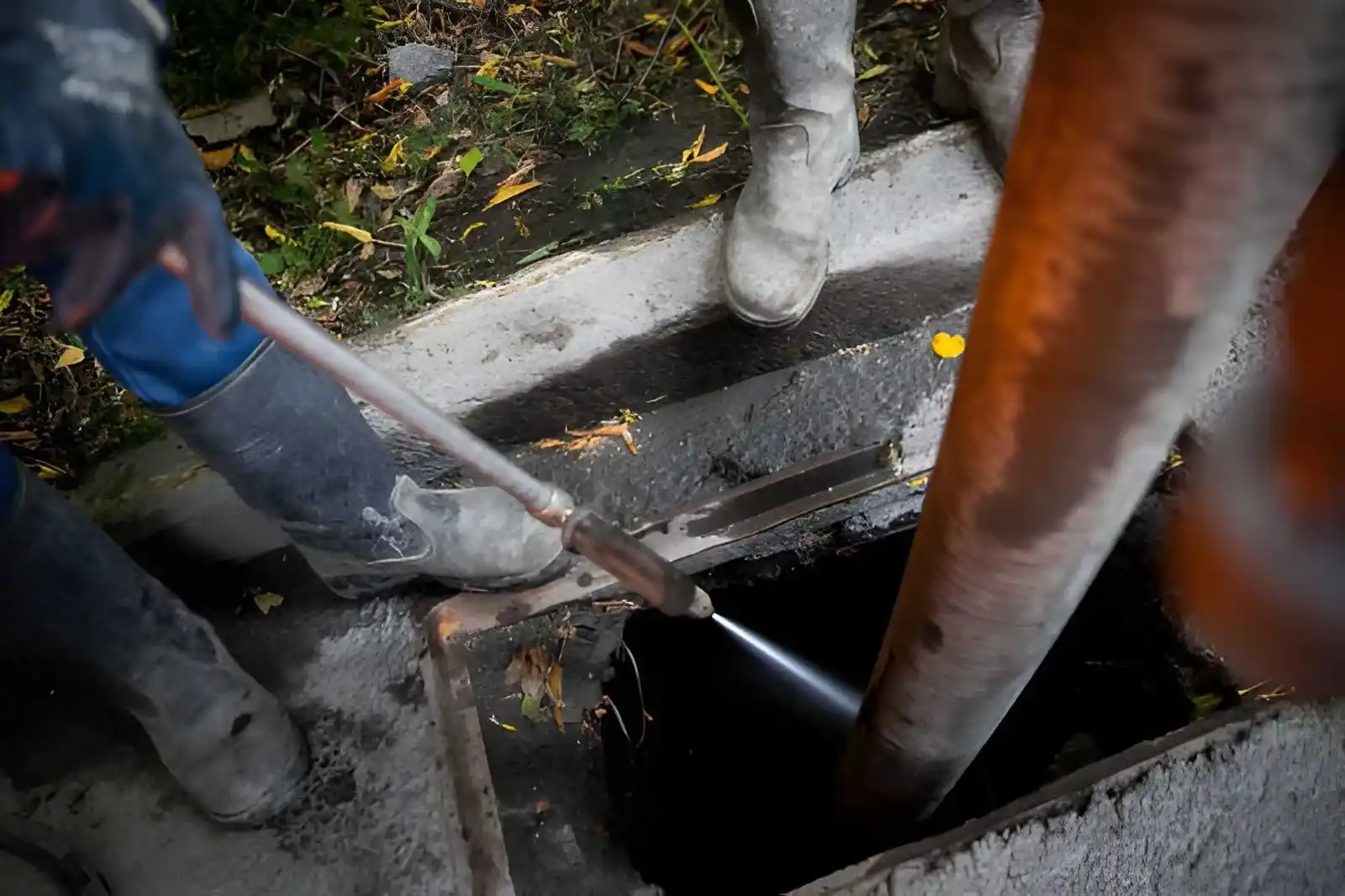
The cable is fed into the drain opening, cleanout, or vent, depending on which access point is closest to the blockage. Using a hand crank or motorized machine, the cable is extended and pushed through the pipe until it reaches the clog.
Step 3: Break Up or Retrieve the Blockage
Once the cable head reaches the obstruction, the plumber rotates it. The rotation lets the auger or blade break up the clog or blockage and clear the pipe. If the clog is a solid object rather than buildup, the head can hook it so it comes out with the cable instead of being pushed further down the line.
Step 4: Test the Drain and Clean Up
After the cable is withdrawn, the plumber runs water through the fixture to confirm the drain flows normally. Some companies also use a camera at this stage. A camera inspection lets the plumber confirm the exact cause of the clog, such as ordinary debris buildup or something more serious like tree roots in the line.
What Types of Drain Snakes Do Plumbers Use?
Plumbers choose between a few different snake types based on the drain size, the fixture, and how deep the clog sits in the pipe. Using the wrong tool can scratch a fixture or fail to reach the blockage at all.
Handheld or Manual Auger
A hand-cranked cable, usually under 25 feet, made for close-in clogs in bathroom or kitchen sinks. It gives the plumber direct feel for how much resistance the cable meets, which helps avoid pushing too hard against a fragile trap.
Motorized (Power) Auger
A motor-driven cable that can extend much further into a pipe, often used for tougher clogs or longer drain runs such as floor drains and washing machine lines. Most drain snakes used for clogged sewer lines are motor-driven rather than hand-cranked.
Toilet (Closet) Auger
A short, curved auger built specifically for toilets. Toilet augers are designed differently so they can navigate the trap without scratching the porcelain, which a standard cable could damage.
Drum Auger
A larger, heavy-duty machine used for stubborn clogs deep in a home’s main line. These units often carry a longer, thicker cable and, on some models, a built-in camera to guide the plumber to the exact spot.
When Should You Use Drain Snaking?
Drain snaking is the right first step when a single fixture is slow or blocked and the problem looks like a local clog rather than a wider pipe issue. It is not the right tool for structural pipe damage or a system-wide backup affecting multiple drains at once.
Common Signs of a Clogged Drain
- Water draining slower than usual in a sink, tub, or shower
- Gurgling sounds from a drain or nearby fixture
- Water backing up into a second fixture when you run another
- A toilet that needs multiple flushes to clear
- A persistent odor coming from a drain opening
Common Causes Snaking Can Address
Hair, soap scum, food scraps, grease, and small foreign objects are the usual culprits behind fixture-level clogs. A snake can typically break through or retrieve these types of blockages. Tree root intrusion and collapsed or offset pipe sections are different problems; a snake may open a temporary path through roots, but it does not repair the underlying issue.
Drain Snaking vs. Hydro Jetting: What’s the Difference?
Snaking creates an opening through a clog using mechanical contact, while hydro jetting uses pressurized water to clean the entire inside of the pipe wall. Neither method repairs cracked, offset, or collapsed pipe; a structural problem needs to be diagnosed with a sewer inspection instead.
Snaking tends to be the faster, less expensive option for a single clogged fixture. Clog removal with a drain auger is generally cheaper than having pipes hydro jetted, and it’s often a reasonable choice for older or more fragile pipe that might not tolerate high water pressure well. Homes built before 1960 with clay or early cast iron pipe are a common example where a snake is preferred over jetting.
Hydro jetting is better suited to recurring backups or pipes coated in grease and mineral buildup along the walls, since it can remove hardened mineral deposits and even break up tree roots that have grown into a sewer line. If a drain keeps clogging again after being snaked, that repeat pattern is usually the signal to ask about jetting or a camera inspection instead.
How Much Does Drain Snaking Cost?
Most homeowners pay between $100 and $300 to have a single drain snaked, with a national average landing around $200 to $250. The exact price depends on the location of the clog, how severe the blockage is, and which type of drain is involved.
| Drain Type | Typical Cost Range | Notes |
|---|---|---|
| Bathroom or kitchen sink | $100 – $225 | Lower end for a simple trap clog near the surface |
| Tub or shower | $100 – $250 | Often requires removing the drain assembly and cover plate to reach the clog |
| Toilet | $100 – $300 | Requires a closet auger to protect the porcelain |
| Main sewer line | $150 – $500+ | Cost can rise further if tree roots or heavy debris require hydro jetting or a camera inspection |
These figures include the plumber’s labor and standard equipment for a typical fixture clog. They generally do not include a camera inspection, hydro jetting, parts replacement, or wall or floor repair if the plumber needs to access a hidden pipe section. Ask what is included before work begins.
What Affects the Cost of Drain Snaking
- Clog location – A clog near a sink trap costs less to reach than one deep in a main line.
- Clog severity – A loose hair clog clears faster than compacted grease or a lodged object.
- Drain access – Clogs behind finished walls or under fixtures that must be partly disassembled add time.
- Equipment needed – A hand auger job costs less than a job requiring a motorized drum auger.
- Time of service – After-hours or emergency calls often carry a higher rate than scheduled daytime work.
- Follow-up diagnostics – A camera inspection to confirm the clog is fully cleared is usually billed separately.
Can You Snake a Drain Yourself?
A basic clog in a sink, tub, or shower can sometimes be cleared with a store-bought manual snake or a plunger. A deep clog, a main line blockage, or a clog that keeps coming back is better left to a licensed plumber.
Store-bought cables are shorter and less rigid than professional equipment, so they mainly help with clogs close to the drain opening. Plumbing snakes for home use typically cost $15 to $100, but pushing one too far or with too much force can scratch porcelain, damage a seal, or push a clog further into the pipe rather than clearing it. Attempting a deeper clog without the right tools and experience can lead to further damage and more costly repairs.
Safety note: Do not attempt to snake a toilet or drain connected to a sewage line without gloves and proper hygiene precautions. Never try to clear a main sewer line or a drain you suspect is connected to a septic system without professional equipment, and never dig near underground pipe or attempt to open pressurized plumbing lines yourself.
When to Call a Professional Plumber
Call a plumber when a plunger and a basic manual snake don’t clear the drain, when more than one fixture is affected at the same time, or when the same drain clogs again shortly after being cleared. Those patterns usually point to a problem further down the line than a homeowner tool can reach.
A professional can also confirm what’s actually causing the clog rather than guessing. If a camera inspection shows root intrusion, pipe scaling, or a collapsed section, snaking alone won’t solve the underlying issue, and a different repair or hydro jetting is the more lasting option.
Frequently Asked Questions
How long does it take to snake a drain?
A single-fixture clog, such as a sink or tub, usually takes a plumber under an hour to clear once they’re on site. A main sewer line clog or one that requires a camera inspection can take longer, especially if the plumber needs to access a cleanout in a hard-to-reach spot.
Is drain snaking bad for pipes?
Used correctly by a trained plumber, snaking is a standard, low-risk method for clearing clogs. Improper use, such as forcing the cable or using the wrong type for a toilet, can scratch fixtures or damage joints, which is one reason many homeowners choose a professional for anything beyond a simple, close-in clog.
Does drain snaking remove tree roots?
A snake can cut through some root intrusion and temporarily restore flow, but it does not remove the roots from the surrounding soil or stop them from growing back. If a camera inspection confirms roots in the line, hydro jetting or a more permanent repair is usually recommended alongside or instead of snaking.
Can snaking fix a clog that keeps coming back?
Snaking clears the immediate blockage, but if buildup lines the inside of the pipe, the same spot can narrow again over time. A drain that clogs repeatedly after snaking is a common reason plumbers recommend hydro jetting or a closer inspection of the pipe’s condition.
What’s the difference between snaking a sink and snaking a toilet?
A sink is typically cleared with a standard cable fed through the drain opening or trap. A toilet requires a closet auger, a shorter tool with a curved sheath built to protect porcelain while navigating the toilet’s internal trap.
Will drain snaking work on a completely blocked drain?
In most cases, yes — snaking is designed to clear both partial and full blockages caused by common debris. If the blockage turns out to be a collapsed pipe or a major root mass rather than ordinary buildup, snaking may only offer temporary relief until the underlying issue is repaired.
How do I know if I need snaking or hydro jetting?
Snaking is usually the right first step for a single slow or blocked fixture with no history of repeat clogs. Hydro jetting is better suited to pipes with heavy buildup, grease coating the interior walls, or drains that clog again soon after being cleared — a plumber can confirm which situation you’re dealing with, often with a camera inspection.
Getting Help With a Clogged Drain
If a plunger and a basic snake haven’t cleared your drain, Anaheim Plumbing can inspect the clog and explain which method fits your situation. Call 714-782-3420.