Table of Contents
Drain parts are the pipes and fittings that carry wastewater out of a home. The main parts include fixture drains, a trap that blocks sewer gas, branch lines, a vent pipe or stack, a main soil stack, and a cleanout for access. Together, these parts move water safely to the sewer or septic system.
Most people never think about their drain system until something backs up or starts to smell. But knowing the basic parts, and what each one is actually supposed to do, makes it much easier to understand what a plumber is talking about or to spot a problem early. This article walks through the main parts of a home drainage system, the parts found in an individual sink drain assembly, what these pieces are typically made of, and the signs that a specific part needs attention. By the end, you’ll be able to look under a sink or behind a wall and know what you’re looking at.
What Is a Drain System?
A drain system, sometimes called a drain-waste-vent (DWV) system, is the network of pipes that carries used water and waste away from every sink, tub, shower, toilet, and appliance in your home. Unlike the water supply side, which uses pressure to push clean water in, the drain side relies on gravity and a slight downward slope to move wastewater out toward the municipal sewer or a septic tank.
Main Parts of a Home Drain System
Here’s how the core parts of a whole-house drain system compare, including what each one does and where you’ll typically find it.
| Part | What It Does | Typical Location |
|---|---|---|
| Fixture drain | Collects wastewater from a sink, tub, shower, or appliance | Directly under or behind each fixture |
| Trap (P-trap or S-trap) | Holds standing water to block sewer gas from entering the room | Just below the fixture drain |
| Trap arm | Connects the trap to the branch drain line in the wall | Behind the wall, just past the trap |
| Branch drain line | Carries wastewater from one or more fixtures toward the main stack | Inside walls, floors, or ceilings |
| Vent pipe / vent stack | Lets air into the system so water can flow without gurgling or losing trap seals | Runs up through the roof |
| Soil stack (main stack) | The large vertical pipe that carries all wastewater down and out of the building | Runs through multiple floors of the home |
| Cleanout | Provides direct access to clear a clog without opening a wall | Near the main line, often outside or in a basement |
Fixture Drains
A fixture drain is the point where a specific sink, tub, shower, toilet, or appliance connects to the rest of the drain system. Every fixture that uses water has its own drain, and this is the part you interact with most directly, whether that’s pulling hair out of a stopper or wiping down a drain opening.
Trap: P-Trap and S-Trap
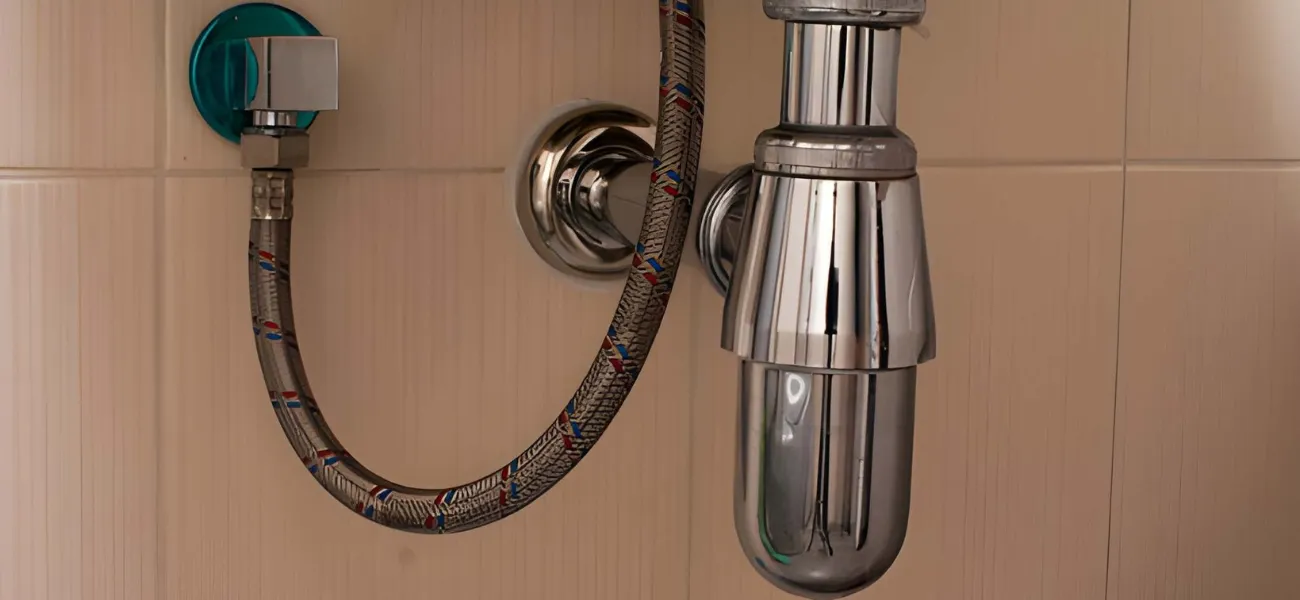
The trap is a curved section of pipe positioned just below a fixture drain. It holds a small amount of standing water at all times, and that water acts as a seal that blocks sewer gas from traveling back up into the room. Sinks, tubs, and showers typically use a P-trap, shaped like the letter P on its side. Older toilets sometimes use an S-trap, though modern plumbing codes generally require P-traps for most new installations because S-traps are more prone to losing their water seal through siphoning.
Trap Arm
The trap arm is the short section of pipe that connects the trap to the branch drain line running into the wall. It’s a small part, but a trap arm installed at the wrong length or angle can affect how well the trap holds its water seal.
Branch Drain Lines
Branch drain lines are the pipes that carry wastewater from one or more fixtures toward the home’s main stack. These lines run horizontally, though they still maintain a slight downward slope, and they’re usually hidden inside walls, floors, or ceilings, which is why a leak in a branch line can be harder to spot early.
Vent Pipes and the Vent Stack
Vent pipes let air into the drain system so wastewater can flow smoothly instead of gurgling or pulling water out of a trap through suction. Each fixture’s drain typically connects to venting, and these vents usually tie into a main vent stack that runs up through the roof, capped to keep out rain and animals while still allowing airflow.
Soil Stack (Main Stack)
The soil stack is the large vertical pipe, typically about four inches in diameter, that carries all of a home’s wastewater down through the building and out to the municipal sewer line or septic tank. Every branch drain line eventually connects to this stack, making it the central artery of the whole drain system.
Main Line and Cleanout
The main line is the pipe that carries wastewater from the home’s soil stack out to the municipal sewer connection or septic tank. A cleanout is a capped access point installed along this line, usually near where it exits the house, giving a plumber a direct way to insert a snake or camera without cutting into a wall when a clog needs to be cleared.
Parts of a Sink Drain Assembly
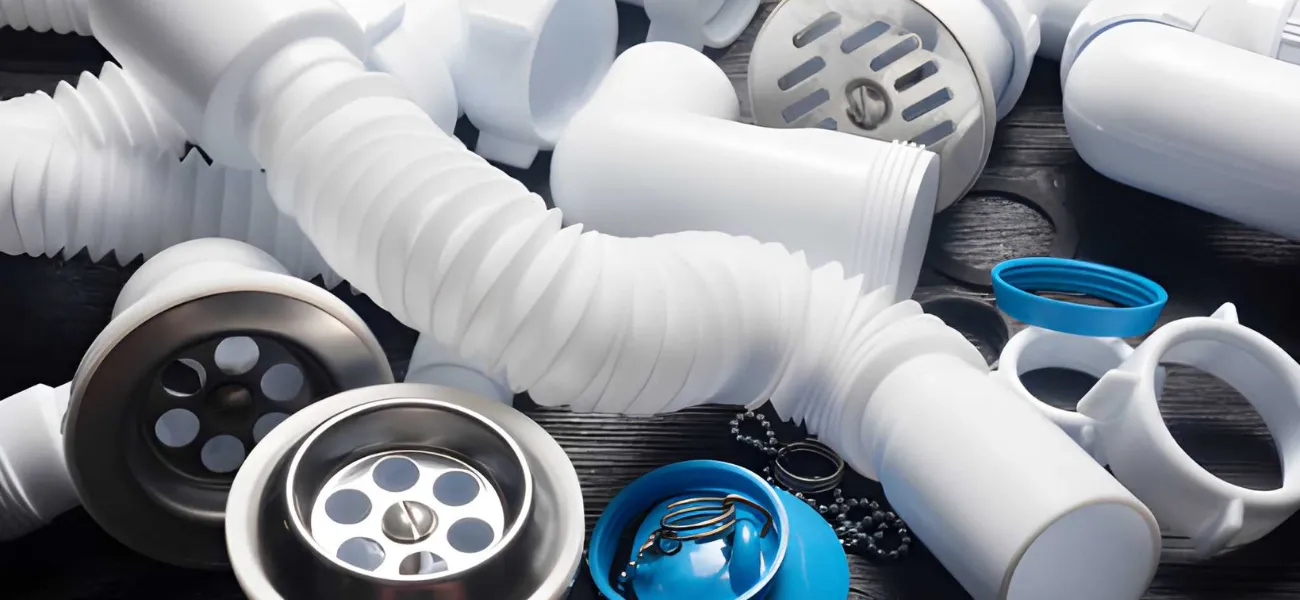
Beyond the whole-house system, there’s a separate set of parts specific to an individual sink’s drain assembly, most visible under a kitchen or bathroom sink.
| Part | What It Does |
|---|---|
| Basket strainer or flange | Sits at the top of the drain opening and catches debris before it enters the pipe |
| Drain body | The fitting that passes through the sink basin, connecting the strainer to the tailpiece |
| Gasket and locknut | Seal and secure the drain body to the underside of the sink |
| Tailpiece | Carries wastewater from the drain body down toward the trap |
| Extension tube | Adds length between the tailpiece and the trap when needed |
| Slip-joint nuts and washers | Hold the tubular sections together and allow the assembly to be taken apart for cleaning |
| Trap adapter | Connects the removable trap assembly to the fixed drain pipe in the wall |
Kitchen sinks can add complexity with a garbage disposal, dishwasher connection, or a second basin, each of which ties into this assembly through additional fittings. Bathroom sinks commonly add a stopper and linkage system, plus an overflow opening near the top of the basin.
What Drain Pipes Are Made Of
Drain pipes and fittings are typically made from one of a few materials, and the material affects durability, cost, and how a repair is approached:
- PVC (polyvinyl chloride): Lightweight, affordable, and the most common material in modern residential drain systems.
- ABS (acrylonitrile butadiene styrene): Similar to PVC but slightly more impact-resistant; common in some regions and older installations.
- Cast iron: Durable and long-lasting, often found in main stacks of older homes, though it can corrode internally over decades of use.
- Copper: Occasionally used in older drain systems, though it’s more commonly associated with water supply lines today.
Different materials generally shouldn’t be joined without the correct transition fitting or cement, since standard adhesives made for one material don’t always bond safely to another.
How These Parts Work Together
When you drain a sink, water flows out of the fixture drain, through the trap, along the trap arm, and into a branch line. As it moves, the vent system lets air into the pipe behind it, keeping pressure balanced so the water flows smoothly instead of gurgling or slowing down. That water eventually reaches the main soil stack, travels down through the building, and exits through the main line to the sewer or septic system. Each part depends on the others working correctly. A dry trap lets odor through even if every other part is fine, and a blocked vent can cause gurgling even if the pipes themselves are completely clear.
Signs a Drain Part Needs Attention
- Sewer smell near a fixture often points to a dry or damaged trap.
- Gurgling sounds can mean a vent pipe is blocked or a branch line has a partial clog.
- Water pooling slowly around a floor drain may point to a slope issue in the branch line or a blockage further down.
- Multiple fixtures backing up at once usually points to the main stack or main line rather than any single fixture’s parts.
- Visible corrosion or a leak under a sink often means a gasket, slip-joint nut, or trap has failed and needs replacing.
Safety Guidance
- Don’t attempt to access or repair the main soil stack or main line yourself. This work is typically regulated and often requires a permit.
- Turn off the water supply to a fixture before disassembling its drain assembly for cleaning or repair, and place a bucket underneath to catch remaining water.
- Don’t cut into a wall to inspect a branch drain line you can’t see. Lines can run near electrical wiring or structural framing.
- If you suspect a cast iron stack is corroded or leaking, have a professional assess it rather than probing it yourself, since deteriorated cast iron can be more fragile than it appears.
When to Call a Professional Plumber
A few situations call for a licensed plumber rather than a DIY approach:
- A leak or clog you can’t trace to a visible, accessible part like a sink’s trap or slip joints.
- Suspected damage to the main stack, main line, or vent system.
- Recurring odor, gurgling, or backup affecting more than one fixture.
- Any repair that involves cutting into a wall, floor, or the main sewer connection.
- Uncertainty about which pipe material you have and whether a part is compatible with it.
A plumber can identify which specific part is causing a problem and recommend a repair that matches your home’s existing system rather than guessing at a replacement part.
Frequently Asked Questions
What is the most important part of a drain system?
The trap is often considered the most critical part at the fixture level, since it’s the barrier that keeps sewer gas out of your home. At the whole-house level, the main soil stack plays a similarly central role, since every branch line depends on it to carry wastewater out of the building.
What’s the difference between a P-trap and an S-trap?
A P-trap holds water in a shape resembling the letter P and is standard in most modern plumbing. An S-trap curves in an S shape and is more prone to losing its water seal through siphoning, which is why most current plumbing codes require P-traps in new installations.
Why does my drain system need a vent pipe?
A vent pipe lets air into the system so wastewater can flow without pulling water out of traps through suction or causing gurgling sounds. Without proper venting, drains can run slow, gurgle, or let sewer gas into the home if a trap loses its seal.
What is a cleanout, and do I have one?
A cleanout is a capped fitting that gives direct access to the main drain line for clearing clogs. Many homes have one located near where the main line exits the house, often in a basement, crawl space, or just outside the foundation. If you’re not sure where yours is, a plumber can help you locate it.
Can I replace sink drain parts myself?
Basic parts like a tailpiece, slip-joint nuts, or a basket strainer are often replaceable by a confident homeowner with basic tools. Anything involving the trap adapter’s connection to the wall, or work on branch lines, vent pipes, or the main stack, is better handled by a licensed plumber.
What material are most home drain pipes made of?
PVC is the most common material in modern residential drain systems because it’s affordable, lightweight, and easy to install. Older homes may still have cast iron or ABS piping, and identifying which one you have matters before attempting any repair or replacement.
Getting Your Drain System Checked
If you’re not sure which parts your home’s drain system has, or you’re noticing odor, gurgling, or a leak you can’t trace, a licensed plumber can inspect the system, identify the part involved, and explain your repair options.