Hydro jetting is a professional drain and sewer cleaning method that sends highly pressurized water through a hose and nozzle to scour the inside of a pipe. Instead of boring a hole through a clog, it strips grease, sludge, roots, mineral scale and debris from the pipe walls and flushes them downstream. The terms hydro jetting and sewer jetting are used interchangeably. Because misuse can damage pipes, the work calls for professional equipment and a camera assessment of the line. Pipes with sound structure and heavy buildup are the best candidates, while fragile or broken lines need a different plan.
In practical terms, hydro jetting is a cleaning job rather than a quick fix for a single stubborn blockage, and it suits lines that keep clogging. Snaking pushes a cable through the obstruction and often leaves residue clinging to the walls, so the same problem can return. Jetting aims to restore the pipe’s full interior diameter, which is why plumbers reach for it when clogs recur or slow drains affect several fixtures.
What Does Hydro Jetting Do Inside a Pipe?
Inside a pipe, hydro jetting uses pressurized water to strip buildup from the entire wall and restore normal flow. The water scours the surface from every direction, which is different from a snake that only opens a channel through the middle of a blockage. The loosened material is carried down the line, so the pipe can again handle its original volume of wastewater. That is why people sometimes call the result a reset, with the line cleaned across its whole circumference rather than merely opened.
Jetting removes grease, soap scum, sludge, mineral scale, silt, dirt, sediment, tree roots and other debris that restrict flow. These materials narrow the pipe gradually, creating partial blockages that trigger recurring backups long before the line is completely shut. Roots are often tackled with specialized nozzles, including chain root cutters, because they can be dense and anchored in joints. You may also hear the process called water jetting or sewer jetting, and it is a different job from mechanical descaling.
Hydro jetting does not repair a broken, collapsed or badly offset pipe, and it cannot fix physical failure of the line. Cracked, collapsed or severely deteriorated lines may even be made worse by high-pressure water. A camera inspection finds these problems before any cleaning begins, so the operator knows whether jetting is appropriate. If damage is present, repair or replacement has to come first, and cleaning can follow once the pipe is sound.
How Does Hydro Jetting Work?
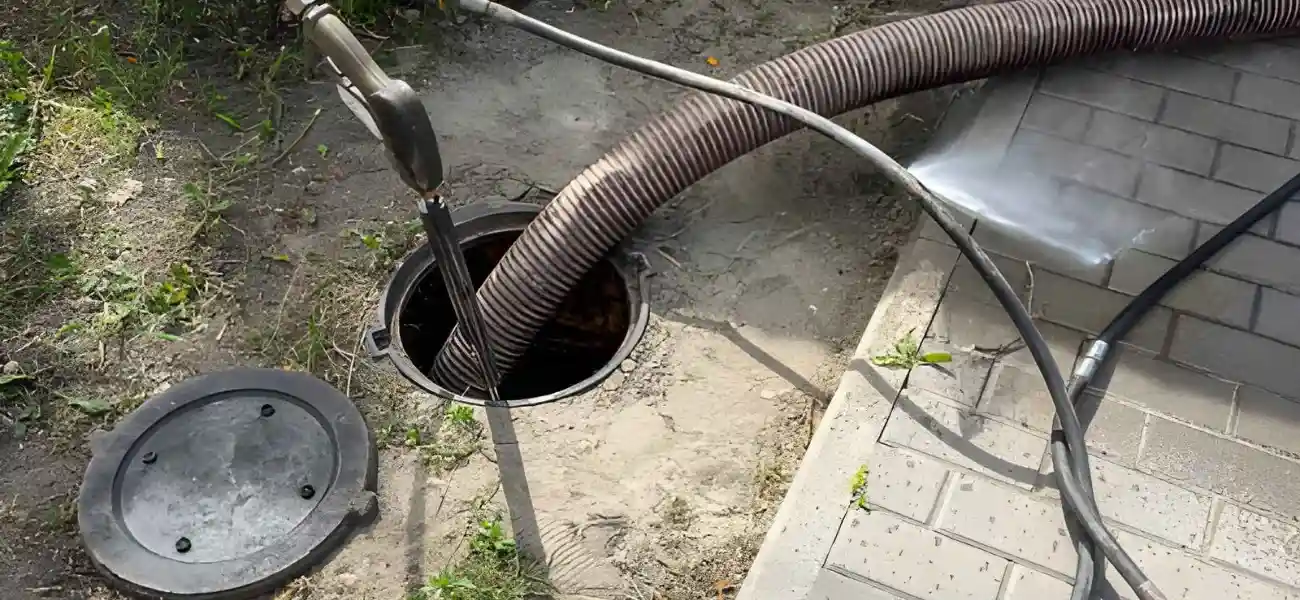
Hydro jetting works by pressurizing water with a pump or motor, sending it through a hose to a nozzle, and using the jets to clear clogs and scour walls. Forward-facing jets break into the blockage, while rear-facing jets pull the hose farther into the line and clean the pipe surface. Because the nozzle sprays forward and backward at once, it pushes through the clog and cleans the walls in the same motion. Loosened debris is flushed toward the main sewer line rather than left behind in the pipe.
The equipment includes a jetter machine or truck-mounted unit, a hose, a choice of nozzles, and a cleanout or other access point. Professional-grade setups carry a large water tank, which lets the crew work through long runs without stopping for water. The hose is fed into the access point, often a cleanout or the main sewer line, and the operator controls how fast it advances. Nozzle choice and hose length are matched to the pipe, which the next sections cover.
Jetting equipment commonly operates between 2,000 and 4,000 PSI, though settings vary with the equipment, pipe condition, blockage and application. Kitchen jetters run at roughly 1,500 PSI, while main sewer line jetters reach about 4,000 PSI. Higher pressure is not always better, since older or weaker pipes cannot tolerate the same force as sound modern lines. Pipe material such as PVC or cast iron also affects the setting, so confirm the planned pressure with the operator.
What Is the Hydro Jetting Process Step by Step?
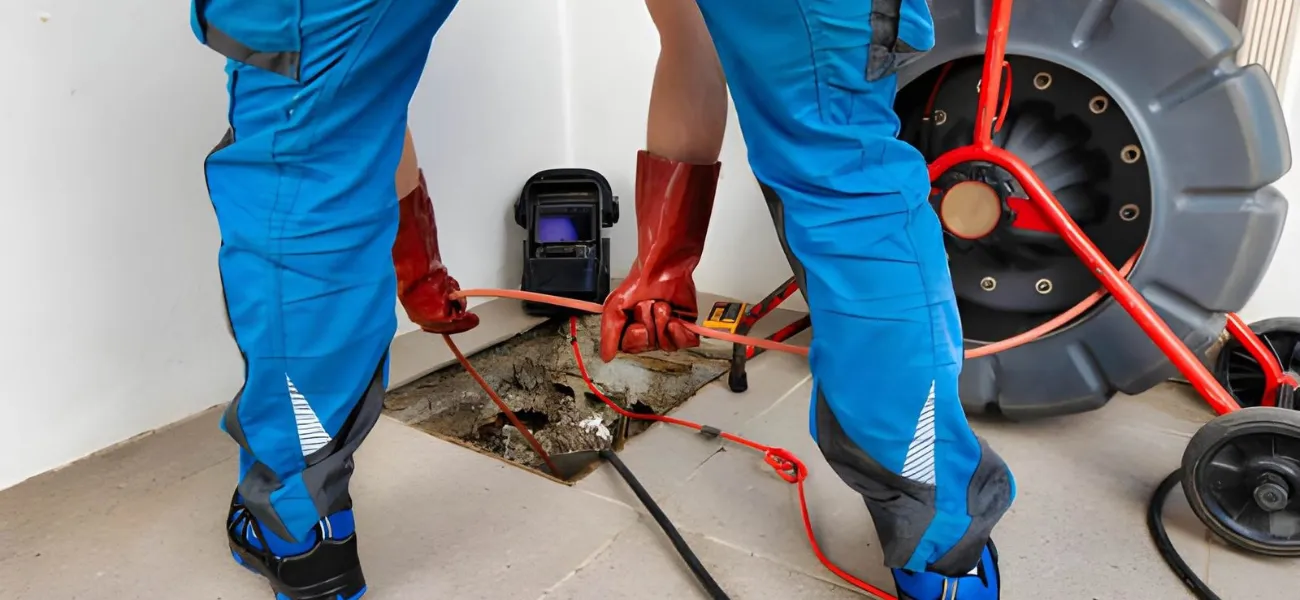
A hydro jetting job starts with a camera inspection and ends with a second inspection, with the cleaning steps in between. The operator first checks pipe condition, then finds an access point, ideally an outside cleanout, and chooses a nozzle suited to the blockage. The hose is then fed in, the clog is cleared, and the hose is pulled back slowly while the jets scour the walls. Finally the line is rinsed and re-inspected with the camera to confirm that debris is gone and water flows freely.
- Camera inspection
- Locate cleanout or access point
- Select nozzle
- Feed hose
- Clear blockage
- Pull back while scouring
- Rinse and re-inspect
The camera inspection decides whether jetting is appropriate at all, which protects against damage to cracked or collapsed lines. Safe pressure should be set before the hose goes in, and flow should be verified afterward rather than assumed. Common mistakes include choosing the wrong nozzle, applying excess pressure to a fragile pipe and skipping the inspection altogether. The post-cleaning re-inspection also shows any remaining debris, so the operator can make another pass if needed.
What Does Hydro Jetting Look and Sound Like?
Hydro jetting looks like a service machine or truck parked near the property, with a hose reel feeding a hose and nozzle into a cleanout. The water flows through the pipe, not across the yard or floor, so the visible action is mostly the hose moving steadily in and out. Professional-grade equipment includes a large water tank, a hose and a nozzle, and crews may carry several nozzles. Different nozzles are used depending on how severe the clog is and what the pipe is made of.
The sound comes mainly from the pump and engine of the machine, since the work inside the pipe is largely out of earshot. How loud it is depends on the equipment, and no reliable figure applies to every job. If noise matters, perhaps because of neighbors or business hours, ask the operator what to expect and where the machine will be positioned. Scheduling can often be arranged around those concerns, particularly for commercial properties.
Mess is typically contained at the cleanout, because the hose goes into the access point and water moves through the line. Still, protecting the area around the opening makes sense in case water backs up while the line is being cleared. Clearing floors, covering nearby surfaces and keeping people away from the access point are simple precautions. Ask the operator how they contain the work, since setups vary with where the cleanout is located.
What Do Nozzles and Hoses Do?
Nozzles direct the pressurized water into the shapes and angles needed to cut clogs and clean walls, while the hose carries that water to the nozzle. The right pairing depends on pipe size, material and blockage, which is why professionals carry more than one nozzle. Using the wrong nozzle can leave buildup behind or put needless stress on the pipe. Together they turn the pump’s pressure into controlled cleaning action inside the line.
Common nozzle types include penetrating nozzles for packed debris, rotary nozzles for full-circle wall cleaning, sharp-bend nozzles and chain root cutters. A penetrating nozzle concentrates force to break through a compacted blockage, while a rotary nozzle spins to reach the entire circumference. Sharp-bend nozzles are designed for tight bends in the line, and chain root cutters are made for roots that have intruded into the pipe. The operator chooses among them based on what the camera shows.
Jet direction matters as much as nozzle shape, because rear-facing jets propel the hose and scour the pipe walls while the forward jet breaks through blockages. The rear jets effectively pull the hose forward, so the operator does not have to push it through the line by force. On the way back, the same jets keep working on the walls, which is why the pull-back stage is so important. This balance of forward and rearward thrust lets one nozzle clear and clean at once.
Jetting hoses are multi-layer braided lines with a diameter matched to the jetter, built to carry high-pressure water without bursting. Lengths range from a short drain hose for a kitchen line up to several hundred feet stored on a reel for long sewer runs. A longer hose lets the operator reach distant sections from a single access point, such as a cleanout near the property edge. Matching hose and jetter correctly keeps pressure and flow consistent from the machine to the nozzle.
When Is Hydro Jetting Needed?
Hydro jetting is needed when clogs recur, drains stay slow, or buildup lines the pipe walls so that a snake gives only temporary relief. Warning signs include gurgling, sewage odors, overflowing drains and backups in more than one fixture. Several slow drains at once point toward the main sewer line rather than one fixture, while the same drain backing up repeatedly often means residue is coating the pipe. Grease, sludge, sediment or scale narrowing the line causes partial blockages that keep returning.
The causes best suited to jetting are heavy grease, sludge, sediment, scale and tree root intrusion that keep triggering backups. It is used on residential drain and sewer lines, in commercial kitchens and sewers, and on municipal lines. Homeowners sometimes choose it as preventive maintenance, while restaurants rely on it to keep grease from building up. If the pipes are structurally damaged, they need repair before jetting is considered.
Is Hydro Jetting Necessary or Just an Upsell?
Hydro jetting is not necessary for a simple, isolated clog that a snake can clear, but it is justified by repeat blockages, confirmed buildup or roots seen on camera. Snaking can remove many clogs, yet it often cannot remove tough clogs or buildup on pipe walls because it only makes a path through the blockage. For a simple single-fixture clog, snaking at $250 to $600 is often the better choice. Jetting makes more sense when the problem keeps coming back.
To tell real need from an upsell, ask what the camera shows and why jetting is recommended over other methods. A reputable provider should be able to show footage of grease, scale or roots and explain how they relate to your symptoms. If the clog is a one-time event in a single drain, a recommendation for full jetting deserves questions. If footage shows buildup coating the line, the extra cost has a clear purpose.
How Often Should a Sewer Line Be Hydro Jetted?
There is no universal interval for jetting a sewer line, and a plumber should set the schedule after inspecting the pipes. The right timing depends on usage, grease load, pipe age, root exposure and past backups. A household with no history of problems has different needs than a property with old pipes and mature trees nearby. Inspection results give the most reliable basis for choosing a schedule.
For most homes, jetting every few years can help prevent buildup before it causes backups. That rhythm works as preventive maintenance, keeping scale and sludge from accumulating gradually along the walls. It is a general pattern rather than a rule, and some homes will need it less often. A clean camera inspection can justify waiting longer.
Lines with recurring roots often benefit from jetting every one to two years, because roots return after being cut. Roots enter through joints and cracks, so the cleaning keeps the line open but does not stop regrowth. If roots keep returning, ask whether repair of the entry points would reduce the need for frequent cleaning. Past backups are a strong signal that a shorter interval is warranted.
Restaurants and HOAs schedule jetting more often than typical homes, since heavy grease or many connected users load the lines faster. Commercial kitchens in particular send fats and food residue into drains daily, which builds up quickly. Their schedule is usually set around actual usage and what inspections reveal. After each service, ask for notes or footage so the next interval can be adjusted.
Is Hydro Jetting Safe for Pipes?
Hydro jetting is generally safe on sound pipes when trained operators control the pressure, and it is considered safe for most kitchen and sewer drain lines, with camera inspection first. Equipment can reach up to 4,000 PSI, which is dangerous water pressure, so adjustable settings and training matter. Operators use protective equipment because high-pressure water can injure people. Backflow is another hazard, which is why the work area is protected.
Risk rises with old, clay, corroded, cracked, collapsed or poorly joined pipes, which may not withstand high-pressure water. A camera inspection assesses these conditions first, and the operator can lower the pressure or recommend another method. If pipes are fragile, alternatives or repairs may be a wiser first step than aggressive cleaning. Never assume age alone makes a pipe unsafe or safe; inspection answers that question.
Hydro Jetting vs. Snaking and Other Alternatives
Hydro jetting clears and cleans the whole pipe, while snaking mostly pokes a hole through a clog and may leave buildup on the walls. The key difference is how effectively the line is cleared and cleaned, not just whether water drains right after service. Snaking suits simple clogs and costs less, while jetting suits recurring problems and heavy buildup. The table compares them on shared criteria, with chemical cleaners and repair included for context.
| Method | How it clears | Best use |
|---|---|---|
| Hydro jetting | Scours full pipe wall | Recurring clogs, buildup |
| Snaking | Opens hole through clog | Simple clogs |
| Repair | Fixes damaged pipe | Broken lines |
Chemical cleaners are harsh on pipes and the environment, and they may not clear heavy grease or roots well. Rooter or auger services and mechanical cutting can clear roots, but they do not scour the whole wall the way jetting does. Descaling in plumbing is a mechanical or chemical way to remove scale, and it is a different technique from water jetting. None of these methods repairs a damaged line.
Damaged lines need repair or replacement, because no cleaning method restores a collapsed or broken pipe. Choosing among options comes down to the cause of the problem, the pipe’s condition and how long you need results to last. A camera inspection answers most of these questions and shows whether cleaning or repair is the right path. Ask the provider to explain the choice against the alternatives.
Is Hydro Jetting Worth It? Benefits, Drawbacks and Cost
Hydro jetting is worth it when buildup, grease or roots are the cause of recurring problems, because it cleans thoroughly and often lasts longer than snaking. It restores flow without chemicals and can help prevent future clogs, which reduces repeat service calls. The results are not guaranteed, since new buildup can form over time and roots can regrow. Value is highest when the camera confirms the problem is in the pipe walls.
The drawbacks are higher cost than snaking, unsuitability for damaged pipes and the need for a professional operator. It costs more because of specialized equipment and professional expertise, and it is overkill for a minor isolated clog. Costs vary by region, line length, access and severity, so request local quotes rather than relying on general figures. Weigh the price against how often you have needed help.
Why Does Hydro Jetting Cost More Than Other Methods?
Hydro jetting costs more because of its specialized equipment, trained operator and the camera inspection that usually comes with it. Price rises with longer or larger lines, deep sludge, grease, scale or roots needing repeated passes, and difficult cleanout access. Commercial jobs often cost more than residential ones because of the scale of the lines. Extra passes, special access and a camera inspection can each add to a quote.
The higher upfront price can be offset by fewer repeat calls, fewer emergency backups and less damage on older lines. Repeated snaking calls add up over time, so compare the total with the price of a single thorough cleaning. When requesting an estimate, ask what it includes, such as inspection, number of passes and access work. A written quote makes comparisons between providers much easier.
How to Choose Hydro Jetting Services
Choose a licensed, insured and bonded contractor with trained operators who inspect the line with a camera before and after jetting. Ask about pressure control, nozzle selection, their policy if damage occurs and whether you will receive a written estimate. These answers show whether the provider adjusts the work to your pipes rather than applying the same method everywhere. Licensing and insurance protect your property and your lines if something goes wrong.
- Licensed, insured and bonded
- Trained operators
- Camera inspection before and after
- Written estimate
- Clear damage policy
Sewer jetting is not recommended as a DIY job, because professional jetters can injure people or damage pipe if misused. Rental units are often too weak to clear roots, so a homeowner may spend money and still have a blockage. Pressure from the hose can cause serious injury, and it can harm fragile pipes without a prior inspection. Hiring a professional is the safer way to get the results you want.
Frequently Asked Questions
Is hydro jetting better than snaking?
Hydro jetting cleans the entire interior of the pipe, while snaking only breaks a path through the immediate clog. For a single simple blockage, snaking is often sufficient and less costly. For recurring clogs, grease buildup, or root intrusion, hydro jetting typically provides a more complete and longer-lasting result.
Can hydro jetting damage my pipes?
Hydro jetting can damage pipes that are already cracked, severely corroded, or made from certain older materials if the pressure isn’t adjusted appropriately. This is why a camera inspection before jetting matters. A qualified technician lowers pressure or recommends an alternative method when a pipe’s condition calls for it.
How long does a hydro jetting service take?
The time needed depends on the length of the line, the severity of the buildup, and how difficult the pipe is to access. A straightforward residential job is often completed within a few hours, while more extensive commercial lines or severe blockages can take longer.
Does hydro jetting remove tree roots from a sewer line?
Yes, hydro jetting can cut through and flush out root masses in many cases, though very extensive root intrusion may require additional repair, such as pipe relining or replacement, alongside the cleaning. A camera inspection helps determine whether jetting alone will resolve the issue.
How often should hydro jetting be done?
There’s no single schedule that fits every property, since it depends on pipe age, usage, and whether grease or root problems are already known. Commercial kitchens and older sewer lines with a history of root intrusion often benefit from more frequent jetting than a typical residential line.
Is hydro jetting safe to use in a septic system?
Hydro jetting can be used on lines leading to a septic system, but pressure and technique need to account for the septic tank and drain field rather than a municipal sewer connection. A professional familiar with septic systems should evaluate the setup before recommending jetting.
Next Steps
If a drain keeps clogging or a camera inspection has shown buildup along the pipe walls, Anaheim Plumbing can evaluate the line and explain whether hydro jetting is the right solution. Call 714-782-3420 .
Need help with drains?
Explore the relevant services available from Anaheim Plumbing.