Explore drains
Choose a guide to explore a specific question, component or repair.
Drain types
- Floor Drains: Types, Parts, and How to Unclog One
- How a Bathroom Drain Works, Why It Clogs and How to Fix It
- How a Toilet Drain Works, Why It Clogs and How to Unclog It Without a Plunger
- How to Clean a Shower Drain and Why It Clogs
- Kitchen Drain: What It Is, Its Parts and How to Clean It
- Why Your Laundry Machine Won't Drain and How Drainage Works
Drain parts
- Drain Pipes: Types, Materials, Sizes, and How They Work
- What Is a Backwater Valve? How It Works, Where It Goes and How It Is Installed
- What Is a Drain Cleanout? Uses, Types, and Functions
- What Is a P-Trap? How It Works, Its Parts, Uses, and Common Problems
- What Is a Plumbing Vent? Types, How It Works and Why You Need One
- What Is a Sewer Lateral? Function, Installation, and Common Problems
Drain problems
Drain cleaning and costs
Drain cleaning and costs overview
- Chemical Drain Cleaner vs. Professional Drain Cleaning: Which Is Safer?
- DIY vs. Professional Drain Cleaning: Which Is Better?
- Drain Cleaning Cost: What You will Actually Pay
- Drain Snaking Cost: Professional and DIY Prices
- Hydro Jetting vs. Snaking: Which Is Better and When Do You Need Each?
- Main Sewer Line Cleaning Cost: Full Price Guide
- Rodding vs. Snaking: Which Drain Cleaning Method Is Best?
- Sewer Camera Inspection Cost?
- What Is Drain Rodding? How the Process Works and What It Costs
- What Is Drain Snaking? How It Works, Methods, and When to Use It
- What Is Hydro Jetting and When Do You Need It?
Drain and sewer repairs
Drain and sewer repairs overview
- Collapsed Drain Pipe: Causes, Cost, and Repair vs. Replacement
- Cracked Drain Pipe: Repair or Replacement, Which Is Better?
- How to Know If Your Pipes Burst
- Leaking Drain: Causes, Repair Options, and Replacement Costs
- Sewer Line Repair: Types, Methods, and Cost Compared
- Trenchless Sewer Line Repair: Methods, Process, and Cost
- What Is Pipe Lining
A plumbing drain is any pipe that carries used water and waste away from fixtures inside a building. Drains lead to a municipal sewer or a septic tank, and they work separately from the supply lines that deliver fresh water. Gravity moves the waste, so the system is built around the drain-waste-vent framework, which isolates sanitary waste from potable water. That separation keeps sewer gases and pathogens out of living spaces and protects the building from hygiene problems and damage.
Supply lines and drains differ in how they move water. Supply pipes deliver clean water under pressure, while drains rely on downward slope, air admitted through vents and water seals at each fixture. A drain is therefore more than a hole in a sink or tub: it is a connected network of traps, branch lines, stacks and access points. Understanding that network helps you recognize problems early and decide when a clog is simple and when it signals something larger.
How Does a Plumbing Drain Work?
A plumbing drain works by letting gravity carry wastewater from a fixture through a trap, a branch line, a stack and the building drain to a sewer or septic tank. Each fixture drain line collects waste and sends it toward the main drain, so every connection must slope downward the whole way. Pipes need enough velocity to move organic solids along. A minimum of 2 ft/s (0.6 m/s) when flowing full is the benchmark for carrying them. Without that movement, waste lingers, bacteria grow and blockages or backflow become more likely.
- Fixture
- Trap
- Branch line
- Stack
- Building drain
- Sewer or septic tank
Slope and air control the pace of that flow. A pitch of 1/4 inch per foot promotes self-cleansing movement, while traps hold water seals and vents keep air available so flow continues without siphoning those seals. If the pitch is wrong, solids settle or water races ahead of them. If venting fails, the system slows and the trap water can be pulled out. The path runs fixture, trap, branch line, stack, building drain, then sewer or septic tank.
How Does the Drain-Waste-Vent System Work?
The drain-waste-vent system works by pairing sloped pipes that carry waste with vent pipes that admit air, so pressure stays balanced and water flows freely. The drain portion carries waste, the waste pipe conveys effluent away from fixtures, and the vent supplies the air that lets water move without resistance. Without that air, draining water would create a vacuum behind it. The result would be slower flow and weaker protection at every fixture.
Venting matters most at the trap. Draining water without a vent creates a vacuum that can pull water out of a P-trap, breaking the seal that blocks sewer gas. Vent pipes prevent that by equalizing pressure, which protects the water seals and keeps wastewater moving at a steady rate through the lines. Codes also limit how far a trap can sit from its vent, so installers measure that distance carefully.
Under IPC Table 906.1, the maximum trap-to-vent length for a 1.25-inch trap is 5 ft (1.5 m). Beyond that distance, the vent can no longer protect the seal reliably. Poor venting shows up as gurgling sounds, slow emptying fixtures and sewer odors in the home. Those signs point to an air problem rather than a simple clog, so they deserve a closer look.
What Is the Right Slope for a Drain Pipe?
The right slope for a drain pipe is 1/4 inch of drop per foot of run, which is the standard for self-cleansing flow in residential drains. At that pitch, water travels fast enough to carry solids along rather than leaving them behind. It balances speed and depth, which is why installers treat it as the benchmark. Deviating from it in either direction causes trouble.
Too little slope means waste will not flow. Water moves sluggishly, solids settle and fats and debris build up along the bottom of the pipe. Over time, that sediment narrows the passage and produces recurring slow drains. Flat sections are among the most common hidden causes of persistent blockages.
Too much slope creates a different problem. Water outruns the solids, rushing down the pipe and leaving heavier material stranded behind. Those solids then collect and form clogs even though the water appears to be draining quickly. More pitch is therefore not better, and a steep run is not a cure for slow flow.
This ties directly to the flow velocity the system needs. A pipe flowing full should reach at least 2 ft/s (0.6 m/s) to carry organic solids, and 1/4 inch per foot helps deliver that. Low-flow fixtures use less water, so careful pitch matters even more with them. Correct slope during installation is far cheaper than fixing a drain that never clears itself.
What Are the Main Parts of a Plumbing Drain System?
A plumbing drain system consists of fixture drains, traps, drain pipes with branch lines and a main stack, vent pipes and cleanouts. Together they carry waste downward, protect the home from sewer gas and allow the lines to be cleared when something blocks them. The table below maps where each part sits along the flow path, from the fixture to the point where waste leaves the building. Traps, branch lines, stacks and cleanouts are the pieces most homeowners will meet in practice.
| Component | Function | Typical location |
|---|---|---|
| Trap | Water seal | Under fixture |
| Branch line | Collects fixture waste | Between fixtures and stack |
| Main stack | Vertical discharge | Through walls, floors |
| Vent pipe | Admits air | Alongside drains, to roof |
| Cleanout | Access for clearing | Stack base, turns |
Reading the drain parts in order of flow makes the system easier to understand. Waste leaves the fixture, passes the trap, enters a branch line, drops through the stack and exits through the building drain, while vents run alongside to supply air. Cleanouts interrupt that path at strategic points for access. The next two sections explain the trap and the cleanout in more detail.
What Does a P-Trap Do?
A P-trap holds a small amount of water in a curved section of pipe, creating a seal that blocks hazardous sewer gases from entering living spaces. Every fixture drain needs one, and the standing water does the work without moving parts. The IPC sets a minimum seal depth of 2 inches (51 mm) for most fixtures. A shallower seal is easier to lose and gives less protection.
A trap can lose its seal in two ways: evaporation in fixtures that go unused, or siphoning when pressure changes pull water out. S-traps are especially prone to siphoning, so modern installations prohibit them under IPC Section 1003.4. P-traps are preferred because they work with a vented arm that protects the seal. A dry trap often announces itself through sewer odor, and running water into it restores the seal.
What Are Cleanouts and Why Do They Matter?
A cleanout is an access point that lets you or a plumber clear blockages and inspect the drain system without cutting into pipe. Most are capped with a threaded plug, which can be removed so a snake, rod or camera can enter the line. They matter because fats and solids that block drains can be reached directly. That saves time, reduces damage and often lowers repair costs.
Cleanouts are typically placed at the base of stacks, at changes in direction and at junctions. Those spots are where debris is most likely to collect or where tools struggle to turn a corner. Knowing where yours are makes it far easier to respond to a backup. A home with no accessible cleanout can face more invasive work when a main line clogs.
What Types of Drains Are There?
Drains types are classified by what they carry: sanitary drains handle wastewater and sewage, while stormwater and surface drainage systems handle rain and runoff. Each type discharges somewhere different, such as a municipal sewer, a septic tank or a catch basin. Inside a building, fixture drains feed branch lines that join the house drain, and the main sewer line connects the building plumbing to the municipal sewer or septic tank. Sanitary drains keep sewage separate from potable water.
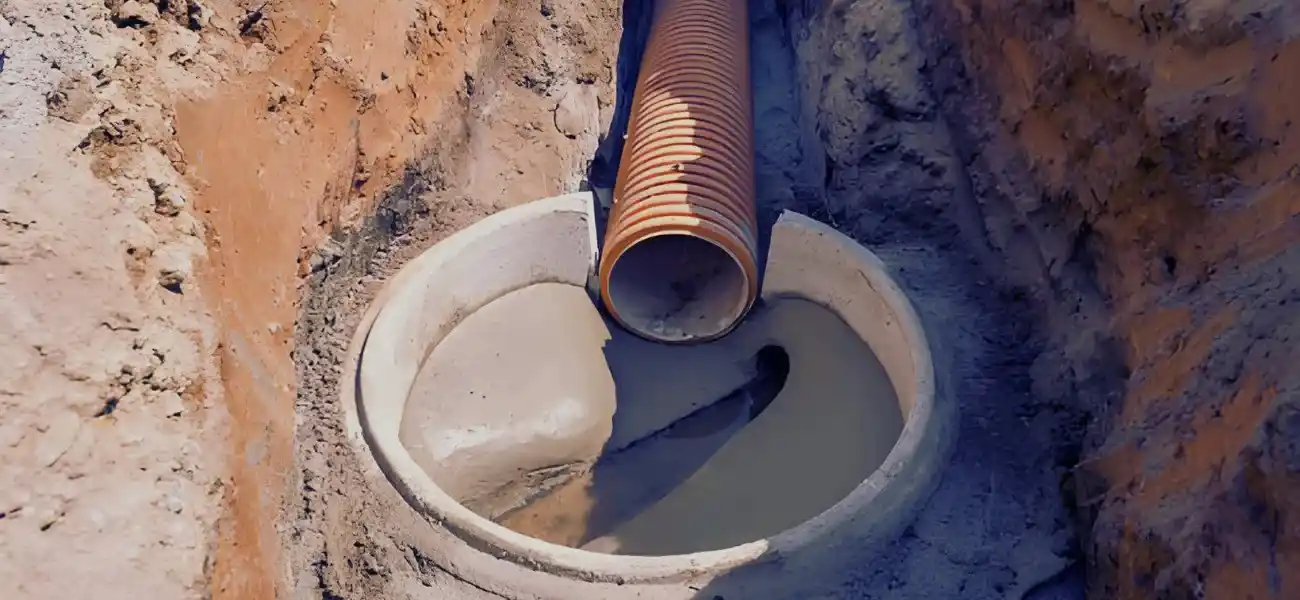
A catch basin collects surface water and may sit on private property or form part of the municipal sewer system. That ownership difference can affect who is responsible when a problem appears. A floor drain is another common question: it is a fixture drain with its own trap, so it needs the same seal protection as a sink. The table summarizes the main types.
| Type | Carries | Discharges to |
|---|---|---|
| Sanitary | Wastewater, sewage | Sewer or septic tank |
| Stormwater | Rain, runoff | Storm drain, catch basin |
What Is a Sanitary Drainage System?
A sanitary drainage system carries wastewater from toilets, sinks, laundry and dishwashers to a municipal sewer or a septic tank. It also includes showers and tubs, so nearly every fixture that produces used water connects to it. Its job is to isolate that waste from the potable water supply. That separation maintains hygiene and prevents contamination.
Sanitary lines are kept separate from stormwater lines. Mixing them would send rain loads into pipes designed for household waste, which could overload the system. Inside the building, the sanitary system relies on traps, vents and sloped pipes to function. Those parts work together so waste leaves quickly and sewer gas stays outside.
What Are Stormwater and Surface Drainage Systems?
Stormwater and surface drainage systems handle rain and runoff using catch basins, storm drains and channels rather than the pipes that carry household waste. Storm drains carry excess water away from a home into larger drainage systems. Keeping this water separate from sanitary lines prevents heavy rain from overloading pipes meant for sewage. It also keeps clean runoff out of treatment paths it does not need.
Surface drainage works at ground level. Shallow ditches run parallel and act like canals, directing runoff into the main storm drain. They suit open areas where water can be steered along the surface. A catch basin collects water at low points and sends it onward.
Subsurface drainage, such as a French drain, works below ground instead. It collects water that has soaked into the soil and carries it away through buried piping. The difference is where the water is intercepted: surface systems manage what flows over the ground, subsurface systems manage what moves beneath it. Many properties use both.
What Pipe Materials and Sizes Are Used for Drains?
Drain pipes are most often PVC or ABS in modern homes, with cast iron used in multifamily and commercial buildings. PVC and ABS resist corrosion, weigh little and join with solvent-weld connections. PVC DWV pipe follows ASTM D2665 and comes in diameters of 1.5 to 6 inches with high chemical resistance. Cast iron soil pipe follows CISPI 301 and is used in high-rise structures for fire resistance and durability.
Residential drain pipes run from about 1.5 inches for branch lines up to 4 inches for main stacks and building drains. Sizes are set using Drainage Fixture Units, which estimate peak discharge so the pipe can handle the load without surcharge. Copper is less typical for drains. The table compares the main materials.
| Material | Advantage | Typical use |
|---|---|---|
| PVC | Chemical resistance | Residential DWV |
| ABS | Light, corrosion resistant | Residential |
| Cast iron | Fire resistance, durable | High-rise, commercial |
What Causes Drain Clogs and Other Common Drain Problems?
Most drain problems clogs come from buildup of hair, grease, coffee grounds, wipes and other debris that solidifies or mats inside the pipe. Grease cools and coats the walls, grounds collect into sludge and wipes tangle into persistent blockages. Other problems include venting faults, sewer line damage or leaks and septic tank leaks. Early warning signs include slow drains, odors, gurgling and backups.
- Slow drains
- Gurgling sounds
- Sewer odors
- Backups
Low-flow fixtures add a design wrinkle. Reduced flow can accelerate sediment accumulation in sanitary DWV systems, which means more maintenance unless the design balances conservation with reliable drainage. Slope and sizing matter here. A system that clears easily with high flow may struggle with less water.
Telling clog types apart helps you respond correctly. A single slow fixture usually points to a local clog. Gurgling, odors or several fixtures affected suggest a venting problem or a main line issue. Sewer odors may also mean a dry trap.
How Are Plumbing Drains Cleaned?
Plumbing drains are cleaned by escalating from prevention and simple DIY methods to mechanical and professional tools. Start with the least aggressive option, check the result, then move up only if the drain stays slow. Mechanical methods such as plunging and snaking remove the blockage itself. They are the better choice for persistent issues.
Avoid repeated chemical cleaners and temporary fixes. Chemical cleaners can corrode pipes, and if one does not dissolve the matter, using more only adds risk. Flushing wipes is another habit that keeps drains clogging. Keeping grease and wipes out of the system prevents many calls.
Call a plumber when a chemical cleaner does not clear the drain. A plumber can snake the line or remove the P-trap to reach what the cleaner could not. That is also the point to bring in help if several fixtures are affected. The detailed sequence follows.
What Is the Drain Cleaning Process Step by Step?
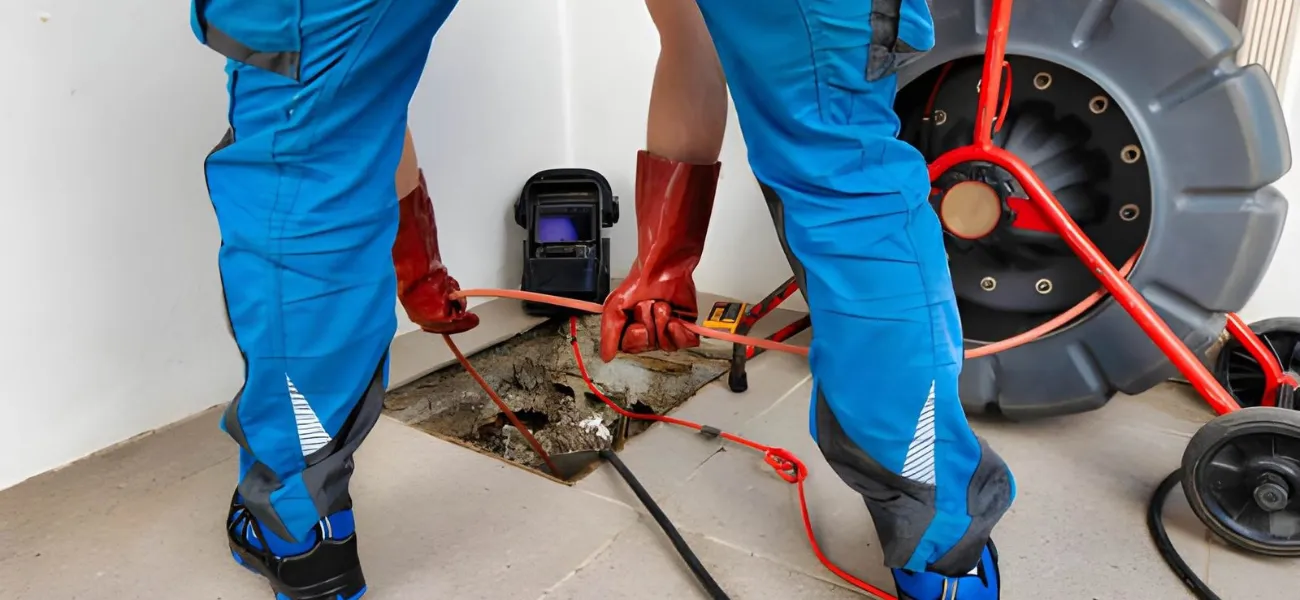
The drain cleaning process runs in order: locate the clog, plunge, snake or auger, inspect with a camera, then hydro jet if needed. Check drainage after each method before escalating. Wear gloves, eye protection and non-slip footwear throughout. Skipping inspection and repeating chemicals are common mistakes.
- Locate the clog
- Plunge
- Snake or auger
- Camera inspection
- Hydro jetting
First, locate the clog by checking multiple fixtures. One slow fixture suggests a localized clog, while several suggest a systemic main line issue. That tells you whether to work at the fixture or at the main line. It saves effort.
Next, plunge, then snake or auger the line. Cleanout access points allow snaking and clearing blockages without disassembling the fixture. Test the flow after each attempt. Stop escalating when the water runs freely.
If clogs return, use a drain camera. Cameras give real-time footage and can reach depths of up to several hundred feet in residential lines. Hydro jetting then clears stubborn buildup. Inspection shows whether damage is the real cause.
Plumber vs Drain Cleaner: Who Should You Call?
Call a drain cleaner for clearing a blockage and a licensed plumber when repairs, venting or pipe replacement may be needed. The difference is scope: drain clearing removes debris, while plumbing work fixes the system. Minor debris clogs may be cleared by DIY or professional cleaning without any pipe repair. Those cases rarely need more.
Recurring clogs usually indicate a deeper drainage or venting problem. If the same drain backs up repeatedly, clearing it again treats the symptom only. A plumber can find the cause. That may be a bad slope, a vent fault or damaged pipe.
Several affected fixtures or suspected sewer line damage also point to a plumber. These signs suggest the problem sits in the main line, beyond a simple clog. A camera inspection helps confirm it. Repair or replacement is then a plumbing job.
When choosing a professional, select a licensed residential drainage specialist. Ask for a diagnosis before work begins. Get a clear explanation of what is wrong and why the proposed fix suits it. That helps avoid paying for work you do not need.
How Much Does Plumbing Drain Work Cost?
Plumbing drain work costs vary widely, but routine drain clearing is priced well below sewer line or septic repairs. Cost drivers include clog location, cleaning method, pipe material, access and whether the job is repair or replacement. Because costs vary by issue, compare local quotes. Sewer repair pricing depends on break location, pipe depth and property location.
Early repair limits water damage, and a correct diagnosis saves money. One homeowner case shows the gap: a $275 repair versus $500 or more for drain cleaning that was not needed. The table sorts jobs by relative cost. Use it for comparison rather than as a quote.
| Job | Relative cost |
|---|---|
| Basic drain cleaning | Lower |
| Sewer or septic repair | Much higher |
Frequently Asked Questions
How do I know which type of drain is causing my problem?
The fixture where the problem shows up usually points to the affected drain; a single slow sink points to that sink’s own drain, while gurgling or backups in multiple fixtures at once point to a shared line or the main sewer drain. If more than one fixture is affected, the problem is further downstream than any single fixture’s drain.
Can a slow drain turn into a full clog?
Yes, a slow drain is often an early sign that buildup is narrowing the pipe, and without intervention, that buildup typically continues until the pipe clogs completely. Addressing a slow drain early, with a plunger, hot water, or a professional cleaning, often prevents it from becoming a full blockage.
Is hydro jetting safe for all pipes?
No, hydro jetting isn’t automatically safe for every pipe; older or already-damaged pipe, particularly clay or heavily corroded cast iron, can be harmed by the water pressure involved. A camera inspection beforehand confirms whether a pipe is in good enough condition to handle jetting safely.
Need help with drains?
Explore the relevant services available from Anaheim Plumbing.