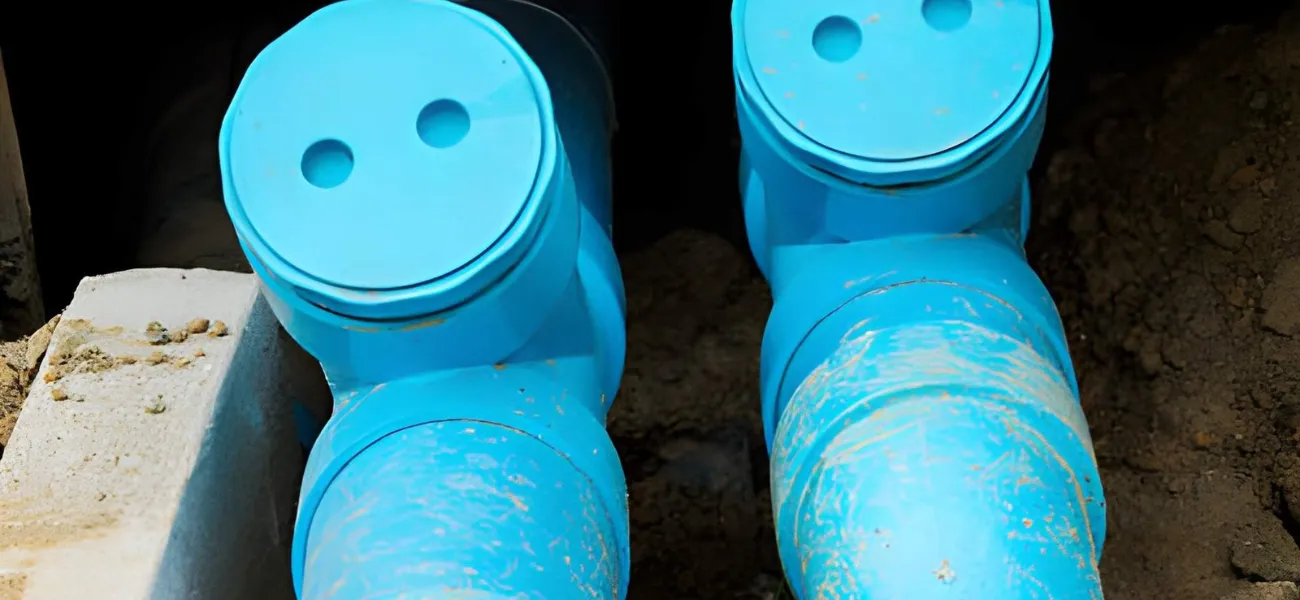
A sewer lateral is the underground pipe that carries wastewater from a building’s drainage system to the public sanitary sewer main. It is also called a building sewer, house connection, or sewer service line. Everything flushed or poured down toilets, sinks, showers, and laundry fixtures leaves the property through it. Most single-family homes rely on one buried line, usually about 4 inches in diameter, running from the foundation toward the street, alley, or easement. The pipe is out of sight, so its condition often goes unnoticed until a problem appears.
A lateral differs from the public main, which serves many properties, and from a septic connection, which ends at a tank rather than a municipal sewer. It also differs from a vent line, which moves air rather than waste. Ownership is the practical issue. Owners are often responsible for part or most of the lateral, and the dividing line depends on local rules. Knowing what the pipe is, where it runs, and who maintains it helps owners avoid costly surprises.
How a Sewer Lateral Works
A sewer lateral works by gravity, sloping downward from the building drain to the public main so wastewater flows out without pumps. The usual path runs from the building drain past a cleanout, across the yard, under the curb or sidewalk, and into a tap on the main. A common minimum slope is 1/4 inch per foot, enough to keep solids moving with the water. Local code sets the exact requirement, so confirm it before any new work.
- Building drain
- Cleanout
- Yard run
- Curb or sidewalk
- Tap into main
Pipe size depends mainly on the building served: 4 inches is typical for single-family homes, and 6 inches is common for small multi-family buildings. Where gravity is impractical because of elevation or distance, sewage ejector or grinder pumps push waste into a pressurized force main. Materials such as PVC, ABS, cast iron, and clay vary with the construction era, and modern installations favor PVC for its watertight joints. A flawed lateral can cause backups at home and let groundwater into the public system.
Where Is the Sewer Lateral Located and How Do You Find It?
The lateral begins where the sanitary stack meets the basement or crawl space floor, and it runs outside toward the street. Look for the stack near the water meter, a floor drain, or an interior cleanout. Finished walls can hide it, so you may need to look in utility areas. Outside, an exterior cleanout cap usually sits between the house and the point where the lateral meets the main under the street. Follow the line from the foundation toward the curb, remembering it may cross a driveway or sidewalk.
- Find the stack or floor drain.
- Check for interior cleanouts.
- Look for an exterior cleanout cap.
- Review plans and utility maps.
- Hire a plumber to locate it.
If those clues are unclear, records and equipment can fill the gaps. As-built plans and utility maps may show the route and connection point. A plumber can also push an inspection camera through the line from a cleanout. The camera measures pipe depth and horizontal position, which helps scope any excavation before digging starts. Marking the route first prevents guesswork and damage to other buried utilities.
What Is the Difference Between a Sewer Lateral, Main Line and Branch Line?
A sewer lateral connects a building’s plumbing to the main sewer line or a septic system, while a branch line stays inside the building and the main serves the neighborhood. Branch lines collect waste from individual fixtures and feed it into the building drain, which then meets the lateral near the foundation. The public main runs beneath the street and collects flow from many laterals. Each part has a different location and usually a different maintenance responsibility.
| Term | Location | Typical owner |
|---|---|---|
| Branch line | Inside building | Owner |
| Lateral | Building to main | Owner, sometimes shared |
| Main | Street | Utility |
Terminology overlaps, which causes confusion. Plumbers may call the lateral the main drain, sewer pipe, or main sewer line, and homeowners also say yard line or service line. The meaning depends on context, so ask what part of the system someone is describing and where it sits. When a quote or notice mentions a main line, confirm whether it means your private lateral or the public main. That distinction decides who pays.
Septic connections and vent lines are separate cases. A lateral on a septic property ends at the tank instead of a municipal main. A vent line is part of the plumbing system but carries air, not waste. Mixing these terms can lead to the wrong repair or the wrong responsible party. The table summarizes the usual locations and owners, though local rules vary.
Who Is Responsible for the Sewer Lateral?
Responsibility for a sewer lateral depends on local ordinance, but the property owner is commonly responsible for at least the section on private property. The lateral is often split into an upper lateral, from the foundation to the property line or back of sidewalk, and a lower lateral, from there to the main. A common model has the owner caring for the building-to-property-line portion and the city handling the rest. Many jurisdictions instead assign the entire lateral to the owner, including the part under sidewalks or streets.
The upper lateral generally falls under plumbing code, while the lower lateral is governed by the local sewer ordinance. Boundaries may follow the property line, curb line, or an easement, so similar-looking properties can have different obligations. Roots, grease, and aging pipe are usually the owner’s expense, and some utilities help only if a cleanout exists at the property line. Confirm your situation with the local utility, sanitation district, or municipal code before repairs.
What Materials and Components Make Up a Lateral?
Laterals are commonly made of PVC, clay, cast iron, or concrete, with the choice shaped by local code, soil conditions, and the age of the home. ABS is also used in modern work, and older properties may have clay or cast iron. Cast iron is prone to rust and clogging, while clay is fragile and vulnerable to root intrusion. PVC is favored today because it is watertight and rust-resistant.
| Material | Known weakness |
|---|---|
| Clay | Fragile, root entry at joints |
| Cast iron | Rust, clogging |
| PVC | Watertight, rust-resistant |
Joints matter as much as the pipe. Clay sections are fitted together rather than glued or threaded, so gaps can open over time and let roots in. Components include cleanouts for access, a tap or wye where the lateral joins the main, and sometimes a backwater valve. Sleeves and offsets, where pipe shifts out of alignment, are points to watch during inspection. Material and joint type therefore help predict cracks, leaks, and root entry.
How Is a Sewer Lateral Installed?
Installing a sewer lateral usually means open-cut trenching by a licensed plumber or contractor, under permit and with municipal inspection. Preparation comes first: obtain the permit, have utilities located, and design the route for proper slope and cleanout placement. Code covers building sewer materials, slope, cleanout spacing, and cover depth, so the design must match local requirements. Crews then excavate, prepare bedding, lay pipe, connect to the main, backfill, and pass inspection.
- Permit and utility locate
- Excavation
- Bedding
- Pipe laying
- Connection to main
- Backfill and inspection
A common mistake involves the water service line, which was historically buried in the same trench as the sewer lateral. Existing lines must be identified and protected so excavation does not damage them or create conflicts between pipes. Inspection before backfilling lets the municipality confirm slope, joints, and connections while they are still visible. Skipping that check can hide errors that later cause clogs or leaks.
What Are the Most Common Sewer Lateral Problems?
The most common sewer lateral problems are clogs, root intrusion, cracks, leaks, sags, and collapse. Tree-root intrusion is the dominant failure mode in laterals older than 20 years, because roots seek moisture and enter through joints and cracks. Once inside, they catch debris and narrow the pipe. Over time, the blockage worsens and the pipe may suffer structural damage.
Defects also affect the wider system. Cracks and leaks admit groundwater, so a damaged lateral can fill with stormwater and contribute to backups. Groundwater leaking into older mains and laterals can raise sewer flows by as much as 2000% in wet weather, according to EBMUD. That extra flow burdens treatment plants and can overload the system during storms. Homes with cracked pipes may see sewage return into basements.
Sags, called bellies, develop when soil settles and drops the pipe out of grade, creating low spots where solids collect. Offset joints and collapsed sections create similar obstructions. Each defect can start small, such as a slow drain, and progress to repeated blockages. Understanding these failure modes helps owners recognize symptoms early.
What Causes a Sewer Lateral to Clog or Back Up?
A sewer lateral clogs or backs up when something narrows or blocks the pipe, most often tree roots, grease buildup, cracks, sags, or offset joints. Wipes, paper, and other foreign objects add to the problem. The cause may be inside the pipe, such as grease, or in its structure, such as a belly. Identifying which type matters because the fix differs.
- Tree roots
- Grease buildup
- Cracks
- Sags
- Offset joints
- Wipes and paper
Roots enter at cracks and joints, then thicken and trap solids. Grease cools and hardens on pipe walls, gradually reducing the opening. Together they create blockages that cleaning may clear temporarily but that return if the underlying defect remains. Repeated clogs in the same line often point to a structural problem rather than bad luck. A camera inspection can reveal which cause is at work.
Settling soil can drop a section of pipe out of grade, forming a belly that traps solids and slows flow. Soil shifts can also offset joints, leaving edges that snag wipes, paper, and grease. These defects build blockages even when residents are careful about what goes down the drain. Pipes that lose slope cannot move waste as designed.
Timing helps distinguish blockage from storm inflow. In dry weather, backing-up water is household wastewater that cannot exit the lateral. If backups happen mainly during heavy rain, groundwater or stormwater entering through defects may be overwhelming the system. Both situations deserve professional evaluation, since a leaking lateral can also be partly blocked. Noting when problems occur gives a plumber useful clues.
What Are the Warning Signs of a Damaged Lateral?
Warning signs of a damaged lateral include slow drains throughout the home, repeated clogs, gurgling sounds, and sewage odors. Slow drains at every fixture, not just one sink, suggest the shared line is restricted. Multiple drain clogs close together are another early indicator. These symptoms often appear before a full backup.
- Whole-home slow drains
- Repeated clogs
- Gurgling
- Sewage odors
- Wet or sunken yard patches
Gurgling happens when displaced air struggles past a partial blockage, and you may hear it in drains or toilets when water runs elsewhere. Sewage odors in the basement or yard can indicate leaks or a failing connection. Occasional odors may seem minor, but they point to waste escaping or trapped. Treat a pattern of symptoms more seriously than a single event.
Yard changes can also signal trouble. Wet or sunken patches along the route of the line may indicate a leak or soil disturbance near the pipe. Because other causes exist, these signs call for investigation rather than assumptions. A camera inspection can confirm whether the pipe is the source. Note where and when the symptoms appear.
Sewage backing up into the home needs immediate attention. It exposes occupants to contaminated water and can damage floors and belongings. Stop using water fixtures and call a plumber or the local utility. Early signs deserve prompt scheduling rather than urgent calls, but waiting can allow minor defects to become serious. Acting early often keeps repairs smaller and cheaper.
How Is a Sewer Lateral Inspected?
A sewer lateral is usually inspected with a CCTV camera pushed through the line from a cleanout, giving a view of cracks, roots, bellies, and leaks. The technician records the footage and notes defects and their locations. Inspectors may code defects with NASSCO-PACP grading, which uses a 1 to 5 scale for severity and type. Higher grades indicate more serious problems.
Other tests locate leaks. Static or smoke testing can confirm infiltration points, and municipalities use green dye to find widespread sewer and lateral problems. These methods show where water or air enters or escapes the system. They complement camera work, which shows the pipe’s interior condition. The table compares the common approaches.
| Method | Shows |
|---|---|
| CCTV camera | Cracks, roots, bellies, leaks |
| Smoke or static test | Infiltration points |
| Dye test | Widespread leaks |
Inspect when buying a home, after recurring clogs, or before an ordinance deadline. Findings that show collapse, severe cracks, or serious blockage call for urgent action. Minor defects may be monitored with periodic re-inspection. A written report helps owners plan repairs and meet any local compliance requirements.
How Are Sewer Laterals Repaired or Replaced?
Sewer laterals are repaired or replaced through spot repair, open-cut replacement, pipe bursting, or cured-in-place pipe lining. Spot repair fixes an isolated defect. Open cut digs a trench along the pipe. The right choice depends on the pipe’s condition and the surface above it.
Pipe bursting pulls new HDPE pipe through the old line while a head fractures the old pipe. CIPP lining cures a resin sleeve inside the existing pipe. Both replace or renew the lateral without a full-length open trench. Trenchless methods suit many situations, but pipe condition determines fit, and open cut may be needed for severe collapse or sags. Trench work is more disruptive to landscaping and pavement.
| Method | Approach |
|---|---|
| Spot repair | Fix isolated defect |
| Open cut | Trench and replace |
| Pipe bursting | Pull new HDPE pipe |
| CIPP lining | Cure resin sleeve |
Permits and compliance rules also matter. Ordinances may trigger repairs at sale or after a defect report. In one example, the Sonoma Valley ordinance gives owners one year from the report date to complete identified repairs. Private lateral repair programs may also apply locally. Check with the utility before work begins.
How Much Does Sewer Lateral Inspection, Repair or Replacement Cost?
Sewer lateral costs vary with length, depth, method, access, and permits. Typical inspection costs $100 to $500, rising to $700 to $2,000 or more if a new cleanout is needed. Minor repairs commonly run $600 to $1,500, and full replacement generally spans $3,000 to $10,000 for standard runs. Complex jobs can exceed $25,000. Permits may add $30 to $1,000.
Method pricing differs per linear foot: traditional excavation $50 to $200, pipe bursting $60 to $225, and CIPP lining $90 to $250. Trenchless methods can reduce total project costs by 30 to 50% when they avoid restoring landscaping and hardscape. Driveways, mature trees, and slabs raise labor and restoration costs, and a very long lateral can make replacement cost about twice as much. Local programs and fees vary, so request local quotes.
How Can You Maintain a Sewer Lateral and Prevent Backups?
You maintain a sewer lateral by keeping grease, wipes, and hygiene products out of drains, managing roots, and scheduling periodic cleaning and inspection. Hydro-jet cleaning can remove grease buildup and early root intrusion. Some plumbing professionals recommend inspecting and cleaning the lateral every two years, a contractor recommendation rather than a universal rule. Respond promptly to any notices from your utility.
- Avoid grease and wipes
- Hydro-jet as needed
- Inspect every two years
- Maintain backwater valve
A backwater valve is a backflow prevention device on drainage pipes that protects the building from sewer backup. Whether your property needs one depends on its plumbing and local conditions, so ask a licensed plumber. Debris can interfere with the valve, so it needs regular upkeep to work when needed. Pairing it with routine cleaning gives layered protection against backups.
Frequently Asked Questions
Who is responsible for repairing a sewer lateral?
This depends on your city. In most places, homeowners are responsible for at least the upper portion running from the house to the property line, while some municipalities own the lower portion under the street. A smaller number of cities hold property owners responsible for the entire lateral. Check with your local water or sewer utility to confirm your specific responsibility.
How do I know if my sewer lateral is failing?
Common signs include multiple drains backing up or draining slowly at the same time, sewage odor in the yard, unusually lush grass over the pipe’s path, and gurgling that coincides with using water elsewhere in the home. A camera inspection is the most reliable way to confirm the actual condition of the line.
Is trenchless sewer lateral repair always cheaper than digging it up?
Not always, but it’s often less expensive overall once you account for restoring landscaping, concrete, or hardscape after traditional excavation. Trenchless repair isn’t an option for every situation, though, such as a completely collapsed section of pipe, which typically requires traditional excavation instead.
What is Orangeburg pipe, and why does it matter?
Orangeburg is a bituminous fiber pipe used in some homes built roughly between the 1940s and 1970s. It’s prone to deforming or collapsing with age, and lines made of this material are commonly recommended for full replacement rather than a targeted repair once problems appear.
Does homeowners insurance cover sewer lateral repair?
Standard homeowners insurance policies often exclude sewer line damage from normal wear, tree root intrusion, or ground movement. Some insurers offer an optional sewer or water backup rider, and some municipalities offer a separate lateral repair program for a monthly fee. Check your specific policy and local utility offerings to understand your coverage.
How often should a sewer lateral be inspected?
There’s no universal schedule, but homes with mature trees near the lateral’s path, older pipe materials, or a history of slow drains benefit from periodic camera inspections to catch problems before they become a full backup. A plumber can recommend an appropriate interval based on your home’s specific conditions.
Need help with drains?
Explore the relevant services available from Anaheim Plumbing.