A backwater valve is a one-way device installed on a building’s main sewer or drain line that lets wastewater leave the house and closes against reverse flow. Its job is to keep sewage from the municipal sewer from rising back into the home when that sewer becomes overloaded or surcharged. The lowest fixtures, such as floor drains, basement toilets and showers, are the ones it guards most directly. Without it, those fixtures become the easiest exit point for contaminated water.
The valve should not be confused with a freshwater backflow preventer, which sits on a water supply line and stops reverse flow of drinking water. A backwater valve works on the sewer side and stops sewage from entering the house. It also does not clear clogs inside the home’s own plumbing. A blockage in a branch drain still needs a plunger, auger or plumber, because the valve only reacts to flow coming back from the sewer.
What does a backwater valve do?
A backwater valve blocks sewage from flowing backward into the building drain when the main sewer line is overloaded, such as during heavy rain or a downstream blockage. In normal use it stays out of the way, opening to outflow so wastewater leaves the house as usual. Only when the flow reverses does it seal, keeping the sewer’s contents on the street side of the pipe. That makes it a passive safeguard rather than something you operate.
Without a valve, sewage can enter through the floor drain, sinks, tubs and toilets, starting with whichever fixture sits lowest in the house. The protection has limits, though. It covers only the fixtures on the protected line, and it cannot stop groundwater seepage or clogs inside the home. A closed valve also blocks outflow from the house, so water from basement fixtures has nowhere to go. Avoid using them until the backup has passed.
How does a backwater valve work?
A backwater valve works as a one-way gate: a hinged flapper or gate inside the valve body is pushed open by outgoing wastewater and closed by reverse flow or sewer pressure. Designs differ in their resting position. Normally open valves rest open, then float up and close only when sewage runs backward, while normally closed valves start shut and are pushed open by wastewater from the home. Both aim for the same result.
- Normally open: rests open, closes on reverse flow
- Normally closed: starts shut, opens under outflow
In a typical flapper design, small floats on either side lift as sewage rises, helping swing the flap onto its seat. Pressure from the backed-up sewage then presses the flap tighter, strengthening the seal. When the sewer clears and flow returns to normal, the flap drops open by gravity and drainage resumes without any action from the homeowner. The seals and the access cover keep the chamber watertight.
The main operating risk is debris. Rags, grease or other solids stuck inside can hold the flap open or keep it from seating, which defeats the seal just when it is needed. Flappers can also become stuck or dislodged and cause blockages even when the sewer is fine. Optional alarms can warn you when the valve closes, and regular cleaning keeps the moving parts free.
Gate valve vs flapper valve: which design is better?
Neither design is better in every home; flapper valves are simple and passive, while gate valves offer a positive close but depend on more conditions. A flapper rests open and seals from backflow pressure alone, with no moving parts to operate. A blade-style gate causes less restriction in normal flow and gives a firmer closing action. The tradeoff is that it can be blocked from closing and needs sewage a foot or more above the valve to shut.
| Criterion | Flapper | Gate |
|---|---|---|
| Operation | Passive | Blade or sliding gate |
| Closing | Backflow pressure | Sewage a foot above |
Choose by comparing reliability, maintenance, debris tolerance, cost and alarm compatibility for your own line and local code. The table captures the differences supported here, but both types need regular cleaning because debris threatens either one. A plumber familiar with your sewer lateral can say which style suits the site. Local code may also specify an accepted type.
Types of backwater valves and common materials
Backwater valves fall into mainline (whole-house) units on the building sewer and fixture-specific units, such as those fitted in a floor drain or under a sink. A mainline valve protects every fixture upstream of it, while a fixture unit protects only the one drain it serves. Building sewers commonly use 4 inch pipe, with smaller sizes on branch lines. Confirm the required size with local requirements.
Valve bodies are typically PVC or ABS plastic, with cast iron options such as a model with a corrosion-resistant duco coating. ABS backwater valves are sold in 4 in. sizes, and diverter valves also come in PVC or ABS. Match the material to the existing pipe and local code. Add-ons include extension risers, access sleeves, cleanouts, alarms and electronic models.
Where is a backwater valve located?
A backwater valve is usually on the main sewer line close to where it leaves the building, below the lowest fixtures. In many homes it sits beneath the basement floor near where the main sanitary sewage exits. It is often at the front of the building, where the sewer lateral enters the foundation wall. An access cover lets the plumber reach it.
In homes without basements or with impractical indoor access, the valve may sit outside near the foundation or in the front yard. There it is housed in an underground pit or chamber where the building’s sewer lateral meets the municipal sewer. This placement guards against street sewer surcharges while allowing maintenance access. Either way, the cover must stay reachable.
Fixture-level units live in floor drains or under sinks rather than on the main line. The valve must be on the main line between the lowest fixture and the municipal connection to protect everything downstream. Many municipalities require this for fixtures below the backwater level, which is generally the height of the street surface. Plumbing diagrams show the planned position.
How can you tell if your home has a backwater valve?
You can tell by looking for an access cover, round or square, in the basement floor near the main drain, often with a screw-in cap. Remove nothing until you know what you are opening; sewer gas and sewage may be present. Check plumbing records, permits and inspection reports as well. A licensed plumber can confirm with a camera inspection, which shows presence and working condition.
Inside, a valve has a body with a removable cover, a flow arrow and a flap that is visible when opened. It is usually beneath the basement floor and connected directly to the main sewer line. If you know where the sump pump is, the valve is most likely close to it. Follow the steps for a systematic search.
- Check the basement floor near the main drain.
- Review permits and inspection reports.
- Hire a plumber for a camera inspection.
What does the flow direction label mean when identifying one?
The flow direction label is an arrow on the valve hub that shows the correct orientation, pointing toward the sewer in the direction wastewater leaves the house. On some valves, a green arrow marks outflow that opens the flapper, while a red arrow marks backup that seals it. Reading it helps you confirm the valve faces the right way. It is a quick check during inspection.
Orientation matters because a reversed valve either blocks outflow from the house or fails to seal against backup. Either error defeats the device, and the fault may stay hidden until a surcharge happens. Installers therefore check arrows before cementing the joints. Inspectors do the same.
Horizontal installation is required, with the arrows on the hub pointing in the direction of flow. A backwater valve should never be installed vertically, because the internal flapper then becomes ineffective. Install in other positions only if the model is specifically rated for it. Follow the manufacturer’s instructions.
Is a backwater valve necessary or required?
Whether a backwater valve is required depends on where you live, so check local building code and your municipality. Some regions, such as Ontario and Alberta, and some cities mandate valves in new builds. Code commonly requires one when a fixture sits below the next upstream manhole. Backup risk rises with a basement or ground floor less than 30 cm above street level.
- Fixture below upstream manhole
- Basement under 30 cm above street
- Combined sewers or backup history
Even where not mandated, a valve is most useful in basements below street sewer level, in areas with combined sewers, in flood-prone areas, or after a past backup. Under DIN EN 12056-4, a passive valve is allowed only if the drain is rarely used and a second toilet sits above the backwater level. Septic systems usually do not have the same need. Consult the local authority.
The tradeoffs are protection against sewage backup versus cost and maintenance. A valve also does not stop all flooding, since groundwater and surface water can still enter. Weigh your home’s elevation, sewer type and history against the upkeep a valve needs. Ask your municipality for local guidance.
How is a backwater valve installed?
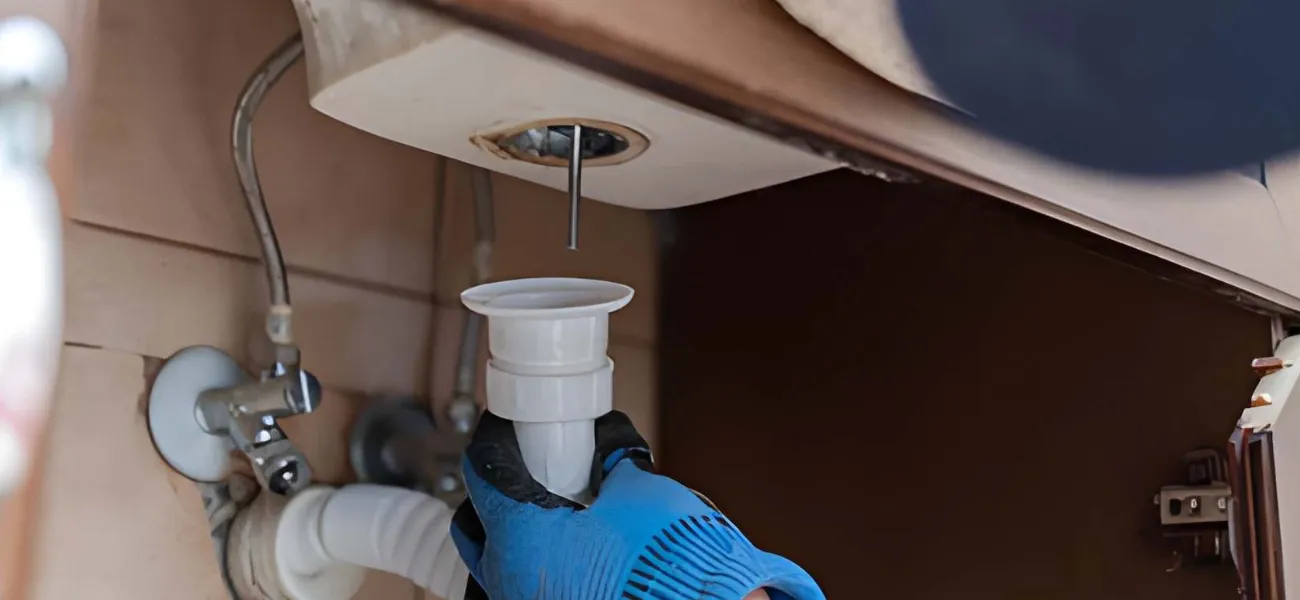
A backwater valve is installed by a licensed plumber who cuts into the main sewer line and sets the valve with its arrow pointing away from the house. Retrofitting an existing home requires a plumbing permit from the municipality, and mainline units often mean breaking the basement slab. The valve has two ends that connect to DWV pipe, held with solvent cement. Incorrect installation can fail when needed.
- Locate the line
- Open floor or dig pit
- Cut pipe, set valve
- Cement joints, add riser
- Test and backfill
The work follows a clear order: locate the line, expose it by opening the floor or digging an exterior pit, and cut out a section of pipe. Then fit the valve with correct direction and slope, join it with couplings, primer and solvent cement, and add an access riser. Finally backfill, pour concrete and test all joints. In new construction, installation happens before the floor is poured.
Common mistakes include reversed direction, no cleanout access, wrong pipe material and ignoring slope. The valve cover must remain accessible for maintenance and inspection. Consider adding a sewer backup alarm. Because cutting the main line risks sewage spills, professional assessment is recommended over DIY.
How much does backwater valve installation cost?
Backwater valve installation costs vary widely: about $500 in new construction, and typically $2,000 to $5,000 when retrofitting an existing home. The device alone, without labor, costs between $250 and $500. Another range puts the average installation at $1,500 to $3,000 including components, labor, equipment rental and transportation. Treat these as guides, not quotes.
- New build: about $500
- Retrofit: $2,000 to $5,000
- Device only: $250 to $500
Cost drivers include mainline versus fixture-level units, whether the slab must be broken, how deep the line lies, and the valve material. Alarms, permits and regional labor rates add to the total. New builds are cheapest because the line is open before concrete goes down. Retrofits cost more because of the digging and slab repair.
A new unit, a retrofit and a replacement are different jobs. A replacement in an existing valve chamber avoids slab work, so it generally costs less than a first retrofit, though no figure is supported here. The exposure of the line and restoration of the floor account for much of a retrofit’s price. Ask for itemized quotes.
Get several written quotes from licensed contractors and ask what each includes. Confirm whether permit fees, concrete restoration, an alarm and cleanout access are in the price. Lower bids may omit the slab repair or inspection. Comparing like with like shows which quote is realistic.
Are there rebates or subsidies for backwater valves?
Yes, in some areas local governments and provinces offer subsidies for backwater valves, but availability depends on where you live. Programs often require a licensed contractor, set eligibility rules and ask for pre-approval before work starts. Toronto’s program is one example, though programs change by location. Verify details locally before hiring anyone.
Insurance also matters. Some policies require a valve to qualify for sewer backup coverage, and an insurer may require installation before coverage begins. Ask your provider which documentation it needs, such as permits, invoices or inspection records. Keeping them also helps with future testing.
How do you maintain, test and repair a backwater valve?
Maintain a backwater valve by inspecting and cleaning it at least annually and after heavy storms, following the manufacturer’s guidance. Open the cover, remove debris, check flapper movement, gaskets and seals, then test with water. A licensed test is expected at installation, within 72 hours of cleaning or repair, and at least yearly. With regular care a valve lasts 5 to 10 years.
Replaceable parts include the flapper, gaskets and seals. The flapper gasket is elastomeric and the access cap gasket is neoprene. Replace the whole valve when parts are worn or damaged beyond repair. The table lists common symptoms and fixes.
| Symptom | Cause | Fix |
|---|---|---|
| Not sealing | Debris, worn gasket | Clean, replace seal |
How does a backwater valve differ from other valves and devices?
A backwater valve differs from other devices by what it protects against and where it sits. It sits in the building sewer line and stops sewage reverse flow, while a freshwater backflow preventer or drinking water check valve sits on a water line. Check valves and system separators protect clean water, not the sewer. The terms are often confused.
A sump pump removes groundwater, while a backwater valve blocks sewer backup. They are often used together but do different jobs. Under-sink or kitchen backflow valves are a similar terminology trap, so confirm which line a product serves. A leak sensor on a supply line does not detect sewer backwater.
Check valves also differ in application and rating, so a water-line check valve should not stand in for a sewer-rated backwater valve. Choose the device that matches the line it will sit on. The table compares them side by side. Local code lists accepted types.
| Device | Protects against | Location |
|---|---|---|
| Backwater valve | Sewage backup | Sewer line |
| Check valve | Water contamination | Water line |
Frequently Asked Questions
What’s the difference between a backwater valve and a backflow preventer?
A backwater valve protects a home’s drains from sewage flowing backward into the house, typically installed on the sewer line. A backflow preventer protects a home’s clean water supply from contamination, typically installed on the water supply side. They serve related but distinct purposes and are not interchangeable.
Do I need a backwater valve if I don’t have a basement?
It’s less critical than in a home with basement fixtures, but any plumbing below street level, including a low-lying ground floor, can still be at risk during a significant sewer backup. A plumber can assess your specific elevation and local sewer conditions to advise whether one makes sense.
How do I know if my backwater valve is working?
Mechanical valves should be inspected periodically by a licensed plumber to confirm the internal mechanism still moves freely and seals correctly. Manual valves depend on you knowing their location and being able to close them promptly, so periodically confirming you can access and operate the valve is worthwhile.
Can I install a backwater valve myself?
This isn’t generally recommended as a DIY project. Correct placement on the sewer line, proper sizing, and local code compliance all matter for the valve to function when it’s actually needed, and many jurisdictions require the work to be done and inspected by a licensed professional.
Does a backwater valve prevent all types of sewer backups?
It significantly reduces the risk of sewage flowing back into your home through the drains it protects, but it doesn’t prevent every possible plumbing issue, such as a clog or backup that occurs on your side of the valve. It’s one part of an overall approach to reducing backup risk, alongside regular drain maintenance.
Is a backwater valve required by code?
Requirements vary by jurisdiction. Some areas mandate a backwater valve for homes with plumbing fixtures below street level or when connecting to certain municipal sewer systems, while others leave it as an optional protective measure. Check with your local building department or a licensed plumber to confirm what applies to your home.
Getting a Backwater Valve Installed or Checked
If you’re considering a backwater valve, aren’t sure whether your home needs one, or want an existing valve inspected, a licensed plumber can assess your plumbing, explain your options, and provide a written estimate before any work begins.
Need help with drains?
Explore the relevant services available from Anaheim Plumbing.