More guides in this subject
Choose a guide to explore a specific question, component or repair.
- Floor Drains: Types, Parts, and How to Unclog One
- How a Bathroom Drain Works, Why It Clogs and How to Fix It
- How a Toilet Drain Works, Why It Clogs and How to Unclog It Without a Plunger
- How to Clean a Shower Drain and Why It Clogs
- Kitchen Drain: What It Is, Its Parts and How to Clean It
- Why Your Laundry Machine Won't Drain and How Drainage Works
A drainage system is an engineered network that collects, carries and disposes of excess water from rainfall, groundwater and wastewater. Its purpose is to keep water from pooling where it does harm, which prevents flooding, soggy soil and structural damage to buildings. A drain is one component within that network, the point or channel where water enters and begins its journey. Drains differ in shape, size and placement, so the right one depends on where the water comes from.
The most important distinction is between drainage and sewerage. Drainage systems handle rainwater, runoff and groundwater, while sewerage systems manage sanitary wastewater from fixtures inside buildings. These two flows must never be mixed, because sanitary wastewater needs treatment and rainwater generally does not. Knowing which system a drain belongs to is the first step toward choosing, installing or maintaining it correctly.
What Is a Drainage System and How Does It Differ From a Drain?
A drainage system is the complete network of pipes, channels and control structures that gathers excess water and discharges it safely, while a drain is a single component of that network. The water involved can come from rainfall, stormwater, snowmelt, groundwater or wastewater. Think of a drain as one doorway and the drainage system as the whole building plan, including every route water takes afterward. A lone drain without a path to discharge simply moves a problem elsewhere.
Drainage systems fall into four main categories: surface, subsurface, stormwater management and sewerage. Surface systems remove water lying on the ground, and subsurface systems lower water held in the soil. Stormwater management deals with runoff from roofs, roads and paved areas, and sewerage carries wastewater from fixtures. Each category uses different components, so understanding the network matters as much as choosing an individual drain.
How Is Sanitary Sewerage Different From Stormwater Drainage?
Sanitary sewerage carries wastewater from toilets, kitchens, bathrooms and other fixtures inside buildings, while stormwater drainage carries rainwater runoff from roofs, yards and paved surfaces. The difference matters because sanitary wastewater contains organic matter and requires treatment before discharge. Rainwater runoff is a much cleaner flow that usually leaves through storm drains or other outlets. Because of this, sewerage must stay separate from stormwater to prevent contamination.
Mixing the two creates real risks. Rainwater entering a sanitary line adds volume that increases the treatment burden, and sewage entering a stormwater line can contaminate surface water. Each flow has its own connection point: sanitary pipes lead to a sewer main or on-site disposal such as a septic system, and stormwater lines lead to a storm sewer or another approved outlet. Sanitary sewerage should never be connected to rainwater drains.
What Are the Main Types of Drainage Systems?
The main types of drainage systems are surface, subsurface, slope, gutters and downspouts, stormwater management and combined systems. Five popular types for homes are surface, subsurface, slope, gutters and downspouts, and HDPE drains. Interior drains, such as those in kitchens and showers, collect water and send it to a sewer or septic system, while exterior drainage protects the property from rain and groundwater. The table below shows how the main exterior types differ.
| Type | Main job |
|---|---|
| Surface | Removes standing water |
| Subsurface | Lowers groundwater |
| Slope | Controls erosion |
| Gutters | Carries roof runoff |
Combined systems join surface, subsurface and roof-level drainage into one plan. They are often necessary in areas with high rainfall or poor natural drainage, where a single method cannot handle every water source. A roof might shed water into gutters, a yard might use grading and area drains, and a foundation might rely on a buried perforated pipe. Working together, these layers give more complete protection against waterlogging and structural problems.
Surface Drainage Systems
Surface drainage systems remove standing water from land using open ditches, swales, grading and drains. They suit visible water problems such as puddles on lawns, yards and driveways, along with rain and sprinkler runoff that collects in low areas. Because they work on or near the surface, the water is easy to see and the results are quick to confirm. They are especially well suited to very flat land, where water has little natural reason to move.
Surface systems include open ditches, swales and gutter systems that capture roof runoff. A ditch or swale gives water a defined path, and grading tilts the ground so water flows toward that path instead of settling. Gutters belong to this family too, since they intercept rain before it reaches the ground. Together these tools prevent water from lingering against buildings and across lawns.
Another form uses a series of pipes and drains around the perimeter of low-lying property. Area drains in this setup collect rain and sprinkler runoff and channel it away from the low spots where it would otherwise gather. The pipes then carry the water to a suitable outlet, so that the lowest part of the yard stops acting like a basin. This layout works well when the whole lot sits lower than its surroundings.
Surface systems are cost-effective for removing visible water, but they need regular maintenance. Leaves, silt and debris can block ditches, grates and inlets, which stops water from flowing and causes standing water to return. Moving water can also erode bare channels, so controlling erosion with vegetation or lining helps. Clearing debris and checking the system after storms keeps it working as designed.
Subsurface Drainage Systems and French Drains
Subsurface drainage systems use perforated pipe buried in gravel to lower the groundwater table and redirect water away from foundations. The most familiar form is the French drain, a gravel-filled trench holding a perforated pipe that collects and conveys groundwater. Water seeps through the gravel, enters the pipe and travels to a safe outlet. This helps prevent foundation problems caused by saturated soil.
These systems are particularly effective where water tables are high or natural drainage is poor. They suit basements that flood, lawns that stay waterlogged and properties where the soil holds water long after rain has stopped. Since the water is intercepted underground, surfaces stay usable and the landscape looks unchanged once the trench is covered. That is a major advantage over open ditches in finished yards.
Depth is a key design question for a French drain. It is typically at least 8 inches deep in most cases, though the right depth depends on the drain’s purpose, the soil type and rainfall. A drain meant to protect a foundation may need to sit deeper than one meant to dry out a soggy lawn. Heavy soils that drain slowly may call for a different design than sandy ones.
Subsurface drainage is more efficient for long-term water table control, but the installation is more complex. Digging trenches, setting the pipe at the correct fall and placing gravel takes more labor than grading a swale. Because the system is buried, problems are harder to spot, and a blocked pipe may require professional inspection. The extra effort usually pays off where groundwater is the real cause of damage.
Gutters and Downspouts
Gutters and downspouts capture roof runoff and carry it away from the structure to prevent damage and erosion. Gutters are the horizontal pipes or channels along the roof edge, and downspouts are the vertical pipes that bring the collected water down. The downspout outlet should discharge well clear of the foundation, since a short outlet simply dumps water beside the wall. This setup links directly to stormwater control and basement flooding.
The most common failures are clogging with debris, spillage onto the footings and poor outlet extension. When a gutter is blocked, water overflows the edge and gathers around the footings. That pooled water can seep toward the foundation and may lead to mould growth. Regularly clearing the gutters and extending downspouts keeps roof water moving to where it belongs.
Slope Drainage Systems
Slope drainage systems use gravity to move surface runoff down an incline, controlling flow and preventing erosion and structural damage. They are used on embankments, hillside yards, podium landscapes, roadside cuttings and roads. Plastic, concrete or steel pipes and channels are common, and the approach is ideal for land with a high incline. The goal is to guide water in a controlled path.
Slopes concentrate water because gravity speeds it up and pulls it into the same paths. Left uncontrolled, fast runoff strips soil, cuts gullies and can undermine structures at the base of the slope. A slope drain gives that water a defined route, so it travels downhill inside a channel or pipe instead of across bare ground. This protects both the hillside and whatever sits below it.
A catch basin is placed at the low point of a slope. It is a concrete or plastic container that collects the descending water before passing it into a pipe or other outlet. This gives the flow a place to settle and slow down rather than rushing onto the next surface. Basins need periodic clearing, since debris carried down the slope collects there.
Stormwater Management for Paved Areas
Stormwater management for paved areas directs runoff from driveways, patios, roads and roofs into catch basins and storm sewers. It handles rainwater and surface runoff from roofs, roads, paved areas and open ground. Paved surfaces cannot absorb rain, so water moves across them quickly and needs a planned route. Without that route, it floods low points and damages edges and foundations.
Impervious surfaces raise runoff volume, especially in urban areas where much of the ground is covered. Storm sewers are underground pipe networks built for these large stormwater volumes. Runoff from paved areas goes to municipal stormwater drains and may need treatment before it is released. Commercial subsurface systems are often installed in parking lots, roadways and other paved surfaces.
Green infrastructure offers a brief alternative approach. Instead of sending all water into pipes, it uses planted or permeable features that hold and slow runoff nearer to where it falls. This can reduce pressure on storm sewers during heavy rain. Many sites combine both approaches, using pipes for capacity and green features to ease the load.
What Are the Main Types of Drain
The main types of drain inside a home are the bathroom, floor, laundry, toilet, kitchen, and tub and shower drains. Each one collects used water from a specific fixture and sends it into the building’s sanitary system. Outdoors, yard and area drains do the same job for rain and runoff. Matching the drain to its use helps prevent clogs and backups.
These drains differ mostly in what they receive. Some handle clean rinse water, others handle grease, hair, lint or solid waste, and outdoor drains handle rain and sprinkler runoff. The kind of material passing through shapes where a drain is placed, what covers it and how it should be cleaned. The sections below describe each drain in turn.
Bathroom Drain
A bathroom drain carries water from the sink and other bathroom fixtures into the sanitary system, which sends it to a sewer or septic system. It collects wastewater from washing, so hair and soap residue are its most common problems. A visible strainer or stopper at the opening catches larger debris before it enters the pipe. Fixtures like this belong to sewerage, not stormwater drainage.
Because of what flows through it, a bathroom drain benefits from strainers and regular cleaning. Hair and soap build up over time, narrowing the pipe and slowing flow. Clearing the strainer often and flushing the drain with hot water helps keep it open. Chemical cleaners can corrode pipes over time, so they are best avoided.
Floor Drain
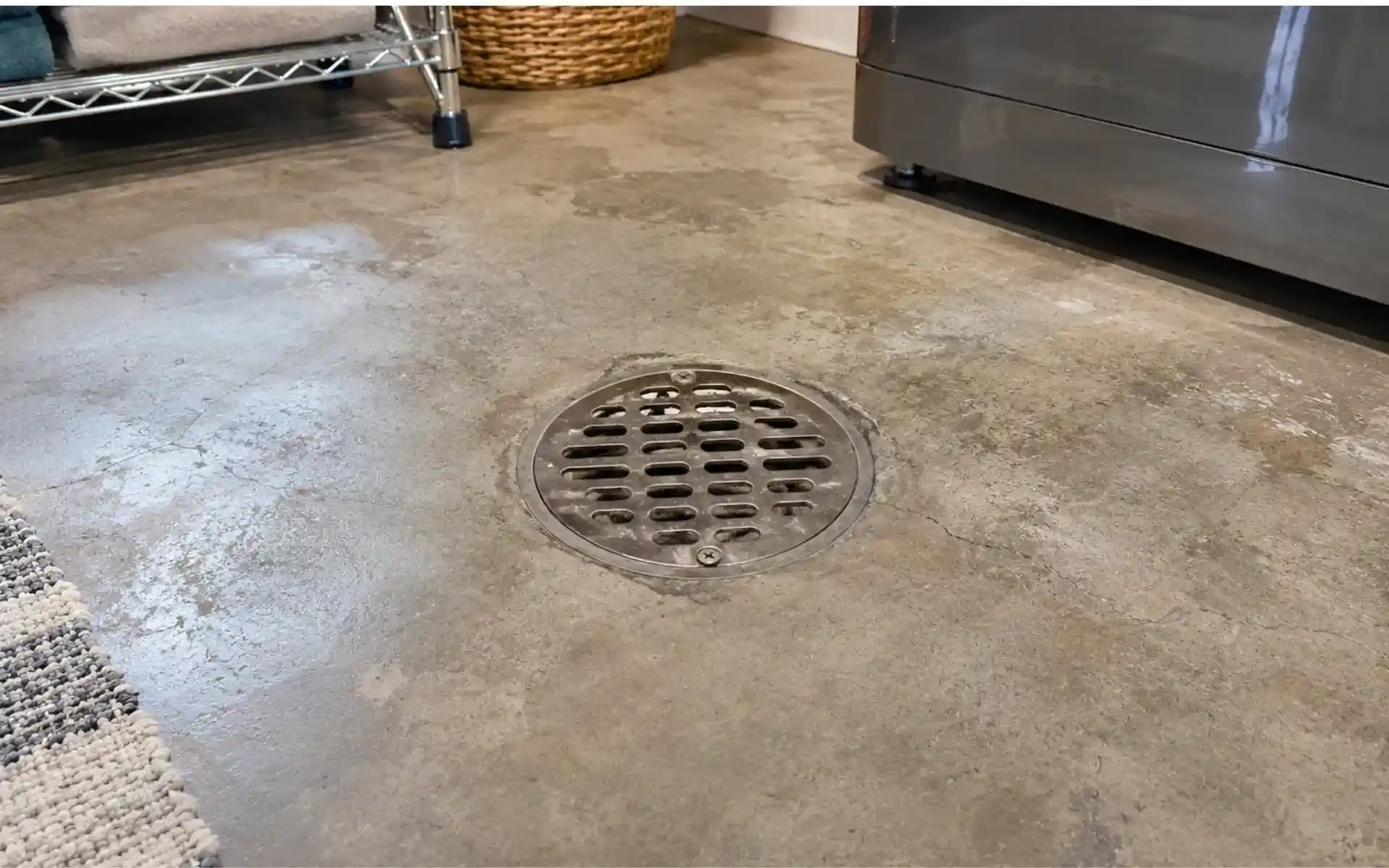
A floor drain is an opening set into the floor that collects water and sends it into a drainage pipe. It is found in places where spills, washing or leaks are likely, such as basements, garages and utility areas. The floor around it is usually sloped slightly toward the opening so water reaches it. A grate covers the opening to keep out large debris.
A floor drain is only useful if water can actually enter it. Dirt, debris and sediment can collect on the grate or just beneath it, blocking flow. Clearing the grate and checking the drain from time to time keeps it ready for a spill. It should lead to a proper outlet, never into a stormwater line if it carries wastewater.
Laundry Machine Drain
A laundry drain takes the discharge from a washing machine and carries it into the sanitary drainage system. The washer pumps out a large amount of water in a short time, so the drain pipe must be able to carry that surge. It usually receives soapy water along with lint and fibers from clothing. These materials make the drain prone to gradual buildup.
To keep a laundry drain working, lint must be kept out of the pipe wherever possible. A lint trap or filter on the discharge hose reduces the material reaching the line. If water drains slowly or backs up around the standpipe, the line may be partly blocked. A professional can inspect and clean the pipe if basic clearing does not help.
Toilet Drain
A toilet drain carries human waste and flush water from the toilet into the building’s sewerage line, which leads to a sewer main or on-site disposal. This is the clearest example of sanitary wastewater, which contains organic matter and requires treatment before discharge. For that reason it must never connect to a rainwater drain. It also needs a larger pipe than most other fixtures.
Toilet drains should receive only waste and toilet paper. Wipes, grease and other items that do not break down can lodge in the pipe and cause a blockage. Proper waste disposal is the best way to prevent clogs here. If water rises in the bowl or drains slowly, a professional can inspect the line.
Yard and Area Drain
A yard or area drain collects rain and sprinkler runoff at a low spot and channels it away through a connected pipe or catch basin. It is a surface drain, so it handles stormwater and not sanitary waste. A grate on top lets water in while keeping out larger debris such as leaves. Keeping that grate clear matters most, since a covered grate leaves water standing in the yard.
Tub and Shower Drain
A tub and shower drain collects bathing water at the bottom of the basin and sends it into the home’s sanitary drain system. The water it receives carries hair, soap and body oils, which can slowly narrow the pipe. A strainer or hair catcher at the opening stops much of this before it enters the line. Cleaning that catcher regularly keeps water draining at a steady pace.
Kitchen Drain
A kitchen drain carries water from the sink and often a dishwasher into the sanitary system, which leads to a sewer or septic system. Grease, food scraps and soap are its main challenges, because they can harden or collect inside the pipe. A sink strainer catches food solids, and proper waste disposal keeps grease out of the line. Flushing with hot water helps move residue along.
Floor Drain
A floor drain sits flush in the floor and collects spills, wash water or leaks, sending them into a drainage pipe. It is typically found in basements, garages and laundry or utility rooms, where the floor slopes gently toward the opening. A removable grate keeps large debris out of the pipe. Because dirt can gather on the grate, occasional cleaning keeps water flowing in.
Laundry Drain
A laundry drain receives water pumped from a washing machine and carries it into the sanitary drainage system. Washers release a lot of water quickly, so the pipe must handle a sudden surge without backing up. The water carries soap, lint and fibers, which slowly build up inside the line. Lint filters and occasional cleaning keep the drain flowing freely.
Yard and Area Drain
A yard and area drain gathers rain and sprinkler runoff from a low spot in the landscape and channels it away from the area. It connects to a pipe or catch basin and is covered by a grate to block debris. This drain belongs to stormwater drainage, so it should not be connected to sanitary lines. Clearing leaves and silt from the grate keeps it effective during storms.
Tub and Shower Drain
A tub and shower drain removes bathing water at the basin floor and passes it into the household sanitary drain. Hair, soap scum and body oils are the usual causes of slow draining here. A strainer or hair catcher stops most of this material at the opening. Cleaning it regularly and using hot water flushes helps prevent stubborn blockages.
Which Drain Types Handle Large Volumes of Water?
Channel, trench, slot and area drains handle large volumes of water, and underground storm sewers carry big flows through urban networks. Trench drains are designed to manage large, sudden volumes of liquids and solids. Channel, trench and area drains are used in urban or industrial settings, where heavy flows arrive quickly and must leave just as fast. The table compares them by shape, collection method and typical location.
| Drain type | Appearance | Collection | Typical location |
|---|---|---|---|
| Trench | Grated trough | Linear | Driveways, industrial |
| Slot | Narrow opening | Linear | Pavement lines |
| Area | Grate at low spot | Point | Yards, patios |
The key difference is linear versus point collection. Linear drains such as trench, channel and slot drains collect water along a whole edge or line, which suits long surfaces. Area drains collect at a single point in a low spot, so they suit places where water naturally gathers. Choosing between them depends on how the water arrives on the surface.
Typical locations include driveways, garages, patios, and industrial and urban sites. At these places, large surfaces shed water fast, so a drain with generous capacity prevents puddles and slippery surfaces. Storm sewers sit beneath, receiving the water and carrying it onward across the city. Together, surface drains and sewers form a complete path from pavement to outlet.
Channel, Trench and Slot Drains Compared
Trench and channel drains collect water along a line using a trough-shaped channel covered by a grate, while slot drains do the same with a narrow, grateless opening along the top. All three are linear drainage systems that catch water along a surface edge. They differ in width, in how visible they are and in how they are built. The main contrast is grated trough versus slotted opening.
Trench drains come in premanufactured sections, while channel drains are formed in place. Premanufactured sections are assembled along the run, which makes the shape and size consistent. A formed-in-place channel is shaped on site, which allows custom layouts. A slot drain has a minimal visible opening, so it suits clean pavement lines where a wide grate would look out of place.
Choose among them by load, flow volume and appearance. A driveway or industrial floor with heavy vehicles needs a drain rated for that traffic, while a patio may favor looks. Confirm product ratings with the manufacturer rather than assuming one type fits a given load. Flow volume also matters, since a narrow slot moves less water than a wide grated trough.
Area Drains and Swale Drains
An area drain collects water at a single low spot and sends it into a connected pipe or catch basin, while a swale drain is a shallow ditch lined with grass or rocks that directs flow. Area drains are point collectors, so they suit patios, yards and low corners. Swales are open and vegetated, guiding water gently across the land. Both are surface solutions, but they work in different ways.
Size and drainage area set the limits of an area drain. Small ones are a few inches in diameter, while industrial drains measure 12 inches or more. In general, an area drain serves a maximum drainage area of 400 square feet. Beyond that, additional drains or a linear system are needed to keep up with the runoff.
How Do You Choose the Right Drainage System for Your Property?
The right drainage system depends on rainfall intensity, soil type, site slope and access to municipal drains. Surface options cost less and handle visible water well but need ongoing upkeep, while subsurface options control the water table over the long term but are complex to install. Heavy rain demands more capacity, and slowly draining soil holds water longer. The table matches common site conditions to suitable systems.
| Site condition | Suitable system |
|---|---|
| Flat yard with puddles | Surface drainage |
| High water table | Subsurface or French drain |
| Hillside | Slope drain |
| Heavy rain, poor soil | Combined system |
Combined systems suit sites with heavy rainfall or poor natural drainage. They join surface, subsurface and roof-level drainage so each water source has its own path. Municipal drain access also matters, because it determines where collected water can legally and practically go. Without an outlet, even a well-built system has nowhere to discharge.
How Do You Know You Need a Drainage System?
You likely need a drainage system if water pools after rain, your basement is damp, foundation cracks appear or the lawn stays soggy. These signs show that water is not leaving the property fast enough. Pooling near the house is especially worrying, since that water is heading toward the foundation. Spotting them early prevents larger repairs.
Improperly directed runoff can cause basement flooding, landscape erosion and waterlogging. Over time, constant moisture weakens soil, stains walls and may encourage mould. Erosion carries away soil from slopes and beds, exposing roots and footings. Each effect points to a different cause, such as a clogged gutter, a high water table or poor grading.
Call a drainage professional when problems persist or the cause is unclear. A professional can inspect and clean the system, and a sewer camera inspection can show what is happening inside buried pipes. That avoids guesswork and expensive digging in the wrong place. A diagnosis also helps you choose the right type of system.
How Do You Maintain Drains and Keep the System Working?
Keep drains working by checking them regularly, clearing obstructions and preventing clogs before they form. Inspect gutters, grates, catch basins and outlets after heavy rain and at regular points through the year. Plan periodic checks before and during the monsoon for surface drains and gutters. The list below sums up the routine.
- Clear gutters and downspouts
- Check grates and catch basins
- Inspect outlets after heavy rain
- Use strainers and flush with hot water
- Avoid chemical cleaners
Clean gutters and downspouts regularly to keep them free of obstructions, since blocked ones spill water onto footings. Strainers, hot water flushing and proper waste disposal keep indoor drains clear. To clear a blocked drain, remove debris from the opening first and flush with hot water. If water still will not move, a professional can inspect and clean the line.
Avoid chemical drain cleaners, which can corrode pipes over time and lead to costly repairs. A drain that slows repeatedly, gurgles or backs up is signaling a deeper blockage or damage. Lifespan depends on the material, the quality of installation and how well the system is kept clear. Regular attention costs far less than replacing a failed system.
Frequently Asked Questions
Why does my kitchen sink clog more often than my bathroom sink?
Kitchen sinks handle grease, oil, and food particles that coat the inside of the pipe and narrow it gradually, while bathroom sinks mainly deal with hair and soap that clump instead of coating the pipe walls. This is why kitchen drains often need cleaning more frequently than bathroom drains in the same home.
Can I use the same drain snake on every type of drain?
A basic handheld snake works on most sink and shower drains, but a toilet needs a specific closet auger designed with a protective coating so it does not scratch the porcelain, and a main line clog usually needs a longer, motorized cable that reaches well beyond what a handheld tool can access. Using the wrong tool can damage a fixture or fail to reach the actual clog, sometimes pushing it further down the line instead of clearing it.
Why does my floor drain smell bad even though nothing is clogged?
Floor drains that are not used often can dry out, which lets the water seal in the trap evaporate and allows sewer gas to enter the room. Pouring water into the drain periodically usually resolves the odor without needing a repair. If the smell returns quickly after refilling the trap, a vent issue or a slow leak in the trap itself may be the actual cause.
Is a bigger drain pipe always better?
No. A drain pipe that is too large for the fixture it serves can actually slow water velocity, which allows solids to settle instead of being carried along by the flow. Pipe size is matched to expected water volume, not simply made as large as possible.
What is the difference between a floor drain and a laundry standpipe?
A floor drain sits flush with the floor and handles occasional spills or overflow in areas like basements and utility rooms. A laundry standpipe is a vertical pipe that connects directly to a washing machine’s drain hose and is sized to handle a large volume of water released quickly during the drain cycle.
Why do toilet clogs sometimes come back after plunging?
If a clog is only partially cleared, small amounts of paper or waste already lodged in the trapway or drain line can catch new material and clog again quickly. A closet auger or professional snake can clear the line more completely than a plunger alone.
Do all drains connect to the same main line?
Yes. Every drain type eventually connects to the home’s main drain line, which carries wastewater to the municipal sewer or septic system. This is why a problem in the shared line, rather than in a single fixture, can cause several different drain types to back up around the same time.
Why does my garbage disposal make my kitchen drain clog more often?
A garbage disposal grinds food waste into smaller pieces, but it does not eliminate the waste, so more solid material still enters the drain line than would from a sink without a disposal. Running cold water while the disposal is on, and for a short time after, helps carry ground waste through the pipe instead of letting it settle and combine with grease buildup along the walls.
Need help with drains?
Explore the relevant services available from Anaheim Plumbing.