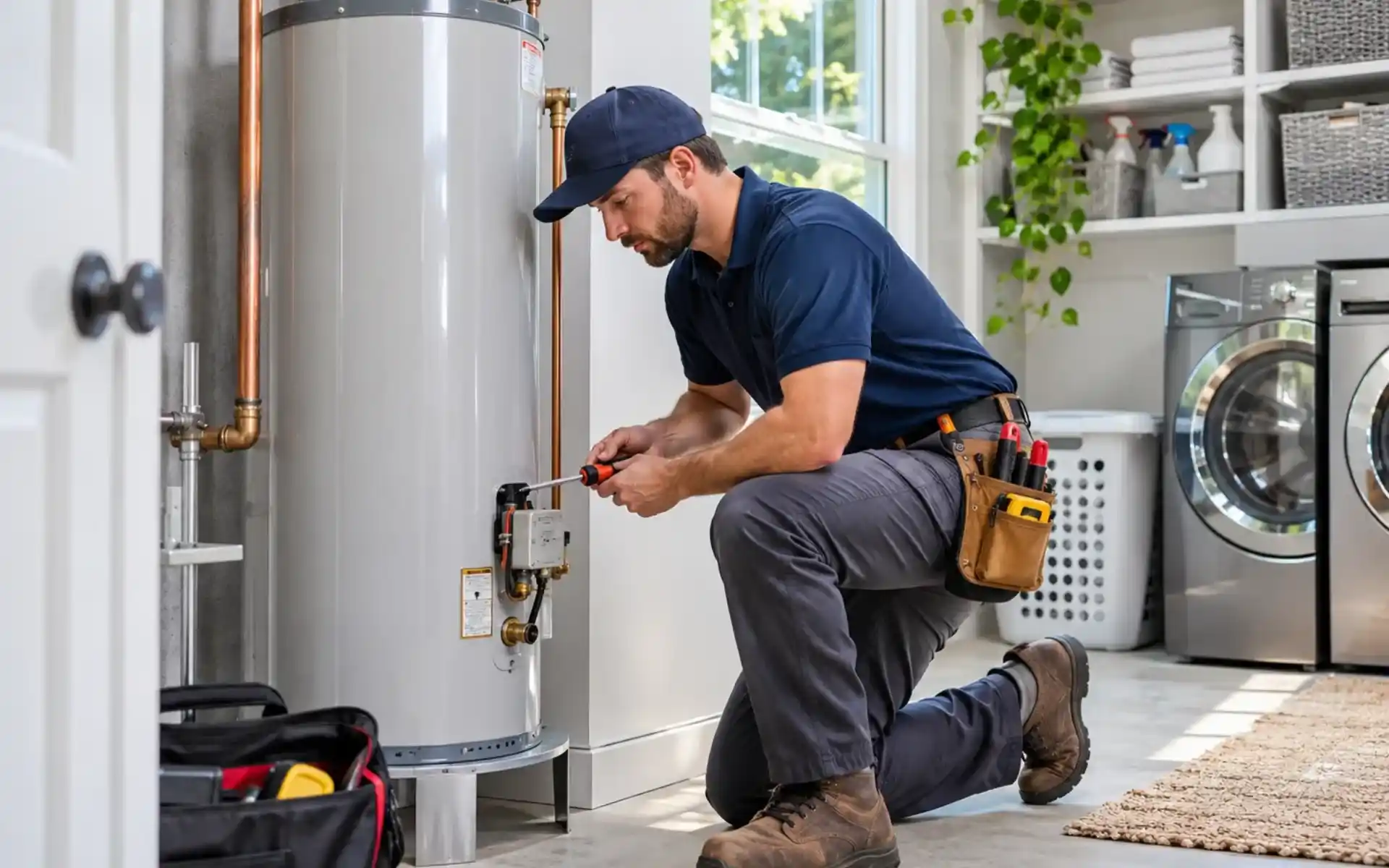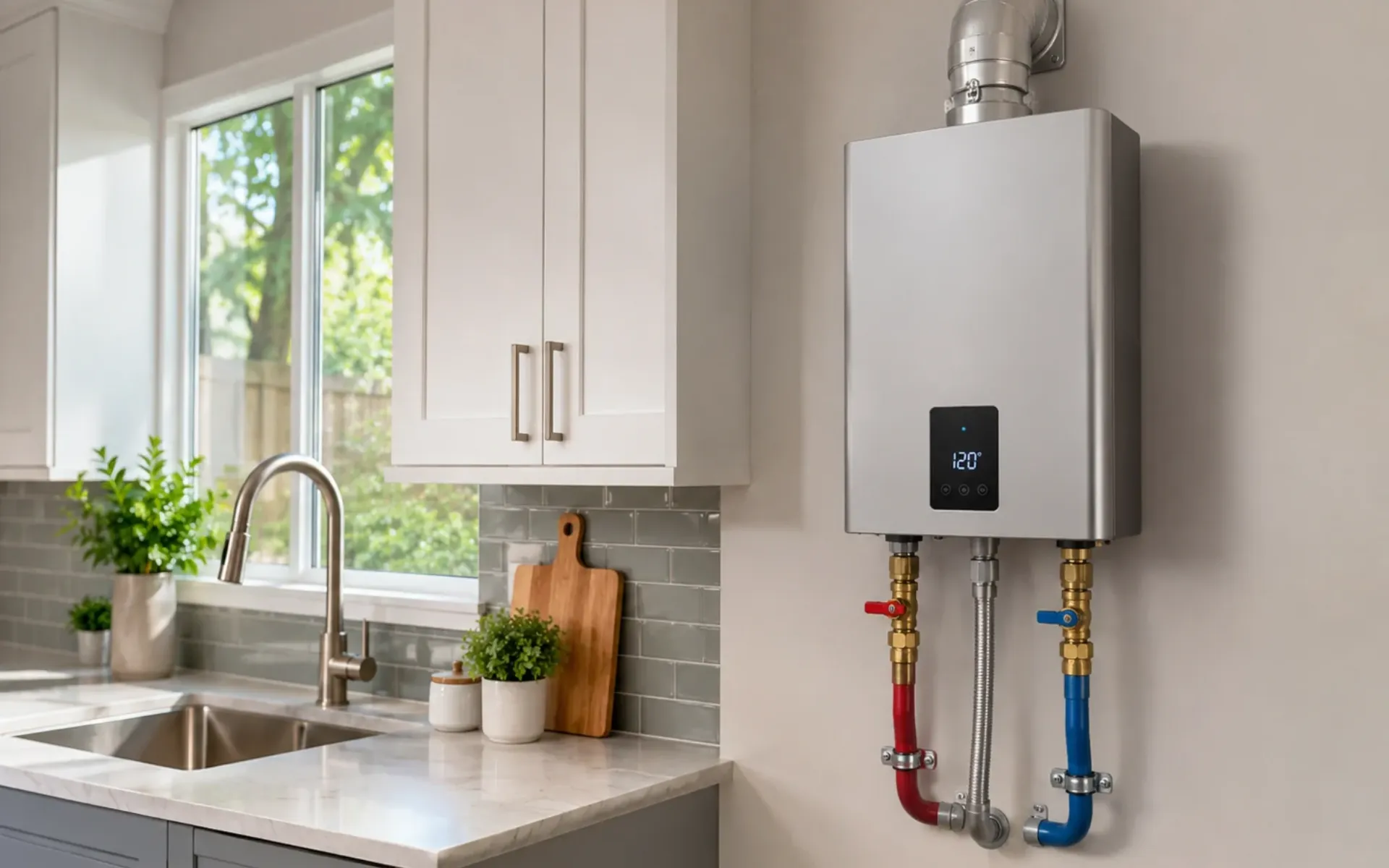
Rust in a tank-style water heater is iron oxide that forms when the steel tank or its metal parts react with water and oxygen. It signals that the protective barriers inside the heater, such as the glass lining and the anode rod, are wearing down or that moisture is attacking the unit from outside. Once rust starts, it cannot be reversed. It can only be removed from a surface, so the key question is how deep the damage goes. Rust is also a common warning that the heater is aging, so treating it early can prevent a bigger failure.
The practical difference is between cosmetic and internal corrosion. A few reddish spots on a pipe fitting or the outer jacket are often a minor moisture issue that can be cleaned and sealed. Brown hot water, a metallic taste or rust near the tank bottom usually points to the inside of the tank, where corrosion is more serious. Internal rust can eventually lead to leaks, reduced hot water output and water damage in the surrounding area. Knowing where the rust appears and what it looks like tells you whether a simple fix will work or replacement is the safer choice.
What Causes Rust in a Water Heater?
Rust forms when iron in the steel tank contacts water and oxygen, creating iron oxide through oxidation. A glass lining normally shields the steel, but tiny cracks let water reach the metal. The anode rod, usually magnesium or aluminum, is a sacrificial part that attracts corrosion so the tank does not. Its rusting is normal, but once it is consumed, the tank loses its main protection. Water quality strongly affects how quickly this happens. Hard water carries calcium and magnesium that form deposits trapping moisture against metal, while sediment collecting at the bottom holds heat and wears at the lining. Acidity can speed the damage, and so can iron in well water.
Temperature plays a role as well. Repeated heating and cooling makes metal expand and contract, creating stress points where moisture can penetrate coatings, and the lining itself can crack over time. Higher thermostat settings speed corrosion reactions, which is one reason a setting around 125°F is commonly recommended. Internal causes include a depleted anode rod, mineral buildup and high temperatures, while external causes add moisture from leaks, humidity and poor ventilation. These factors usually work together, which explains why identical heaters can age very differently in different homes.
Why Does a Water Heater Rust Within a Few Years?
A water heater usually rusts within a few years because of a depleted anode rod, aggressive water or neglected maintenance. Rust is often seen after about 5 to 7 years, depending on water quality and upkeep. Earlier rusting suggests a problem, such as poor water quality, a defective anode rod or installation issues. The anode rod typically corrodes after 3 to 5 years, so skipping its inspection leaves the steel exposed. Aggressive water, whether hard, acidic or iron-rich, wears down the glass lining faster. Sediment that is never flushed adds to the damage by trapping heat and moisture against the bottom of the tank. Without annual flushing, these heater problems compound, and the lining can fail well before the unit’s expected lifespan.
Normal aging is gradual. Conventional tank heaters typically last about 8 to 12 years, and some surface corrosion or a rusting anode rod is expected as that point approaches. Premature corrosion looks different: brown hot water, rust at the base or lower seam, or leaks in a heater only a few years old. The difference matters because early rust often has a fixable cause, such as an anode rod that is overdue for replacement or sediment that needs flushing. Catching it then can extend the tank’s life considerably instead of shortening it.
Installation and operating conditions also contribute. A damp basement or utility room with poor airflow keeps humidity high around the tank, and a thermostat set too high speeds up the chemical reactions that cause corrosion. Heating elements corrode too, because they sit in direct contact with the water they heat. If a young heater is already showing rust, the best response is to identify the cause rather than simply wait for it to worsen. A professional inspection can confirm whether the water supply, the anode rod or the installation is responsible.
External Causes: Leaks, Moisture and Condensation
External rust on a water heater usually comes from leaks, high humidity or condensation around the tank, fittings and pipe connections. Where the rust sits tells you which of these is responsible and how serious it is. Rust on top of the tank is usually caused by a slow leak at pipe connections or the temperature and pressure relief valve, and it is generally less severe than internal rust. Check the inlet and outlet connections, the nipples and the area around the T&P valve for reddish-brown streaks. Corroded fittings can often be addressed by replacing the part or tightening the joint once the leak is stopped.
Telling a leaking fitting from condensation helps avoid needless repairs. A leak tends to leave a trail of staining that begins at a joint and returns after cleaning, while condensation appears as general dampness on cold surfaces. Surface rust from condensation can often be handled with simple repair. Cut the power, let the tank cool, wire-brush to clean metal, then seal with rust-inhibiting primer and heat-resistant paint. This approach is for external rust only and does not fix corrosion inside the tank. If rust returns after cleaning, the moisture source has not been solved.
Rust on the outside of the tank wall deserves a different response. It most often means the inner tank has leaked through the lining and insulation, and that cannot be repaired. Replacement is essential in that case, and the unit should not be treated as a cosmetic problem. Poor ventilation makes matters worse, because humid basements and utility rooms without airflow keep moisture high and encourage corrosion. Where possible, fix leaks promptly, keep the area dry and improve air circulation around the heater.
Gas heaters add one more concern. Rust on the heat exchanger is serious because it can crack and leak carbon monoxide. If you notice a sulfur smell or suspect rust in that area, turn off the unit and call for service rather than trying to inspect it yourself. Galvanic corrosion is another external cause, occurring where two different metals meet, such as copper pipes and a steel tank. Dielectric unions electrically isolate those metals, and fixing existing galvanic damage requires a professional to shut off water and power, drain the tank, rebuild the connection and test it.
How to Tell if Your Water Heater Is Rusted
You can tell a water heater is rusted by checking for reddish-brown stains on the tank, discolored hot water and changes in how the unit performs. Start with a visual inspection of each area, then compare it with what comes from the taps. Visible rust or bubbling paint on the jacket, particularly at the base ring or lower seam, suggests moisture or internal failure. Brown hot water at multiple fixtures, often with a metallic taste or smell, points to internal corrosion. Performance changes also matter. Less hot water, uneven temperatures and higher bills with normal use can signal that rust and sediment are hurting efficiency. Popping or rumbling during heating comes from water trapped under sediment turning to steam.
Use the list below to match what you see with its likely meaning. Location matters, because rust at a fitting is a different problem from rust at the bottom of the tank. Moisture under the heater, even dampness that appears after the unit has been off for a few hours, can indicate an active or developing leak. Knocking, banging or whistling noises, leaks, odd smells or a metallic taste all warrant investigation. If you find several signs together, schedule a professional inspection to confirm corrosion and estimate what repair or replacement is appropriate.
Is the Rust Coming From the Heater or the Pipes?
To find out whether rust comes from the heater or the pipes, compare hot and cold water. Rust only in hot water points to the heater, while rust in cold water from a tap that does not pass through the heater points to the plumbing. Rusty cold water often indicates old galvanized pipes, and rusty water from a boiler system has its own source in that equipment. When rusty hot water appears with clear cold water, the heater is the likely culprit. Check more than one location. Rust that shows up in hot water at separate fixtures points to the heater, rather than to a single corroded pipe near one faucet. The location of visible rust changes the meaning as well.
Sometimes the cause is sediment rather than tank corrosion. Rust in hot water is often caused by sediment buildup at the tank bottom, and it clears after running the tap for a few minutes. Persistent rusty hot water with a metallic smell or taste is different, because it indicates a cracked lining and worn anode rod, and replacement is typically needed. A drained sample from the tank can help, since flushing will show whether the discoloration is loose sediment or ongoing corrosion. Run the water until you can judge whether it clears.
Follow these steps to run the test. 1. Run a cold tap that bypasses the heater and note the color. 2. Run a hot tap at a separate fixture and compare. 3. Let the hot water run a few minutes to see whether it clears. 4. Drain a sample from the tank to check for flakes or sediment. Rust only in cold water means looking at the pipes, while discolor only in hot water means looking at the heater. If the water stays brown after flushing, have the tank inspected, because worn lining and anode problems need professional confirmation.
Is Rust in a Water Heater or Hot Water Dangerous?
Rusty water is usually not a health hazard, because rust is oxidized iron and small traces are not poisonous. Discolored water should still not be ignored, because it signals corrosion that may lead to leaks. Heavy rust can affect taste and may worsen certain health conditions. Kids, older adults and immunocompromised people are more affected, and people with weak immune systems should avoid drinking it. If water is discolored in unusual ways or smells strange, consider other contaminants rather than assuming it is simply rust. Rust staining is common, but it does not prove the water is safe for every use.
Showering in rusty water is mostly a comfort and cosmetic issue. Iron can dry or irritate skin, worsen eczema, add an orange tint to light hair and clog pores. Rust also stains sinks, tubs, toilets and laundry, and iron particles wear seals and clog valves, shortening the lifespan of appliances and fixtures. The larger risk is structural. A corroded tank can leak or fail, causing water damage around the heater. For gas units, a rusted heat exchanger is a separate safety concern because of carbon monoxide, so the unit should be turned off and serviced.
Can Rust Be Removed or a Rusty Water Heater Repaired?
Rust can be removed from surfaces and some parts, but rust itself cannot be reversed. A rusty water heater can be repaired when the problem is limited to sediment, an anode rod, fittings or elements. Fixable items include flushing sediment, replacing a worn anode rod, swapping corroded fittings or valves, and replacing a rusted heating element. A corroded anode rod alone is an easy fix by a repair specialist. Surface rust on the outside can be cleaned and sealed, and rust on exterior pipes can be scrubbed with a brush and white vinegar. These repairs can extend the life of a heater that is otherwise sound.
A perforated tank or corroded tank wall is not fixable. A worn, cracking glass lining cannot be repaired, and significant internal rust usually requires replacing the tank. The decision comes down to where the damage is. If the problem is in a replaceable component, repair makes sense. If the tank itself is leaking, rusted through at the base or seam, or still producing rusty water after flushing, replacement is the better choice. Keep in mind that do-it-yourself repairs can void the manufacturer warranty, while professional service keeps it valid.
How to Flush and Clean Rust Out of the Tank
To flush a tank, shut off power or gas, close the cold water supply, connect a hose to the drain valve and drain until water runs clear. Let the tank cool first, and have a bucket or drain location ready. Flushing at least once a year removes sediment and improves efficiency, and households with heavy use or hard water may flush more often. A severely rusted tank should not be drained by you, because failure can accelerate once it is disturbed. 1. Turn off electricity or gas. 2. Shut off the cold water supply. 3. Attach a hose to the drain valve. 4. Open a hot tap and the drain valve. 5. Drain a few gallons until the water runs clear. Then close the valve, refill the tank, and restart power or gas.
After restarting, check the drain valve and connections for drips and confirm that the water runs clear at the taps. Mistakes to avoid include restarting an electric heater before the tank is full and draining a tank that is badly corroded. Skipping the power shutoff is another common error, and so is rushing the cooldown, which risks scalding. If water still comes out brown after flushing, the discoloration is probably coming from the tank lining or anode rod rather than loose sediment. At that point, a professional inspection will show whether the anode rod can be replaced or the tank itself is failing.
Dealing With Rusted Elements, Nipples and Pipes
Rusted heating elements and seized nipples are best handled carefully, and often by a professional. The heating element corrodes because it sits in direct contact with the water it heats, so removal begins with shutting off power, cooling and draining the tank. Corroded parts can seize and break when forced, which risks leaks or damaged threads. Replacing an element or swapping connections is a straightforward repair when the tank itself is sound. Rusted nipples and corroded connections are often a sign of leaks or galvanic corrosion, where dissimilar metals meet. Dielectric unions help prevent this by isolating copper pipes from the steel tank.
Call a licensed plumber when parts will not loosen, when corrosion is spreading to the tank, or when the repair involves shutting off water and power, draining the tank, rebuilding connections and testing. Professional work also protects the manufacturer warranty, which DIY repairs can void. Rusted exterior pipes can sometimes be cleaned with a brush and white vinegar, but heavy flaking calls for replacement. If rust on a fitting keeps returning, the underlying leak or metal contact needs to be fixed, not just cleaned.
Rust in the Drain Pan or at the Tank Bottom
Rust in the drain pan or at the tank bottom usually means moisture is reaching the base, and rust at the bottom often indicates a corroding steel tank. A leak may be present or coming, and replacement is likely. The drain pan collects water from leaks and condensation, so rust there shows that something has been wet. Look at the base ring and lower seam for rust streaks or bubbling paint, and feel for dampness around the unit. Rust at these spots is more concerning than rust on a top fitting.
To separate an active leak from old drips, dry the pan completely and check again after a few hours. Dampness that returns after the unit has been off for a while suggests a current leak, while dry rust marks may be left from an earlier problem. Pan rust can also come from a leaking fitting above, a drain valve or condensation. Tracing the water upward from the pan can show whether it comes from a connection or from the tank itself. A tank that leaks from the bottom cannot be repaired.
If you find an active leak, turn off the cold water supply and the power or gas to the unit. Then contain the water and arrange for service. Do not drain a severely rusted tank yourself, because failure can accelerate once it is disturbed. A professional can confirm corrosion, flush sediment if appropriate and estimate replacement if needed. A mineral sediment issue at the bottom can sometimes be fixed with flushing and anode rod service, but a corroded tank bottom cannot.
Taking prompt action matters because bottom rust can lead to water damage and emergency costs. A professional checkup costs about $150 now versus about $1,500 in emergency repairs later. Acting early also helps when the cause is limited, such as an overdue anode rod or a loose fitting. Replacing a heater before it fails lets you choose the new unit and schedule the work calmly. Waiting until the pan overflows turns an inconvenience into a flooded utility room.
When Does a Rusty Water Heater Need to Be Replaced?
A rusty water heater needs replacement when the tank leaks, is heavily corroded or still produces rusty water after flushing. Rust at seams or the base, recurring leaks after repairs and advanced corrosion on an older tank also point to replacement. Age matters too. Most tanks last up to 10 to 12 years with proper maintenance, and a heater around a decade old is worth replacing with a more energy-efficient model. Frequent repairs add up, and two or more major repairs often make a new unit more cost-effective. Rust and sediment can also raise energy bills, so a bill spike with normal use may signal a failing heater.
| Criteria | Repair-appropriate | Replace-appropriate |
|---|---|---|
| Rust location | Surface or fitting | Base, seam or tank wall |
| Water | Clears after flush | Stays brown |
| Age | Under a decade | Around 10-12 years |
The table compares repair and replacement for common situations. A professional assessment adds value because it confirms how deep the corrosion goes and estimates what each option would cost. Surface rust from condensation, light sediment cleared by a full flush and an anode rod past end of life are likely repair scenarios. Persistent brown water despite maintenance suggests the lining has failed. When the evidence is mixed, an inspection helps you avoid replacing a sound tank or repairing one that is about to fail.
How to Prevent Rust in a Water Heater
You can prevent rust with regular maintenance, controlled temperature and attention to moisture. Flush the tank at least once a year, and have the anode rod inspected, replaced when significantly corroded, and checked again at tune-ups. Check the temperature and pressure relief valve regularly, and keep the thermostat around 125°F, since higher settings speed corrosion. Inspect heaters in basements and damp locations regularly, fix leaks promptly and keep air moving around the unit. These small steps protect the lining and extend tank life.
If rust keeps coming back, water quality may be the cause. Water softening or filtration reduces minerals and keeps the tank cleaner in homes with extra-hard water, and treatment can address mineral content and pH. When replacing a unit, consider options that resist rust better, such as stainless steel or glass-lined tanks. A tankless unit avoids the standing water that causes tank corrosion. Annual professional service is a modest cost compared with emergency repairs and keeps the warranty valid.
All Know About Rusty Water Heaters
Is rust normal over time? Some rust is normal as a heater ages, especially on the anode rod, which is meant to corrode. Rust in the water or on the tank, however, deserves attention. How long does corrosion take? Rust typically shows after about 5 to 7 years, varying with water quality and maintenance. Conventional tanks usually last about 8 to 12 years, so rust that appears much earlier suggests a problem to investigate. Annual flushing and anode rod service help delay it.
Can showering in rusty water cause harm? Usually not seriously. Rusty water is generally not a health hazard, though iron can dry or irritate skin, worsen eczema and tint light hair orange. It can also stain tubs, fixtures and laundry. People with eczema or weak immune systems may want to be more careful. If the water has an unusual smell or other warning signs, have it checked, because the cause may not be simple rust.
Can a hot water heater cause rusty water? Yes. Sediment at the bottom or a corroding tank can turn hot water brown while cold water stays clear. If the water clears after running the tap for a few minutes, sediment is the likely cause. If it stays discolored, the lining or anode rod may be failing. Rust is irreversible, so persistent rusty hot water often means it is time to plan for replacement.
Frequently Asked Questions
Is it normal for a water heater to develop some rust over its lifespan?
Some degree of internal wear is expected as a tank ages, but visible rust in the water or on the tank’s exterior generally means a protective barrier, either the anode rod or the internal lining, has already failed rather than being a routine part of normal operation. Catching it early, particularly a depleted anode rod, often allows for a straightforward repair.
Can flushing my water heater fix rusty water?
Flushing can resolve rusty water caused by loose sediment, but it won’t fix rust caused by a depleted anode rod or a corroding tank interior, since those require rod replacement or full replacement respectively. Flushing is often done alongside a rod check rather than as a standalone fix.
How long does an anode rod typically last?
Anode rod lifespan depends on water chemistry, usage, and the rod’s material, generally running several years before needing replacement. A specific replacement interval should be confirmed against the manufacturer’s recommendation for the unit in question.
Does rust in my water heater mean I need a whole new unit?
Not necessarily. Rust caused by a worn anode rod or sediment buildup is usually repairable, while rust from a breached tank wall, evidenced by external rust on the tank’s body or a persistent leak, generally does require replacement. A professional inspection can confirm which situation applies.
Why is my cold water also coming out rusty?
Rust affecting both hot and cold water points away from the water heater and toward either corroding household plumbing, such as aging galvanized pipe, or iron-related bacteria in the incoming water supply. A water quality test can help confirm whether the issue originates in the supply itself.
Can I replace the anode rod myself?
Anode rod replacement is a task some homeowners attempt, but it involves working with a pressurized tank and, on gas units, components near the burner assembly, so professional replacement reduces the risk of a mistake that could cause a leak or other issue. A professional can also confirm the rod is actually the correct fix for the rust observed.
Need help with water heaters?
Explore the relevant services available from Anaheim Plumbing.