Table of Contents
A water heater gas valve is the control unit that regulates gas flow to the burner, manages the thermostat and pilot, and shuts off gas as a safety measure. Replacing one involves gas line connections and precise wiring matches, which makes it regulated work best left to a licensed technician.
A water heater’s gas valve does more work than its plain metal housing suggests, since it’s simultaneously the thermostat, the pilot control, and a safety shutoff all built into one unit. When it fails, symptoms can range from a pilot that won’t stay lit to water that never gets hot at all. This article explains what the valve actually does, the different types you’ll find across brands and models, the signs that point to a real valve failure rather than a cheaper fix, and what the replacement process actually involves, along with why it’s not a project to take on yourself.
What Is a Water Heater Gas Valve?
A water heater gas valve, also called a gas control valve, is the component that regulates how much gas reaches the burner, houses the thermostat that controls water temperature, and manages the pilot light or ignition system.
It sits near the base of a gas water heater, usually with a dial for setting temperature and a knob for switching between pilot, on, and off. Beyond controlling normal operation, the valve also includes a built-in safety function: if it detects a problem, such as a pilot that isn’t lit, it stops gas flow rather than letting unburned gas continue into the burner compartment.
What Are the Types of Water Heater Gas Valves?
The two main types of water heater gas valves are standing-pilot valves, which keep a small flame burning continuously, and electronic ignition valves, which light the burner only when heat is needed.
A standing-pilot valve has a separate pilot flame that stays lit at all times, so the main burner can ignite from it instantly whenever the thermostat calls for heat; this is the older, more common design and doesn’t require electricity to operate.
An electronic ignition valve skips the continuously burning pilot and instead uses a spark or hot-surface igniter triggered only when needed, which is more common on newer, sealed-combustion water heaters. Some electronic ignition models also include wired connections to a roll-out switch, a thermal fuse in the burner compartment that shuts off gas if it detects a flash fire, and that wiring has to be correctly matched during any replacement.
Beyond ignition style, gas valves also vary by manufacturer, with White Rodgers, Robert Shaw, and Honeywell among the most common brands found across major water heater manufacturers like A.O. Smith, Rheem, State, and Bradford White; matching the exact brand and model matters more here than with most other water heater parts.
What Are the Signs a Gas Valve Has Failed?
The main signs a gas valve has failed are a pilot that won’t stay lit despite a good thermocouple, water that’s scalding hot or never heats at all, or a control knob that’s stuck or seized.
A pilot that repeatedly goes out even after a proper relighting attempt can point to the valve itself rather than the more commonly blamed thermocouple, especially if a thermocouple has already been ruled out. Water that runs consistently too hot, or doesn’t heat at all despite the pilot staying lit, suggests the valve’s internal thermostat function isn’t regulating gas flow correctly. A knob that won’t turn between pilot, on, and off positions is a more straightforward mechanical failure. If you ever smell gas near the water heater, treat it as a gas leak rather than a valve symptom: leave the house immediately and call your gas utility or emergency services from a safe location rather than investigating further.
How Do You Rule Out Other Causes First?
Before assuming a gas valve has failed, rule out the thermocouple and the pilot assembly itself, since true valve failure is relatively uncommon compared to these cheaper, more frequently failing parts.
The thermocouple, a small sensor that confirms the pilot flame is lit, is both a more common point of failure and a far less expensive part to replace, so a pilot that won’t stay lit is statistically more likely to be a thermocouple issue than a bad valve. A dirty or clogged pilot orifice can produce a similar symptom by disrupting the flame itself. Checking your water heater’s age and remaining warranty coverage is also worth doing before committing to a valve replacement, since many valves carry a manufacturer warranty for a number of years, and a unit already past 8 to 12 years old may be a better candidate for full replacement than a major component repair.
What Does Gas Valve Replacement Actually Involve?
Gas valve replacement involves shutting off and purging the gas line, disconnecting the old valve, installing an exact-match replacement, reconnecting the wiring on models that use a roll-out switch, and leak-testing every connection before relighting the unit.
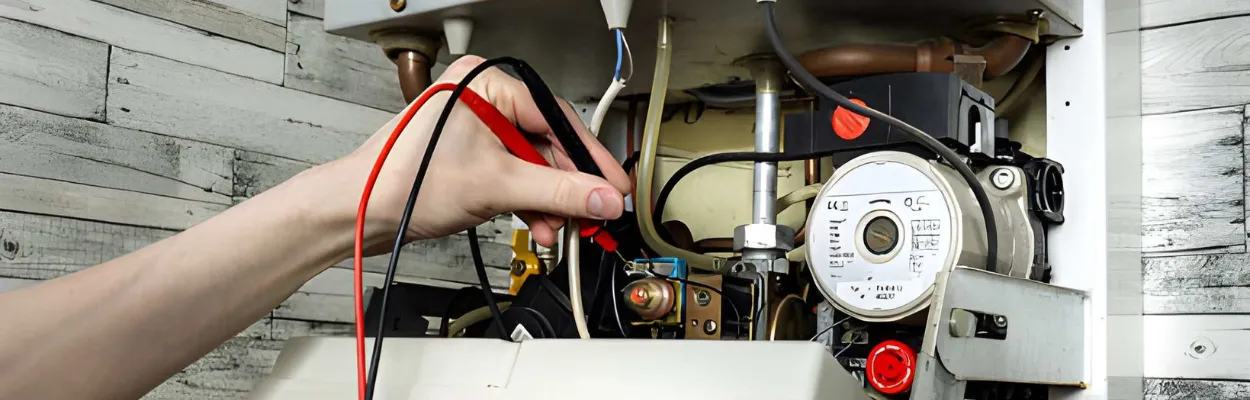
A technician starts by shutting off the gas supply and relieving pressure in the line, then disconnects the fittings connecting the valve to both the gas supply and the burner assembly. Because valves aren’t universally interchangeable, especially on models with a wired thermal fuse connection, matching the exact replacement to the original valve’s brand, model, and configuration matters for the unit to function and pass inspection correctly. Once the new valve is installed and reconnected, every fitting gets tested for leaks, commonly with a soap-and-water solution that bubbles if gas is escaping, before the pilot is relit and the system is confirmed to be working normally.
Why Isn’t This a DIY Project?
Gas valve replacement isn’t a DIY project because it involves opening and resealing gas line connections, and an improperly sealed fitting can create a genuine gas leak risk inside your home.
Beyond the immediate safety concern, many jurisdictions treat gas appliance work as regulated, sometimes requiring a permit or inspection, which a licensed plumber or gas technician is set up to handle correctly. Getting the wiring wrong on a model with a roll-out switch, or failing to fully purge air from the line before relighting, are both mistakes that are easy to make without training and hard to catch until something goes wrong. If you’re seeing signs of a failing gas valve, the safest and most reliable path is having a licensed technician diagnose and replace it rather than attempting the disconnection and reconnection yourself.
Frequently Asked Questions
How much does a water heater gas valve cost to replace?
The valve itself is commonly priced somewhere in the $150 to $300 range, with labor added on top for professional installation.
Is it really the gas valve, or could it be the thermocouple?
A thermocouple failure is more common and less expensive to fix than a true gas valve failure, so it’s worth ruling out first. A pilot that won’t stay lit even after a fresh thermocouple has been installed is a stronger sign the valve itself is the problem.
Can I replace a gas valve myself if I’m handy with tools?
This isn’t recommended regardless of DIY experience, since the job involves gas line connections that must be perfectly sealed and, on some models, wiring that has to match the original configuration exactly. A licensed plumber or gas technician has the training and testing equipment to confirm the work is safe.
What happens if a gas water heater’s safety shutoff is triggered?
The valve is designed to stop gas flow if it detects an unsafe condition, such as an unlit pilot or, on models with a roll-out switch, a flash fire in the burner compartment. This is a protective feature working as intended, though a valve that trips repeatedly should be diagnosed by a professional rather than reset indefinitely.
Do all gas water heaters use the same type of valve?
No. Older and standard models typically use a standing-pilot valve that keeps a small flame burning continuously, while many newer, sealed-combustion units use electronic ignition instead. The valve’s brand and exact configuration also vary by water heater manufacturer and model.
Should I replace the valve or the whole water heater?
This depends mainly on the unit’s age and overall condition. A valve replacement is generally the more cost-effective option on a heater with years of expected life left, while a unit already past 8 to 12 years old may be a better candidate for full replacement, since other components are likely approaching the end of their service life too.
Getting a Gas Valve Diagnosed
If your water heater’s pilot won’t stay lit, the water runs too hot or not at all, or you suspect the gas valve has failed, a licensed plumber can confirm the cause and handle the replacement safely.