Table of Contents
A water heater heating element is the electric component submerged in the tank that heats water through resistance, and most electric units have two, an upper and a lower. When one fails, water runs lukewarm or runs out fast, and replacing it is a task many homeowners can do with basic tools.
An electric water heater that suddenly delivers only warm water, or hot water that runs out much faster than it used to, is often pointing to one specific part rather than the whole unit. The heating element does the actual work of warming the water, and it’s also one of the more replaceable components inside the tank.
This article covers what a heating element actually is, the different types installed across various water heaters, the symptoms that point to a failed one, and the full replacement process from shutting off power to restoring service. It also covers where this task crosses from a reasonable DIY project into professional territory.
What Is a Water Heater Heating Element?
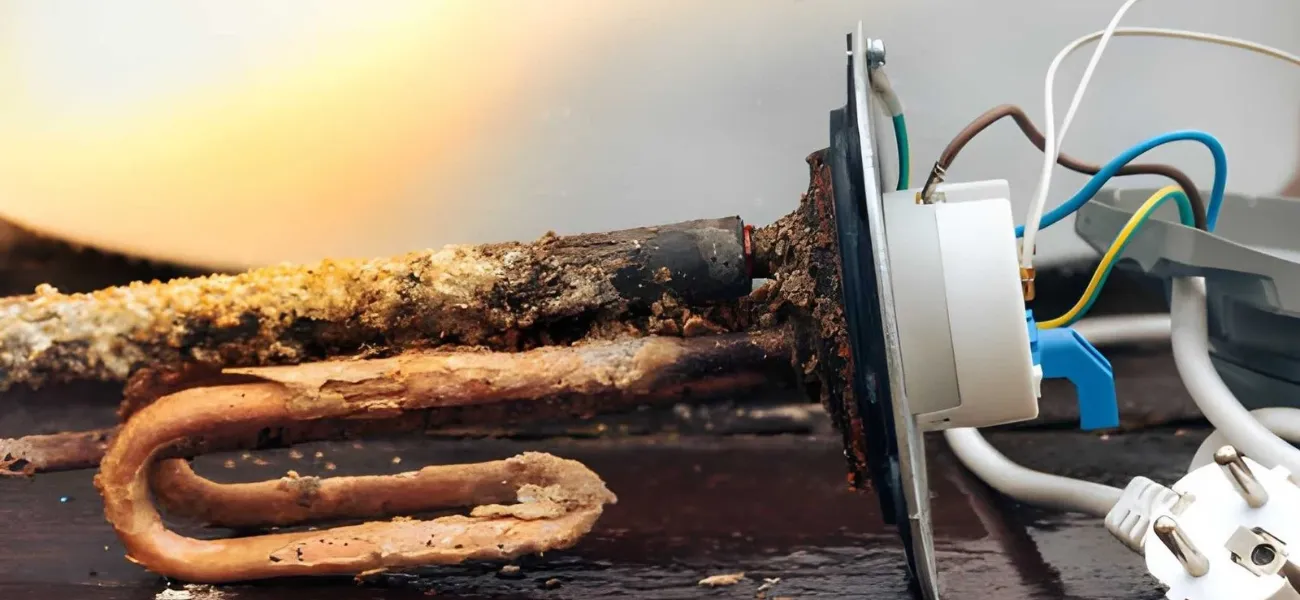
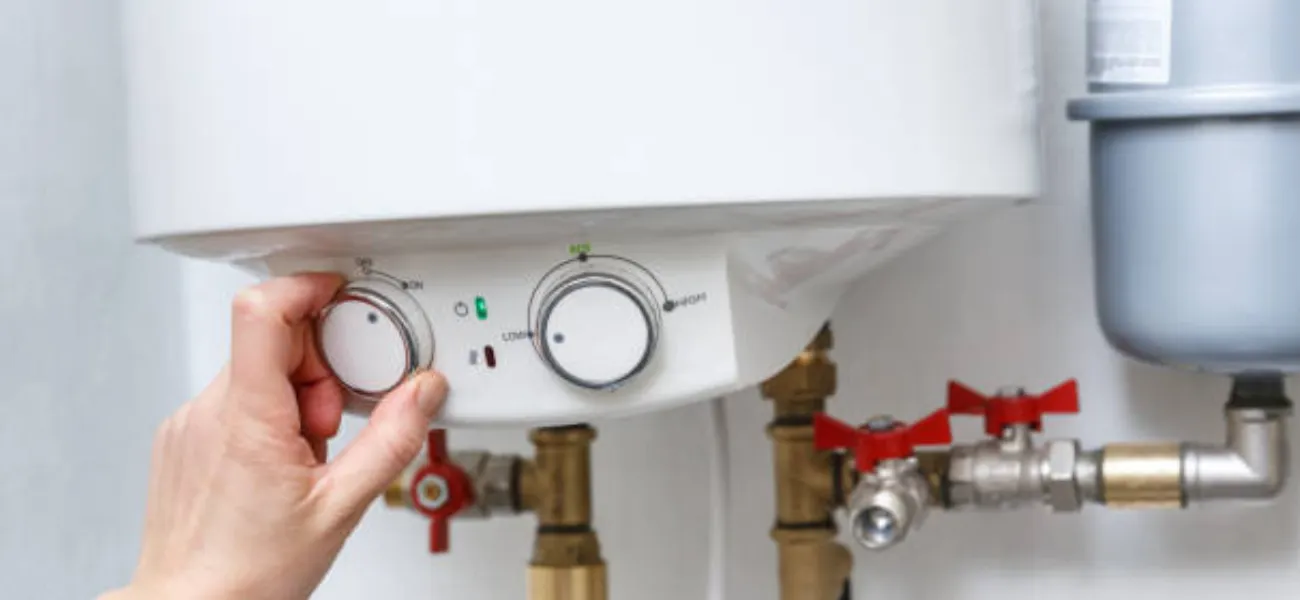
A heating element is a metal rod submerged directly in the water inside an electric water heater’s tank, and it heats the surrounding water through electrical resistance when current passes through it. Most residential electric water heaters use two of these elements, an upper one near the top of the tank and a lower one near the bottom.
Each element is controlled independently by its own thermostat, and in most residential wiring configurations, only one element heats at a time rather than both running simultaneously. This is why a single failed element often produces a partial hot water problem rather than a complete loss of hot water.
Types of Water Heater Heating Elements
Water heater elements are classified by how they physically attach to the tank and how their heat is distributed across the element’s surface, and matching both correctly matters as much as matching voltage and wattage. Getting either wrong can mean an element that doesn’t fit or doesn’t perform the way the original did.
Screw-In vs. Flange-Mounted Elements
Most electric water heaters manufactured today use a screw-in element, which threads directly into a fitting welded onto the tank and is removed or installed with a specialized element wrench. Older water heaters sometimes used a flange-mounted element instead, held in place by four bolts around a flat gasket rather than a threaded connection. Adapter kits exist to convert a flange-style opening to accept a screw-in element, though compatibility should be confirmed for the specific tank.
High-Watt Density vs. Low-Watt Density Elements
A high-watt-density element concentrates its heating output over a smaller surface area, while a low-watt-density element spreads the same wattage over a larger surface, running cooler per square inch. Low-density elements are commonly recommended for areas with harder water, since mineral buildup tends to accumulate faster on the hotter surface of a high-density element, which can shorten its service life.
Signs a Heating Element Has Failed
A failed heating element usually shows up as lukewarm water, hot water that runs out faster than expected, or no hot water at all, with the specific pattern depending on which element, upper or lower, has stopped working. Matching the symptom to the likely element narrows down the problem before any tools come out.
| Symptom | Likely Cause |
|---|---|
| No hot water at all | Failed upper element, since it’s typically the first to heat and often shares a circuit path with the lower element |
| Hot water available but runs out quickly | Failed lower element, since the bottom portion of the tank isn’t reheating |
| Water is lukewarm but never fully cold or fully hot | Element partially failed or heating inconsistently |
| Breaker trips repeatedly when the water heater runs | Element has likely shorted internally and needs replacement |
| Discolored or rusty water alongside heating problems | Possible tank corrosion in addition to, or instead of, an element issue |
What You’ll Need Before Replacing a Heating Element
Replacing a heating element requires a small, specific set of tools: a non-contact voltage tester, a garden hose, a screwdriver, and either an element wrench or a deep socket sized for the element’s hex head. Having the correct replacement element on hand before starting avoids leaving the tank drained and out of service longer than necessary.
The replacement element itself needs to match the original in three ways: flange style (screw-in or flange-mounted), voltage and wattage, and ideally watt density if switching to a lower-density option intentionally. This information is typically printed on the water heater’s data plate or on the old element itself once removed.
How Do You Replace a Water Heater Heating Element?
Replacing a heating element involves shutting off power and water, draining the tank to below the element, removing the old element, installing the new one, and refilling the tank completely before power is restored. Each step matters, and skipping the order can create a real safety issue.
Step 1: Shut Off Power and Confirm It’s Off
Locate the water heater’s circuit breaker and switch it off. Before touching any wiring, use a non-contact voltage tester at the element’s access panel to confirm no power is present. This confirmation step is not optional, since the panel gives no visual indication on its own of whether the circuit is actually dead.
Step 2: Shut Off the Water Supply and Drain the Tank
Turn off the cold water supply valve above the water heater. Connect a garden hose to the tank’s drain valve, run the hose to a floor drain or outside, and open the valve to drain the tank down to below the level of the element being replaced. Replacing only the upper element generally requires less draining than replacing the lower one.
Step 3: Remove the Old Element
Remove the access panel and insulation covering the element, then disconnect the two wires from its terminals. For a screw-in element, use an element wrench or a 1½-inch deep socket to turn it counterclockwise until it’s free. For a flange-mounted element, remove the four bolts holding the flange in place. Once loose, pull the element straight out of the tank.
Step 4: Install the New Element
Clean the opening and threads where the gasket seats before installing the replacement. Fit a new gasket onto the new element, position it in the tank opening, and thread or bolt it into place. A screw-in element should be turned clockwise until snug, without overtightening, and a flange-mounted element’s bolts should be tightened evenly in a crisscross pattern to seat the gasket without warping it.
Step 5: Refill the Tank Before Restoring Power
Close the drain valve, turn the cold water supply back on, and open a hot water tap elsewhere in the home to let air escape as the tank fills. Once water runs steadily from that tap with no sputtering, the tank is full and the air is cleared. Only after the tank is completely full should power be restored at the breaker, since running an element without water covering it can destroy the new element almost immediately.
When Should You Call a Professional Instead?
Call a licensed plumber or electrician if you’re not comfortable working with electrical wiring, if the breaker trips again after replacement, or if the tank shows other signs of trouble like rust or a leak alongside the element failure. Replacing an element is a manageable task for many homeowners, but it isn’t the right project for everyone.
- The circuit breaker trips again after the new element is installed and powered on.
- There’s any uncertainty about correctly identifying whether the power is fully off.
- The water heater shows rust, corrosion, or other signs of a problem beyond the element itself.
- Both elements need replacement and the unit is old enough that a broader inspection makes sense first.
Water Heater Repair Services covers broader diagnosis and repair for water heater issues beyond a single element replacement.
Frequently Asked Questions
How do I know if it’s the heating element or the thermostat that failed?
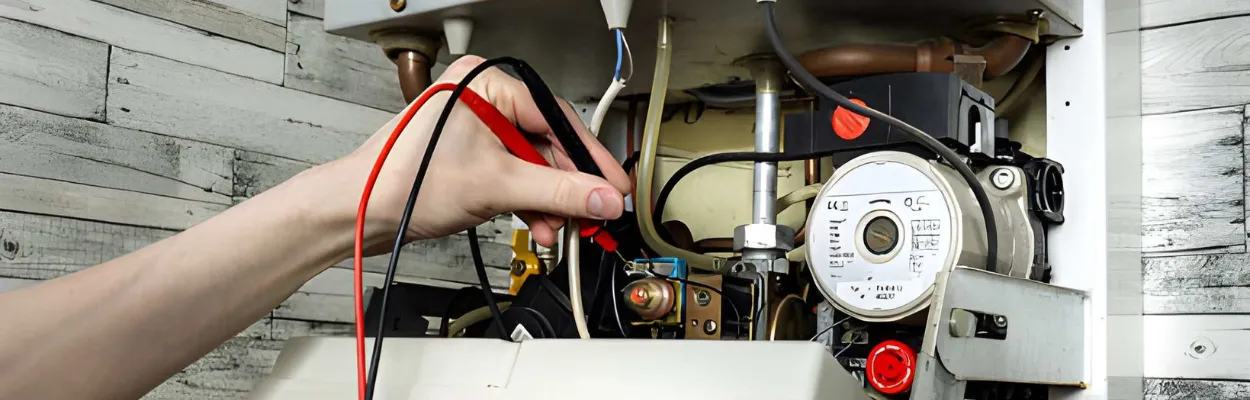
- The two can produce similar symptoms, which is why a multimeter continuity test on both components is the most reliable way to isolate the actual failure rather than assuming based on symptoms alone. If you’re not comfortable performing that test yourself, a professional can check both in the same visit.
Can I replace just one heating element, or do both need to be replaced together?
- Replacing only the failed element is generally fine, and the two elements don’t need to be replaced as a pair. That said, if one has failed due to age or mineral buildup, the other may not be far behind, which is worth keeping in mind on an older unit.
Is it safe to replace a heating element myself?
- Many homeowners replace a heating element themselves successfully by following the correct order of steps, particularly confirming power is off with a non-contact tester before touching any wiring. If you’re not confident handling electrical components, even with the power off, having a professional do the replacement is a reasonable choice.
What happens if I restore power before the tank is full?
- Running a heating element without water fully covering it can cause the element to overheat and fail almost immediately, since it’s designed to transfer heat into surrounding water rather than operate in open air. Always confirm the tank is completely full, with steady flow from a hot tap elsewhere in the home, before switching the breaker back on.
How long does a water heater heating element typically last?
- Element lifespan varies with water hardness, usage, and the specific element’s watt density, with lower-density elements generally lasting longer in areas with harder water. A specific expected lifespan should be confirmed against the manufacturer’s documentation for the element in question.
Do I need a permit to replace a water heater heating element myself?
- Replacing a single heating element is generally considered a minor repair rather than new installation work, though permit requirements vary by jurisdiction and should be confirmed locally if there’s any uncertainty.
Next Steps
If your water heater is producing lukewarm water or running out of hot water quickly, Anaheim Plumbing can diagnose whether the element, thermostat, or another component is the cause.