Table of Contents
A water heater thermostat controls how hot the stored water gets, and the type depends on fuel source: gas units use a single thermostat built into the gas control valve, while electric units typically use two separate thermostats, one for the upper heating element and one for the lower.
Inconsistent hot water, whether it runs out fast or never gets properly hot, often traces back to a thermostat rather than the tank itself. But “the thermostat” means something different depending on whether the water heater runs on gas or electricity, and electric units add a second layer most people don’t expect.
This article covers the specific types of water heater thermostats, what each one actually controls, the symptoms that point to a specific one failing, and what can be safely checked without opening up the unit’s electrical components.
What Does a Water Heater Thermostat Actually Control?
A water heater thermostat monitors the water temperature inside the tank and signals the heating source, either a gas burner or an electric heating element, to turn on or off to maintain the temperature setting selected on the dial. It’s the component responsible for keeping stored water within a consistent range rather than letting it drift hot or cold.
Because gas and electric water heaters generate heat through entirely different mechanisms, the thermostat controlling that process looks and functions differently between the two fuel types, even though the end goal, a consistent water temperature, is the same.
Why the Distinction Between Types Matters
Knowing which type of thermostat a water heater uses affects more than just curiosity. It determines what a homeowner can safely check, what parts are involved if something fails, and even how a repair is priced, since replacing a single electric thermostat is a very different job from replacing an entire gas control valve. Assuming one type behaves like the other is a common source of confusion when troubleshooting a hot water problem.
Gas Water Heater Thermostats
A gas water heater uses a single thermostat built directly into the gas control valve, the same assembly that also houses the pilot light controls and safety components. This design means the thermostat isn’t a separate, replaceable part on its own.
The dial on the front of a gas control valve, usually marked with a temperature range or settings like “low,” “medium,” and “hot,” adjusts this built-in thermostat directly. When the water cools below the set point, the thermostat opens the gas valve to the main burner, and once the water reaches the target temperature, it shuts the burner off again. Because the thermostat is integrated into the valve rather than a standalone component, a failing gas thermostat generally means replacing the entire gas control valve rather than swapping out a single part.
Why Gas Thermostats Aren’t Sold as Standalone Parts
Manufacturers build the thermostat into the gas control valve as a single sealed assembly, partly because the valve also regulates gas flow to both the pilot and main burner, functions that are closely tied to the thermostat’s own operation. Separating these into individual replaceable parts would add complexity and additional failure points to a component that’s directly responsible for controlling combustion gas. This is why, unlike an electric thermostat, there isn’t a simple parts swap available when a gas thermostat is suspected of failing.
Electric Water Heater Thermostats
A standard electric water heater uses two separate thermostats, an upper thermostat controlling the top heating element and a lower thermostat controlling the bottom one, each mounted behind its own access panel on the side of the tank. This dual arrangement is different enough from a gas unit’s single thermostat that it’s worth understanding both roles separately.
The Upper Thermostat’s Role
The upper thermostat does more than just control the top element. In most residential setups, it also manages power flow down to the lower thermostat, heating the top portion of the tank first and only allowing the lower element to activate once the top has reached temperature. Because of this added responsibility, a failing upper thermostat often results in no hot water at all, rather than just a partial loss.
The Lower Thermostat’s Role
The lower thermostat controls only the bottom heating element, without the added responsibility of managing the unit above it. A failing lower thermostat typically shows up differently than a failing upper one: hot water is available initially, since the top of the tank still heats normally, but it runs out faster than expected because the lower portion of the tank isn’t being reheated properly.
The High-Limit Safety Switch
Most electric water heaters also include a high-limit switch, sometimes called a reset switch, positioned alongside the upper thermostat. This switch is a separate safety component, not a thermostat itself, and it trips to cut power to the heating elements if water temperature rises to a level considered unsafe, regardless of what the thermostat dial is set to. A tripped high-limit switch can look identical to a failed thermostat from the outside, since both result in a complete loss of heating.
How Do the Two Electric Thermostats Communicate With Each Other?
Most residential electric water heaters use what’s called non-simultaneous operation, meaning the upper and lower elements are wired so only one heats at a time rather than both drawing power together. This wiring detail explains some thermostat behavior that can otherwise seem confusing.
Some water heaters, typically those built for simultaneous operation, are wired so both elements can heat at once, which requires a larger breaker and heavier wiring than the non-simultaneous design most homes use. Whether a specific unit is wired one way or the other is usually noted on a label inside the access panel, and this distinction affects the electrical testing pattern a technician expects to see, though it isn’t something a homeowner typically needs to identify without opening the unit.
What Non-Simultaneous Wiring Means in Practice
In a non-simultaneous setup, the upper thermostat effectively has priority. It heats the top of the tank first, and only once that portion reaches its set temperature does it hand control over to the lower thermostat, allowing the bottom element to activate. This design keeps the unit’s total power draw lower at any given moment, which is part of why non-simultaneous units can run on a smaller breaker than a simultaneous setup that allows both elements to draw power together.
Water Heater Thermostat Types at a Glance
Comparing gas and electric thermostat setups side by side highlights how differently each system is structured, even though both aim to keep water at a consistent temperature. The table below summarizes the key differences.
| Feature | Gas Water Heater Thermostat | Electric Water Heater Thermostats |
|---|---|---|
| Number of thermostats | One, built into the gas control valve | Two, upper and lower, each separate |
| Location | Front of the gas control valve | Behind access panels on the side of the tank |
| Replacement if faulty | Entire gas control valve is replaced | Individual thermostat can typically be replaced alone |
| Associated safety component | Built into the same valve assembly | Separate high-limit switch near the upper thermostat |
| Typical adjustment method | External dial with temperature range or settings | Screwdriver-adjustable dial behind the access panel |
What Symptoms Point to a Specific Thermostat Problem?
Matching the specific hot water symptom to the pattern below helps narrow down which thermostat, or which type of unit issue, is most likely responsible before any inspection begins. These patterns aren’t a substitute for a professional diagnosis, but they’re a useful starting point.
| Symptom | Likely Cause |
|---|---|
| No hot water at all (electric unit) | Failed upper thermostat or tripped high-limit switch |
| Hot water runs out faster than expected (electric unit) | Failed lower thermostat or lower heating element |
| Water never gets hot enough, gas unit | Thermostat within the gas control valve, or a pilot/burner issue |
| Water is scalding hot | Thermostat stuck in the “on” position, or dial set too high |
| Inconsistent temperature, some days fine and others not | Loose wiring connection or a thermostat beginning to fail intermittently |
How Can You Safely Check a Water Heater Thermostat?
Checking the external temperature dial setting and comparing your hot water symptoms against the pattern table above are the two safe, homeowner-level checks available before deciding whether professional service is needed. Both can be done without opening any electrical access panel.
Confirming the dial itself is set to the intended temperature, typically in the 120°F range for most households, rules out the simplest possible explanation before assuming a part has failed. From there, timing how quickly hot water runs out, or noting whether there’s no hot water at all versus a partial supply, helps identify which thermostat is the likely cause using the pattern described above.
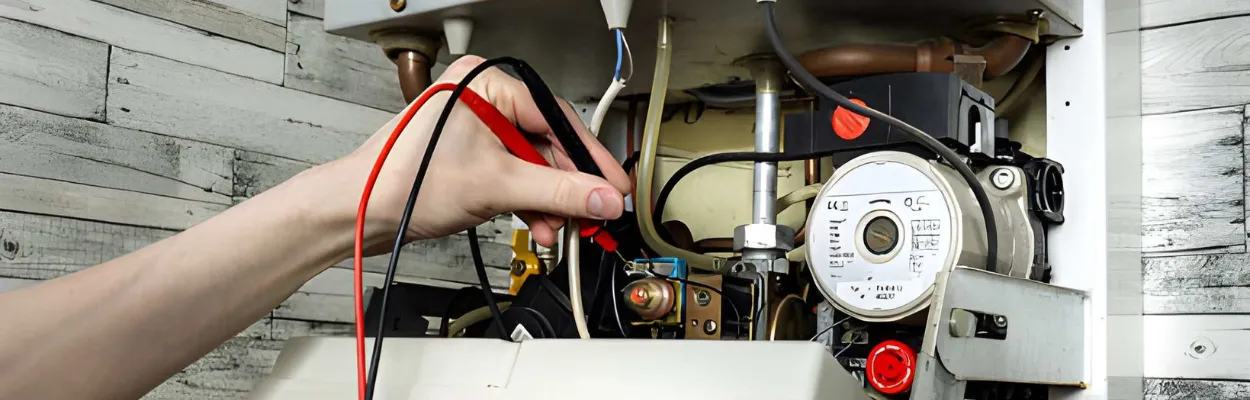
Testing a thermostat directly, using a multimeter to check for voltage or continuity at its terminals, requires shutting off power to the water heater at the breaker and working inside the unit’s electrical access panel. This goes beyond a simple dial check and involves handling wiring and components connected to a 240-volt circuit, which is why this level of testing is generally handled by a licensed electrician or plumber rather than covered here as a DIY step-by-step process.
What a Professional Checks That a Homeowner Typically Can’t
A technician testing a suspected thermostat generally confirms power is fully shut off, verifies that with a meter before touching any wiring, then checks the thermostat’s terminals for continuity or the expected voltage pattern depending on which stage of the diagnostic process they’re at. They also typically test the heating elements themselves alongside the thermostats, since a failed element can produce symptoms nearly identical to a failed thermostat, and distinguishing between the two often requires testing both rather than assuming one based on symptoms alone.
When to Call a Professional
Call a licensed plumber or electrician when symptom patterns point to a specific thermostat, when the high-limit switch has tripped more than once, or when the issue requires opening the unit’s electrical panel to test or replace a component. Working inside a water heater’s electrical compartment involves live circuit components that are best left to someone trained to handle them safely.
- No hot water at all, especially paired with a tripped high-limit switch.
- Hot water that runs out consistently faster than it used to.
- Water that’s scalding regardless of the dial setting.
- Any need to test, adjust, or replace a thermostat inside the access panel.
A professional visit for a suspected thermostat issue typically resolves the ambiguity quickly, since testing both the thermostats and the heating elements together identifies the actual failed component rather than guessing based on symptoms that can look similar across several different causes.
Water Heater Repair Services covers broader water heater diagnosis and repair once a thermostat issue is suspected.
Frequently Asked Questions
Can I adjust my water heater’s temperature myself?
- Yes, adjusting the external dial on a gas control valve or the screwdriver-adjustable dial behind an electric unit’s access panel is a task within normal homeowner ability, though the electric version still requires opening the panel with the power off. Setting the temperature too high increases scalding risk, so most manufacturers recommend staying around 120°F.
Why does my electric water heater have two thermostats instead of one?
- Electric water heaters use two separate heating elements, one near the top of the tank and one near the bottom, and each needs its own thermostat to control it independently. This design lets the unit heat the portion of the tank being drawn from first rather than treating the whole tank as one zone.
Does a gas water heater have more than one thermostat?
- No, a gas water heater uses a single thermostat built into the gas control valve, since there’s only one burner supplying heat to the entire tank rather than two separate heating elements. This is a key structural difference from electric units.
What does a tripped high-limit switch mean?
- A tripped high-limit switch means the water temperature reached a level the safety component considers unsafe, and it cut power to the heating elements as a protective measure regardless of the thermostat’s setting. This can happen due to a failing thermostat that’s no longer regulating temperature correctly, and the underlying cause should be identified before simply resetting the switch repeatedly.
How do I know if it’s the thermostat or the heating element that’s failed?
- The two can produce similar symptoms, which is why professionals typically test both together rather than assuming one or the other based on symptoms alone. A thermostat problem and a heating element problem often require the same kind of internal testing to tell apart reliably.
Is it safe to test my water heater thermostat myself with a multimeter?
- Testing a thermostat involves shutting off power at the breaker and working with wiring inside the access panel, which is more involved than most routine homeowner maintenance and carries real risk if done incorrectly. Many people choose to have this specific check done by a licensed professional rather than attempting it without electrical experience.
Next Steps
If your water heater isn’t heating consistently and you suspect a thermostat issue, Anaheim Plumbing can test the actual components and identify the cause.