A water heater usually makes noise because of sediment, pressure changes, restricted flow or loose parts, and the sound itself points toward the cause. Popping and rumbling come from inside the tank, while banging and ticking often come from the pipes. Tankless and heat pump models have their own sounds. Some sounds are routine, like a burner firing or the tank filling. Others, especially ones that are new or changing, deserve a closer look. Most causes are simple to fix, but a few noises signal real safety problems that need prompt attention.
Telling tank noise from pipe noise is the most useful first step. Run a hot tap and listen. If the sound gets louder or changes, the pipes are probably involved. If it stays the same, the source is likely inside the heater. That distinction matters because flushing a tank will not cure water hammer, and securing a pipe will not remove sediment. Leaks, gas smells or hissing from a relief valve move the problem from annoying to urgent.
Is It Normal for a Water Heater to Make Noise?
Yes, some noise is normal. A gas burner firing, a faint electric hum and the tank filling are ordinary operating sounds. Metal also expands and contracts as it heats and cools, which can produce light ticking or mild popping. Occasional relief valve hissing is part of normal operation too. New units are generally quiet, so a fresh sound on a newer heater is worth noting. Aging tanks are more likely to rumble. Sounds when the heater is idle or at night are often recovery cycles, since overnight cooling means a long reheat.
- Normal: burner firing, light hum, filling, faint ticking
- Warning: loud banging, worsening rumble, hissing with leaks or gas smell
Pattern, loudness and change over time separate routine sounds from warning signs. A brief, steady, predictable sound is usually fine. A sound that grows louder, becomes more frequent or appears suddenly deserves attention, because the noises that matter are the ones that are new or change over time. A heater older than 10 years that develops new noises may be nearing the end of its life. Worry less about a soft tick; worry more about loud banging, rumbling that worsens, or any sound paired with water or a gas smell.
What Causes a Water Heater to Make Noise?
Most water heater noise comes from six sources: sediment, thermal expansion, water pressure and flow, loose or worn components, condensation and heat traps. Sediment is the most common, since minerals settle at the tank bottom and cause popping or rumbling. Pressure and flow problems create banging, screeching or whistling in the pipes. Each cause has a typical sound, which is why describing the noise accurately makes diagnosis much easier than guessing. Several of these causes can overlap in one heater, particularly in older units.
Some causes are mechanical and some are tied to water quality. Loose heating elements, fan parts and fittings rattle or hum. Heat traps and check valves tick as water temperature changes. Condensation can crackle on a gas burner, usually harmlessly. Hard water speeds mineral buildup, and unchecked scale can lead to uneven heating, damage and leaks.
How Does Sediment Buildup Create Popping and Rumbling?
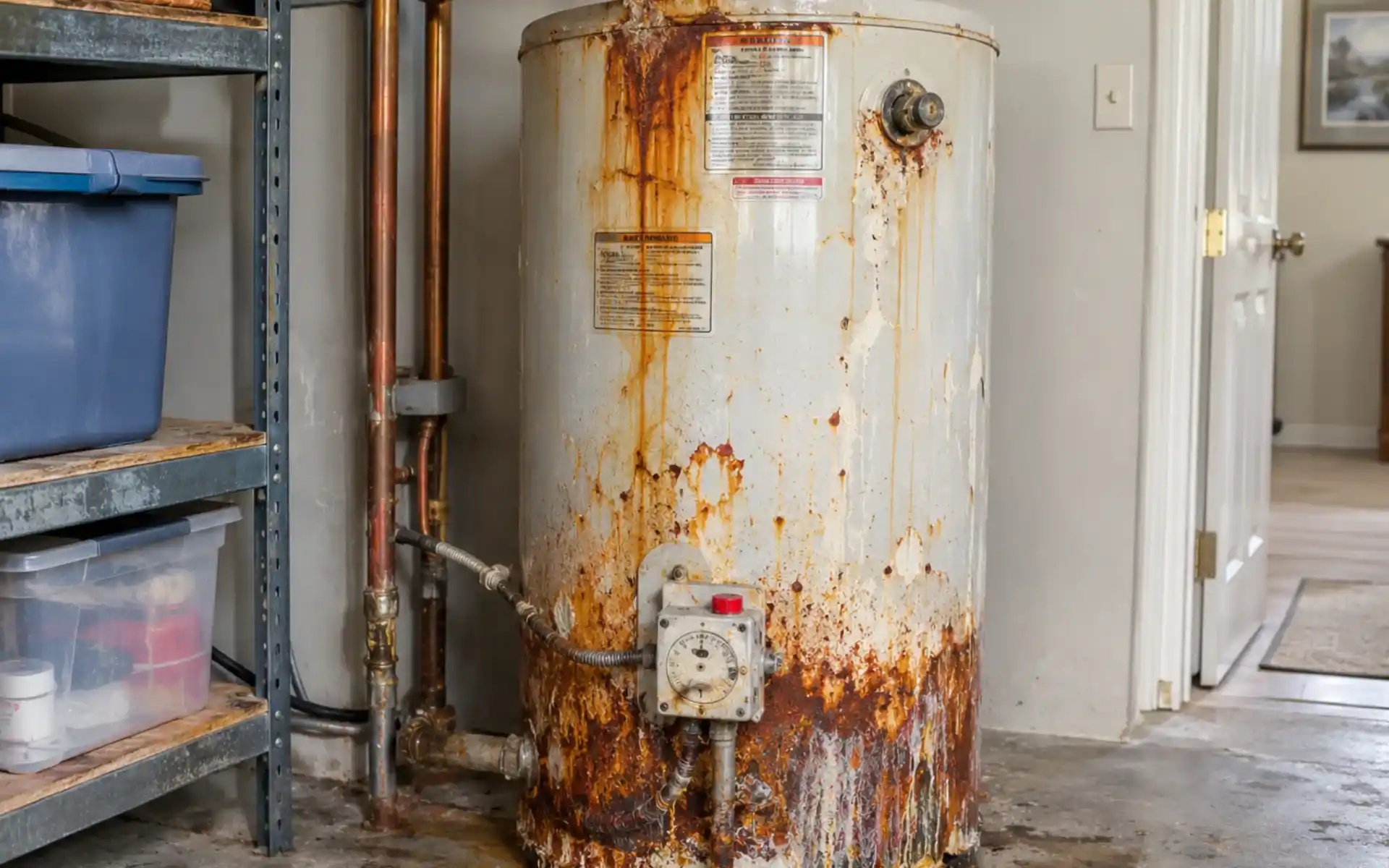
Sediment creates popping and rumbling when minerals, mainly calcium and magnesium, settle at the tank bottom and trap water beneath them. That trapped water superheats, turns to steam and bursts up through the crust when the burner or element fires, producing popping, crackling or a popcorn sound. Hard-water areas hear this more often and louder. The noise is usually loudest right after heating starts, and in the morning after the longest recovery cycle. Electric elements coated in minerals and gas burners heating a crusted bottom both produce the effect.
Sediment also costs money. The crust makes the burner run longer to reach temperature, wasting energy and raising bills. The bottom runs hotter, which stresses the steel and can weaken the glass lining, shortening tank life. In accelerated testing by Pacific Northwest National Laboratory, a gas storage heater’s efficiency fell from 70.4% to 67.4% over two years of simulated use at 444 mg/L hardness. Flushing at least yearly removes loose sediment before it hardens into a thick scale layer.
Can Water Pressure and Thermal Expansion Cause Banging?
Yes, water pressure surges and thermal expansion can both cause banging, though they are separate problems with different fixes. Water hammer happens when flowing water suddenly stops or changes direction, sending a shockwave through the pipes. It often occurs right after a faucet is turned off. Expansion noise comes from heated water having nowhere to go in a closed system, raising pressure and making pipes and the tank knock. Telling them apart helps you avoid replacing parts that were never at fault.
Fast-closing valves are the usual trigger for water hammer. Washing machines and dishwashers often cause it because their solenoid valves snap shut instantly. Lab testing has measured shockwaves above 300 PSI, more than five times the normal 40 to 60 PSI of a residential system. Loose pipe straps make it louder, because pipes can slam against framing each time the pressure wave passes. Banging left unchecked can eventually lead to leaks or component failure.
Thermal expansion is simple physics. In a 50-gallon heater, warming incoming water from 40 to 140 degrees F expands it by roughly three-quarters of a gallon. If the system is closed, that extra volume pushes pressure upward. An expansion tank gives the water somewhere to go. California code requires an expansion tank in closed systems with a backflow preventer or check valve. A waterlogged or missing tank can cause knocking and frequent relief valve discharge.
Household pressure matters too. Keeping water pressure between 40 and 80 PSI protects both the heater and the plumbing. Pressure that runs consistently high makes every surge and expansion event harsher, and it can stress valves and fittings. Banging that occurs only when a fixture shuts off points to water hammer, while banging that follows heating cycles points toward expansion. Continuous banging may indicate dangerous pressure and should be checked promptly.
What Loose Parts, Heat Traps and Condensation Do
Loose parts rattle or hum, while heat traps and condensation produce ticking or crackling that is usually harmless. A loose heating element vibrates against the tank walls, more common in electric units. Fan or blower parts can also loosen or collect dirt and make noise. Heat traps and check valves tick when pressure changes as water of different temperatures moves through them, which is normal. Hardware that is merely loose is often a simple fix, unlike damage to internal components.
Condensation forms when water vapor meets cooler surfaces. On a gas heater, droplets can fall onto the hot burner and vaporize, causing a faint sizzle or crackle, especially in winter or during heavy use. Occasional crackling is not alarming, and a plumber can confirm everything is working properly. Crackling can also come from sediment or from aluminum hydroxide beads, jelly-like green, blue or gray beads that appear when the anode rod reacts with excess chlorine. Persistent crackling or pooling water deserves a professional look.
What Does Each Water Heater Sound Mean?
Each sound points to a likely cause, and matching them narrows the fix quickly. The table pairs the main noises with causes, seriousness and a sensible first step. Tank models produce most of these sounds, while tankless and heat pump units add whining, buzzing, fan and compressor noises covered later. Seriousness reflects typical cases, not guarantees, since a mild sound combined with a leak or gas smell becomes urgent. Use the table as a starting point, then read the matching subsection for detail.
| Sound | Likely cause | Seriousness | First step |
|---|---|---|---|
| Popping | Sediment | Low | Flush |
| Banging | Water hammer | Moderate | Secure pipes |
| Hissing | Leak or T&P valve | Varies | Inspect |
Always weigh the table against context. A sound that is new, louder or accompanied by puddling, rusty water or reduced hot water is more serious than the same sound in isolation. Likewise, the age of the heater matters. Tanks around 10 to 15 years old tend to act up more often. If the first step does not help, move to the next simplest explanation rather than skipping to replacement. Persistent or worsening noise after basic troubleshooting suggests internal problems.
Why Is My Water Heater Popping or Rumbling?
Popping or rumbling almost always means sediment buildup, with water trapped under mineral layers turning to steam and forcing its way through. It is loudest right after the burner or element kicks on, and it is rarely an emergency alone. It does signal that the tank needs flushing. Gas units heat from the bottom, so the crust directly insulates the flame, while electric units may have an element coated in minerals. Either way, the sound is a symptom of wasted energy and added stress on the tank.
Other clues include slow hot water delivery, rusty or cloudy water, a metallic smell and higher energy bills with no clear reason. Tanks 8 or more years old that were never flushed tend to build thick scale layers. Draining and flushing with cold water is the best cure, though noise may return within months if the tank is old and heavily scaled. That return signals that replacement is approaching.
Why Is My Water Heater Banging or Knocking?
Banging or knocking usually means water hammer or moving pipes, and it is not strictly a water heater fault. When a valve closes fast, the shock travels through the plumbing. You may hear it right after turning off a faucet or when a toilet or appliance fills. A loose heating element can also bang against the tank wall in electric units. Run a hot tap to learn whether the noise is in the pipes or the tank.
Knocking is not an immediate problem, but over time it can damage pipes and fittings. Padding or clamping loose pipes quiets tapping, and insulation around pipes can help cushion them. Persistent hammering may need a water hammer arrestor, usually available for under $20, installed on the supply line near the offending appliance. Flushing will not fix water hammer because it is a plumbing issue, not a sediment issue.
Noise after flushing the tank often results from air or pressure in the lines, not new damage. Opening a hot faucet higher in the home, such as a second-story bathroom, helps release pressure and prevents vacuums in the pipes. If banging continues, check the expansion tank, since a waterlogged or missing one causes knocking and frequent relief valve activity. Continuous loud banging may mean dangerous pressure, so call a plumber.
Why Is My Water Heater Hissing, Sizzling or Bubbling?
Hissing, sizzling or bubbling usually means water is touching a hot surface, boiling in sediment, or escaping through a valve. In an electric unit, water dripping onto hot elements turns to steam, which indicates a leak needing repair but not an emergency. A persistent hiss can also mean the lower element is buried in sediment, with water flashing to steam on contact. Dripping sounds with no visible leak may be small amounts vaporizing before they pool.
A hissing temperature and pressure relief valve is releasing excess pressure. Frequent activation needs a checkup, and you should never tighten or cap the valve yourself. Look for mineral deposits or stains around the discharge pipe as signs it has been opening. Hissing near the gas valve or burner with a gas smell may be a serious gas leak. Shut off the gas supply and call a professional immediately. Small condensation is normal, but larger amounts of water need a professional.
Why Is My Water Heater Humming, Buzzing or Vibrating?
Humming, buzzing or vibrating usually comes from something loose or electrical, such as an element, fan, pump or mounting hardware. In electric heaters, a low hum is normal from element vibration, and a loose or scaled element is the usual culprit for a steady hum. Tightening the element may reduce it. Turn off the power first and only do this if you are comfortable with electrical work. It is dangerous only if breakers trip or the unit scorches.
In gas units, humming may indicate a partially blocked combustion air inlet. Venting problems risk carbon monoxide, so this needs a professional. Ultra-low NOx heaters that hum may have a damaged burner, and manufacturer tech support is the right contact. Vibration can also come from pipes or the mounting surface, so turn the unit off, let it cool, and inspect it top to bottom. Tighten fittings carefully, because overtightening can damage threads or gaskets.
Why Is My Water Heater Screeching or Whistling?
Screeching or whistling usually means water is being forced through a restricted opening, often a partially closed valve. The narrow gap raises velocity and pressure, producing a high-pitched sound. The inlet control valve is a common source. Open it fully to reduce the pressure, and replace the valve if the noise persists. Check that other valves near the heater are fully open before assuming a failure.
Mineral scale in valves and fittings can narrow passages too. The sound often starts quiet and grows louder as deposits build, especially in hard-water areas. A whistling temperature and pressure relief valve is different. Discharge means pressure above 150 PSI or temperature above 210 degrees Fahrenheit. Do not tighten or cap it yourself. Call a professional to diagnose why the pressure or temperature is too high.
Why Is My Water Heater Ticking or Clicking?
Ticking or clicking is usually harmless, caused by metal pipes and heat-trap fittings expanding and contracting as hot and cold water flow. Pressure changes from different water temperatures in heat traps or check valves create the sound, and this is normal. It is the least alarming noise a heater makes. A light, rhythmic tick can often be quieted by securing a loose pipe. Heat traps can be replaced with dielectric nipples, which serve the same function and can improve efficiency.
Some clicks come from controls rather than metal. Thermostats click as they switch, and igniters click while trying to light a gas burner. A normal ignition click lasts a moment before the burner lights. Repeated clicking without a flame suggests an ignition problem. Follow the manufacturer’s instructions printed on the unit for relighting, and leave complex gas issues to professionals.
Why Is My Tankless or Heat Pump Water Heater Noisy?
Tankless and heat pump water heaters are noisy for different reasons than tanks, mainly because their moving parts and heat exchangers behave differently. Tankless units hold no standing water, so they lack the classic rumble, but scaling in the heat exchanger can cause whining or buzzing. Periodic descaling is recommended, and a clogged inlet filter or restricted flow can add noise. Gas models also have burners and blowers that produce their own sounds.
Blower problems are a frequent source. A dirty blower wheel or obstructed vent can cause noise, so clean it and confirm it moves freely. Failed blower bearings are more expensive and need a new blower motor and professional help. Electric tankless heaters need no venting, so they are more affordable to install and fit tight spaces. Gas tankless units use propane or natural gas and heat water on demand rather than storing it.
Heat pump models add fan and compressor sounds, which are part of normal operation. Their sound character differs from a tank’s popping and banging. New or louder fan or compressor noises are worth checking, though specific causes vary by model. Beeping usually signals a low controller battery or a system error code. Replace the battery, and call a pro if it continues. Water hammer and pipe noise can affect any type because they originate in the plumbing.
Is a Noisy Water Heater Dangerous?
A noisy water heater is sometimes dangerous, but most noises are not. Danger depends on the sound and what accompanies it. Leaks, loud banging, explosion-like noise, gas or combustion signs and overheating are the real risk factors. Hissing near a gas connection with a gas smell risks explosion and carbon monoxide, while continuous banging may mean dangerous pressure. Mild thermal-expansion popping and occasional relief valve hissing are normal.
- Gas smell near the heater
- Leaking from the tank body
- Discharging T&P valve
- Continuous loud banging
Combinations matter most. Noise plus visible leaks, unusual vibration, discolored water or a lack of hot water signals a more serious problem. Pooling water at the base of any heater, gas or electric, needs a technician and should be treated as a safety issue. If you see signs of distress, shut off power and water, then call for help. For gas units, shut the gas supply before anything else if you smell gas.
Some heater parts get hot enough to burn skin, so caution is warranted even for minor checks. Plumbers handle connections to plumbing, gas lines and electricity carefully for that reason. Treat these as urgent: a discharging or hissing T&P valve, leaking from the tank body, gas smell, or hard rumbling from an old, heavily scaled tank. Rust-colored water or moisture at the base also warrants a professional evaluation.
How Do You Stop a Water Heater From Making Noise?
Stop water heater noise by working from the simplest checks to the more involved ones, confirming the sound after each step. Before any maintenance, turn off electric power at the breaker or shut the gas supply, and let the unit cool. First identify whether the noise is in the pipes or the tank, since that decides which steps apply. The ordered steps below move from low-effort checks to repairs.
- Locate the noise: pipes or tank
- Flush the tank
- Check temperature, pilot, leaks, valves
- Address water hammer and expansion tank
- Call a plumber if it continues
Listen again after each step so you know which change helped, and avoid changing several things at once. If the sound disappears, stop there. If it persists, move down the list rather than guessing. Some steps are reasonable DIY jobs, such as flushing the tank and securing a rattling pipe, as long as power or gas is off and scald risk is respected. Others, especially gas, venting and valve problems, belong to a professional.
Noise that continues or worsens after basic troubleshooting suggests internal damage that needs specialized tools. Anode rods, heating elements and valves have predictable lifespans, so replace them before failure, especially relief valves. Keep notes on when the noise occurs, since timing helps a plumber diagnose it faster. The subsections cover flushing, temperature and checks, and pressure-related fixes in detail.
How to Flush the Tank to Remove Sediment
Flush the tank by shutting off power or gas, cooling the water, draining through a hose until clear, then refilling before restoring power. Turn off the heater and cold supply, connect a hose to the drain valve, run it to a safe spot, drain, reopen the cold supply to flush, then refill. Never turn power on before the tank is full. On older tanks, open the drain valve slowly so dislodged sediment does not clog it. Keep the drain away from skin and walkways.
Flush at least once a year, and twice a year in very hard-water areas. Some homes in harder-water cities flush every 6 to 8 months. Cloudy or gritty drain water means you should shorten the schedule. Baked-on scale is not removed by standard flushing and needs descaling or replacement. If noise continues after flushing, check pressure and valves, then call a plumber.
Adjusting Temperature and Checking Pilot, Leaks and Valves
Lower an overly high thermostat setting, then check the pilot, leaks and valves. Most manufacturers recommend 125°F. Excess heat increases sediment boiling and expansion, so lowering it reduces stress and can quiet noises. On a gas unit, a healthy pilot flame is blue and steady. Yellow or red is too cool, and flickering suggests draft or dirt. Follow the manufacturer’s relighting instructions printed on the unit.
Inspect connections and valves for drips. Connection drips can often be fixed by tightening connections or replacing faulty valves. Tighten carefully, since overtightening can damage threads or gaskets. Leaks from the tank itself, from a cracked or corroded tank, an improper relief valve or a worn anode rod, call for a plumber. Also check the relief valve discharge pipe for mineral deposits or stains.
Secure any loose pipes and valves. Padding or clamping pipes quiets tapping and rattling. Pipe insulation helps too. It preserves temperature, prevents winter freezing and may lower energy costs. Test the T&P valve gently and never block it. Call a professional for combustion air, venting or complex gas issues.
Fixing Water Hammer and Expansion Tank Noise
Fix water hammer by anchoring loose pipes and adding a water hammer arrestor, then confirm the expansion tank is working. Arrestors add shock absorption, typically install easily and give an immediate reduction in noise. Install one on the supply line near the offending appliance, such as a washing machine or dishwasher. Flushing the heater will not fix water hammer, since it is a plumbing issue.
Secure exposed pipes with straps, padding or insulation so they cannot slam against framing. Persistent water hammer may need an arrestor at the right point, not just anywhere in the system. If a fixture is the trigger, start the repair there. Running a hot faucet higher in the home can release trapped pressure.
For expansion noise, inspect the expansion tank. A waterlogged or missing one causes knocking and frequent T&P relief. Its air charge must be correct to absorb the extra water volume as heating expands it. A plumber is recommended for checking or replacing it. Remember that California requires one in closed systems with a backflow preventer or check valve.
If banging persists, the cause may be household pressure. Keep it between 40 and 80 PSI. Pressure outside that range strains the heater and plumbing and can make surges worse. A plumber can measure pressure and correct it if needed. Continuous banging may mean dangerous pressure, so do not wait.
When Should You Call a Plumber or Replace the Heater?
Call a plumber when noise persists after flushing, grows louder, or comes with leaks, rust-colored water, a gas smell or an old unit. DIY suits low-risk tasks like flushing and securing pipes. Gas, electrical, venting, relief valve and tank leak problems belong to professionals. A flush often quiets a unit under about 8 years old with new noise. Noise that returns within months in an old, scaled tank signals replacement. The anode rod protects the tank by corroding in place of the walls.
- Repair: under 8 years, one fixable cause
- Replace: 10+ years, leaks, noise returns after flushing
Anode rods typically last about 5 years, depending on your water. Check them every few years and replace when more than halfway corroded. Replacement is inexpensive and extends tank life. Most tank heaters last 8 to 12 years, and hard water and skipped maintenance shorten that. At 10 or more years, repeated repairs often cost more than replacing. Thick sediment can weaken the lining and cause leaks and premature failure.
How Can You Prevent Water Heater Noise?
You can prevent most water heater noise with regular maintenance that targets sediment, pressure and loose hardware. The steps below are the routine habits that keep a heater quiet and extend its life. They cost little compared with the energy waste and early failure that sediment causes. Annual attention also catches small problems before they turn loud.
- Flush yearly, twice in hard water
- Add a water softener
- Keep thermostat near 125°F
- Check the anode rod every few years
- Secure pipes and insulate
- Keep pressure at 40-80 PSI
Pair these habits with an annual professional inspection, which addresses sediment, the root cause of popping, rumbling, reduced efficiency and early tank failure. Draining every few months slows buildup between visits. A water softener reduces sediment-forming minerals but will not remove hardened crust, so flush first. Changes in sound or new puddling warrant a professional’s evaluation.
Frequently Asked Questions
Here are the questions homeowners most often ask about noisy water heaters, along with direct answers.
Is it normal for a water heater to make any noise at all?
Yes. A light hum while the burner or heating element is running, and an occasional tick as pipes expand and contract, are both considered normal. Popping, banging, whistling, and hissing are not part of normal operation and each point to a specific, identifiable cause.
How often should I flush my water heater to prevent noise?
Most manufacturers recommend an annual flush to clear sediment before it builds up enough to cause popping or rumbling. Homes with hard water may benefit from more frequent flushing, since mineral buildup tends to accumulate faster in those conditions.
Can a noisy water heater actually damage the tank?
Left unaddressed, yes, in some cases. Heavy sediment buildup makes the unit work harder and can stress the tank and heating components over time, while repeated water hammer pressure surges can stress connected plumbing. Addressing the noise early generally prevents it from progressing into a more serious issue.
Why does my water heater only make noise sometimes?
Sounds tied to sediment or thermal expansion often show up specifically during a heating cycle, so they may only be noticeable right after a hot water draw when the unit is actively reheating. Intermittent noise doesn’t necessarily mean the cause is intermittent too, just that the conditions producing it aren’t constant.
Should I be worried if my water heater suddenly gets louder?
A sudden increase in volume or a new type of sound is worth paying attention to, since it can mean sediment has reached a level where a flush is overdue, or that a component like a valve or heating element has started to fail. It’s a reasonable moment to move from monitoring to actually investigating the cause.
Can I fix a noisy water heater myself, or do I need a plumber?
Tightening a loose valve, securing a pipe strap, or performing a basic tank flush are all generally within reach for a comfortable DIY homeowner. Anything involving the heating element, a suspected leak, or a gas burner is safer left to a licensed professional, both for accuracy and for safety.
Need help with water heaters?
Explore the relevant services available from Anaheim Plumbing.