A commercial water heater is a storage, tankless, or heat pump unit built to supply hot water for businesses and institutions at high volume. It serves restaurants, hotels, hospitals, schools, apartment complexes, salons, fitness centers, and breweries, where many fixtures and appliances may draw hot water at once. Heavier-duty components, higher input ratings, larger capacities, and faster recovery separate these units from the models designed for a single household. Because of that, every purchase decision starts with the building’s real hot water demand rather than a nominal tank size.
Demand, recovery, code compliance, and uptime drive most choices. A kitchen at dinner rush or a hotel at morning shower time stresses a system very differently from a quiet office. Choosing the wrong equipment means cold showers, failed dishwashing sanitation, callbacks, or wasted energy and capital. Commercial units also fall under separate regulations and certifications from residential ones, which affects venting, permits, and service. The sections below walk through types, sizing, installation, cost, maintenance, and replacement so each decision rests on solid information.
What Is the Difference Between Residential and Commercial Water Heaters?
Commercial water heaters produce more hot water, faster, and are built for continuous duty, while residential units serve the lighter, intermittent demand of one home. Residential tanks typically hold 10 to 75 gallons; commercial units typically start around 75 gallons and run to 500 or more, though some commercial models hold 60 or 75. Gas storage input commonly runs 200,000 to 800,000 BTU/hour, against 40,000 to 50,000 for residential. Commercial lifespans of 15 to 20 years or more compare with 8 to 12 for homes. Federal rules also treat them separately, under 10 CFR Part 431 rather than Part 430.
| Feature | Residential | Commercial | Implication |
|---|---|---|---|
| Capacity | 10–75 gal | 75–500+ gal | Peak coverage |
A large residential unit is not a commercial substitute. Size alone does not give it the recovery rate, components, certifications, or code approvals a business needs. Most manufacturers also void the warranty if a licensed professional does not install the unit, and commercial equipment typically offers better serviceability. Check the ratings plate: commercial labels may carry extra certifications and diagrams, and the model number usually distinguishes commercial from residential. The table summarizes the main contrasts and what they mean in practice.
What Types of Commercial Water Heaters Are Available?
Commercial water heaters fall into three main categories: storage tank, tankless, and heat pump, each available in gas-fired or electric versions. They are classified by how they make and hold hot water: storage units keep a heated reserve, tankless units heat flow on demand, and heat pumps move heat from surrounding air or a building water loop. Condensing gas models and hybrid designs add further variety within these groups. Tankless-on-tank systems also exist, adding stored hot water as a buffer for large simultaneous peaks.
Four questions guide the choice: demand pattern, fuel, available space, and efficiency goals. Sharp short peaks suit storage, steady spread-out draws suit tankless, and sites that value low electric consumption may favor heat pumps. Daily hot water volume and peak periods matter as much as the type, since each design handles continuous and sudden demand differently. Mechanical room space and fuel availability can rule options in or out before cost is considered.
Water heating is about 10 to 20 percent of total energy use in hotels, apartments, healthcare, and food service, so the choice carries real operating consequences. The market reflects this importance, valued at $5.4 billion in 2020 and projected to reach $7.7 billion by 2026. Chimney-vented commercial models are expected to end production under a DOE efficiency rule, tentatively in October 2027, which affects planning. The subsections below look at each category in turn.
Storage Tank Water Heaters
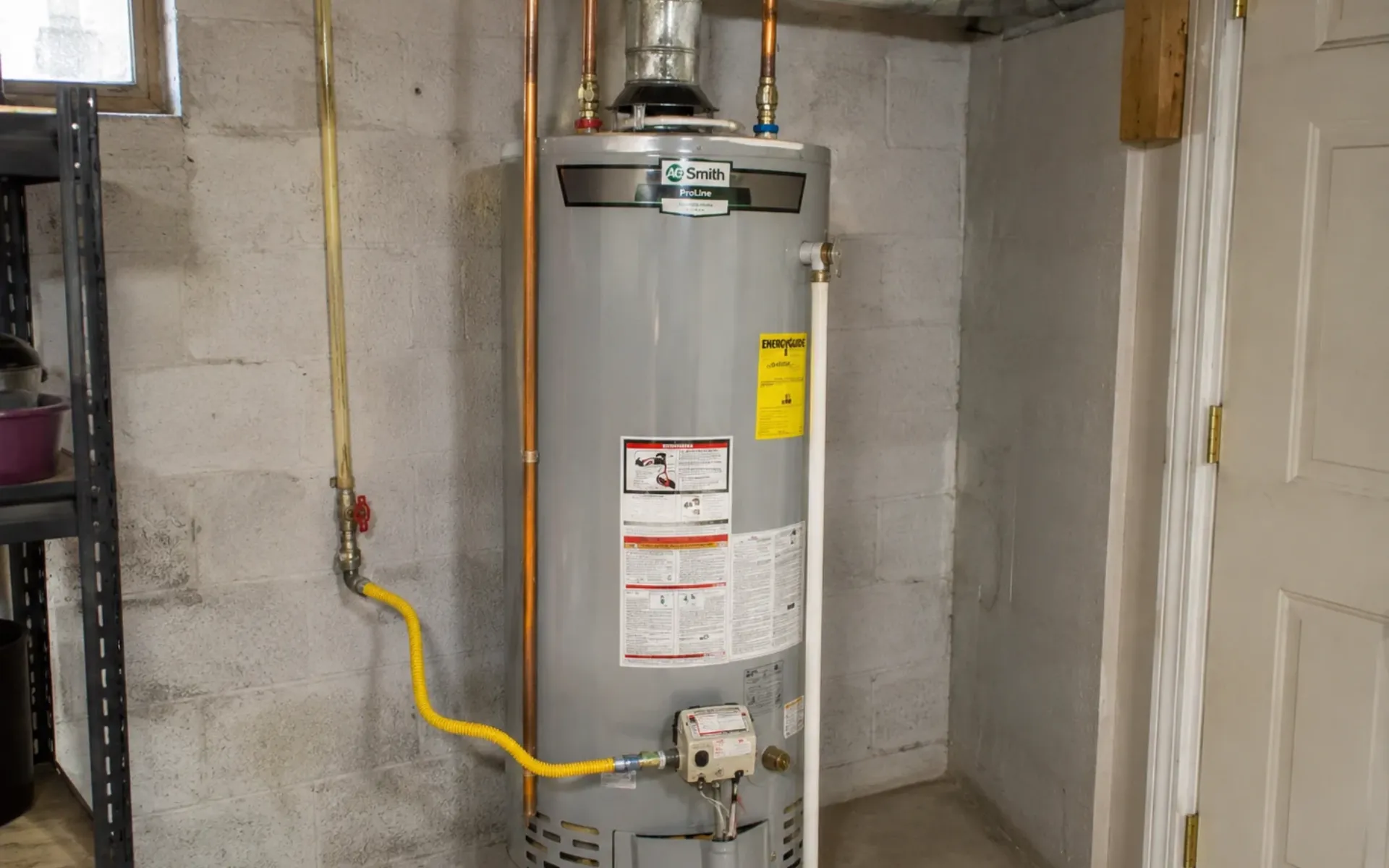
Storage tank water heaters heat water with a gas burner or immersed electric elements and hold it in an insulated tank, ready for immediate draw. Hot water leaves from the top while cold water enters at the bottom. They are the most common commercial type, and most new commercial buildings use them. Performance is defined by tank volume in gallons and recovery rate in gallons per hour at a stated temperature rise. Capacities across gas, electric, oil, and steam types range from 50 to 5,000 gallons.
Recovery rate is how fast the unit replenishes hot water after a draw. Gas burners generally recover faster than electric elements of similar size. As an example, 199,000 BTU input yields about 193 gallons per hour at a 100°F rise, and a 200-gallon tank with a 300,000 BTU/hr burner can briefly meet 400 to 500 GPH peaks. Smaller tanks deplete and refill more often than larger ones. Tank capacity and recovery together must cover peak-hour demand.
Storage units fit sharp, short peaks such as schools and offices, and applications with high simultaneous demand like restaurants. Upfront cost is lower than for many alternatives, but the tank needs floor space and regular maintenance to avoid rust or sediment problems. The drawback is standby heat loss, since the unit uses energy continuously to keep a large volume hot. Insulation and tank blankets in unheated spaces help reduce that loss.
Redundancy is a real option with storage systems. Multiple smaller heaters can stage on as demand rises, which adds resilience if one fails. A single large unit costs less and takes less space, but its failure leaves no hot water at all. Condensing gas storage models capture exhaust heat and reach up to 97 percent thermal efficiency, at a higher initial investment. Tank-style units generally last 10 to 15 years, depending on maintenance and water quality.
Tankless (On-Demand) Water Heaters
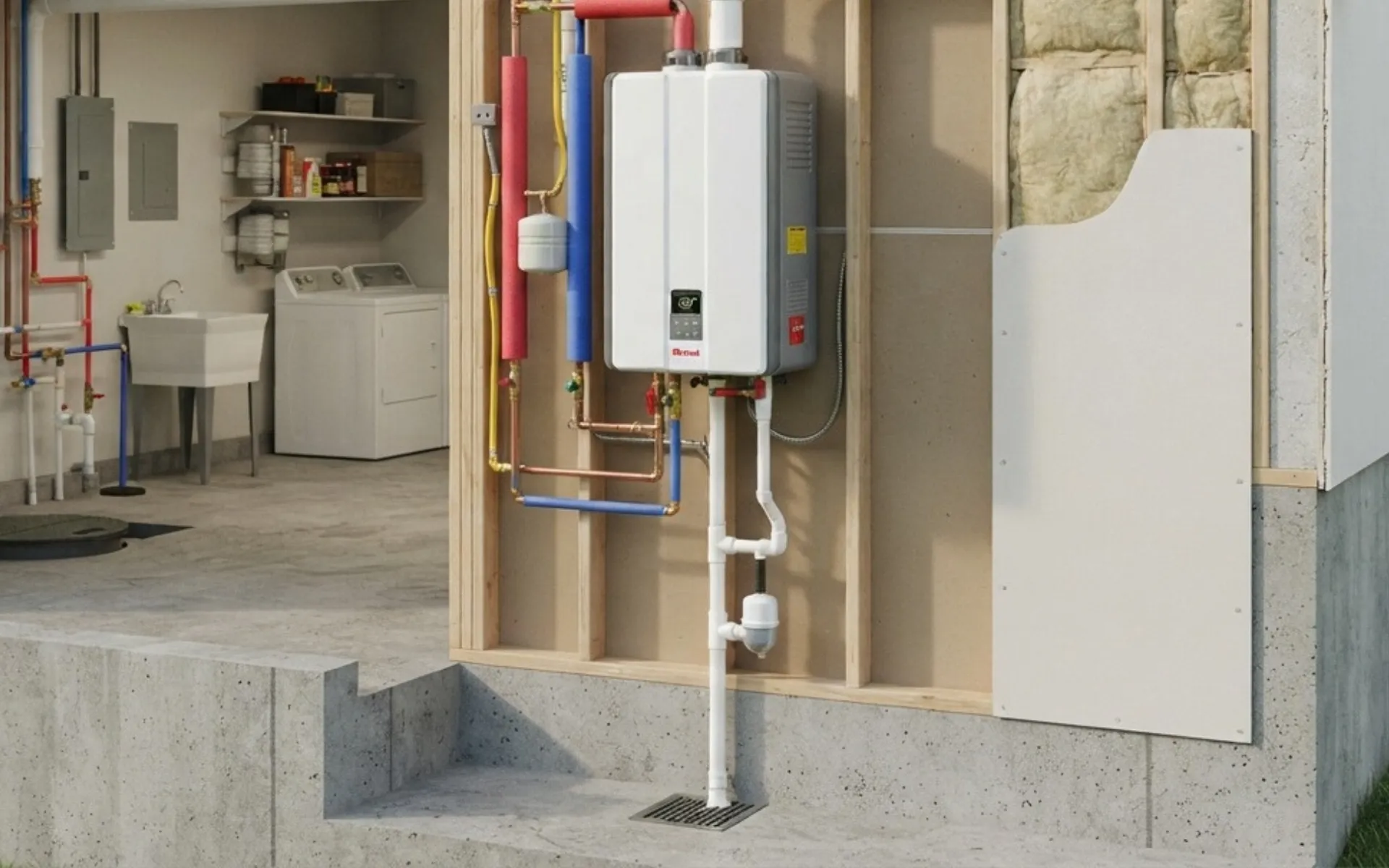
Tankless water heaters heat water on demand as it flows through a heat exchanger, so no large tank is kept hot around the clock. Commercial units typically deliver 2 to 10 GPM depending on capacity and incoming water temperature, and inputs can reach about 1,000,000 BTU/hr. Banks of modular units on a manifold add flow. In food service, multiple units are common because if one needs service, the others keep running at reduced capacity. Service life of 20 years or more beats storage heaters.
The limits are simultaneous demand, venting, gas supply, and scale. The GPM rating must cover everything that might run at the same moment. High inputs need larger gas lines and venting, and hard water can build scale, so treatment matters. Tankless suits continuous moderate demand like offices and schools, and institutions such as hospitals use banked configurations for steady spread-out draws. Upfront cost is higher, but savings in energy and floor space can offset it over time.
Heat Pump Water Heaters
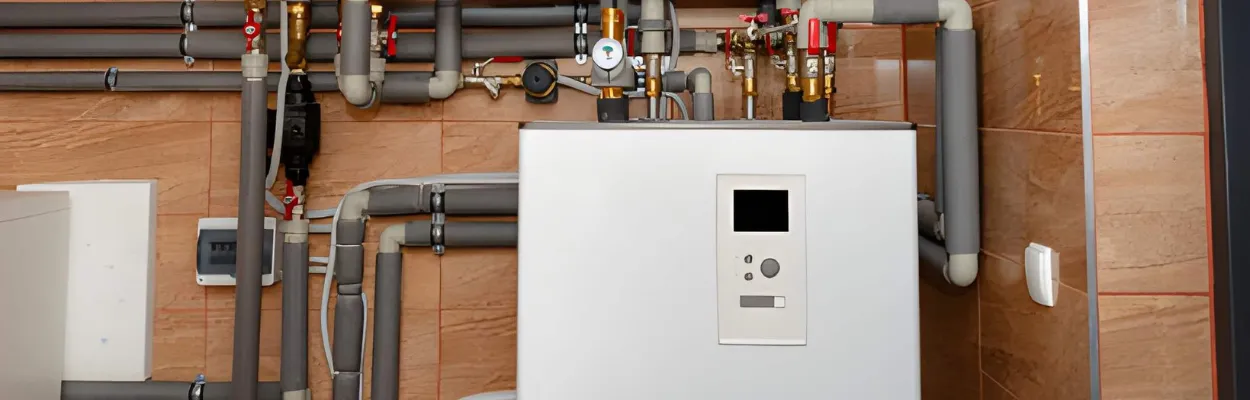
Heat pump water heaters move heat from surrounding air or a building water loop into the water rather than generating heat directly. They produce 3 to 4 units of heat per unit of electricity, and typically cut water heating energy by 50 to 65 percent versus electric resistance. Efficiency falls in cold surroundings: COP is about 2.0 at 50°F versus 3.5 at 80°F. That makes them best suited to warmer spaces and climates.
Air-source models need enough surrounding air volume and clearance, and some need more room than others. A warm, large mechanical room works best, and ventilation matters. Electrical panel capacity also must be confirmed before installation. Placement can even provide spot cooling to the surrounding room, which affects layout decisions. Check that the space can supply air without being starved or overly cold.
The trade-offs are recovery and cost. Heat pump and hybrid models recover more slowly than gas storage and cost more upfront. They may qualify for utility incentives, and new minimum UEF standards for heat pump units took effect in April 2024. Hybrid units often pair a heat pump with resistance backup for peaks. Heat pump and electric storage units can last about 15 to 20 years.
Gas vs. Electric: What Changes in the Mechanical Room?
Gas units need a gas line, venting, and combustion air, while electric units need adequate electrical service and little else. Gas typically has the lowest operating cost, with propane an option where no gas line exists. Electric costs less upfront but often more in long-term energy. Gas burners generally achieve higher recovery than electric elements of similar size. Doubling electric kilowatts yields about 1.75 times recovery, not double.
| Criteria | Gas | Electric |
|---|---|---|
| Infrastructure | Gas line | Electrical service |
Replacement is not always like-for-like. Tankless gas input is often two to three times that of an old burner, so gas lines and vents may need upgrades. Tight, energy-efficient rooms may need louvers or ducted outside air, and condensing units require a condensate drain and often a neutralizer. Electric and heat pump replacements need panel capacity checked first. The table compares the main infrastructure points.
How Do You Size a Commercial Water Heater?
Size a commercial water heater by balancing peak-hour demand, recovery rate, and storage capacity so the unit covers the most hot water needed in any single hour. Use peak-hour gallons rather than total daily gallons, and count fixtures that run simultaneously. For tank units, first hour rating and recovery in gallons per hour at a given temperature rise are key figures. For tankless, the required GPM is what matters. Colder incoming winter water raises the load, so size to the coldest incoming temperature.
- List fixtures
- Estimate usage
- Apply temperature rise
- Select unit
The method follows steps: list fixtures and appliances, estimate usage patterns, build a time-based load, and apply the temperature rise. Fixture demand is often taken from ASHRAE Table 10 in gallons per hour per fixture type, which is based on older studies and can be conservative for low-flow designs. Multiply fixture demand by fixture count for a subtotal, apply a demand factor for maximum demand, then a storage factor for suggested storage. Document assumptions in writing and choose a tank just above suggested storage.
Per capita methods suit smaller light commercial facilities, while fixture counts fit most commercial buildings because occupancy varies widely. Manufacturer sizing guides and tools help check the result. Constraints like space, fuel, budget, or maintenance preference may force a smaller tank or lower recovery rate. One school example needed 150 gallons by formula but a 65-gallon tank with lower recovery sustained the eight-hour day. Coordinate early with the architect and electrical engineer.
Why Correct Sizing Matters
Correct sizing keeps hot water available at peak hours without overspending. Undersized units run short, and oversized units waste money. An undersized heater slows kitchens, laundries, or guest floors, and can lead to callbacks. In restaurants it can also mean falling out of compliance with local health codes for dishwashing and sanitation. Peak-hour shortages are the most visible symptom.
Oversized heaters cost more to buy, install, and run than needed, and can make a bid less competitive. They lose energy through standby losses and short-cycling, which adds to wear. Higher capital and operating cost continue for the life of the equipment. Right-sizing is therefore both a comfort and a budget matter.
Equipment wear also depends on sizing. A unit constantly pushed beyond capacity cycles harder and ages faster. Efficiency suffers too, since too small units run at full tilt and too large units lose heat. Cold incoming water in winter forces heaters to work harder, which exposes marginal sizing. Margins should reflect worst-case conditions.
For businesses, the risk is operational. Missing hot water can close a kitchen, upset hotel guests, or breach health requirements. Confirm local health code minimums before finalizing equipment count. Homes use standard residential sizes, but businesses need peak-demand calculations. Skipping that step is costly later.
Sizing by Building Type
Building types differ in demand shape: restaurants spike at meals, hotels in the morning, and schools in short peaks. A 100-room hotel may need roughly 1,500 to 2,000 GPH, while a 150-room hotel may need 700 to 900 GPH peak; a 200-bed hospital may need 5,000 to 8,000 GPH. Restaurants with sanitizing dishwashers need 180°F water, so a booster heater may be added. Older buildings may have changed fixtures or usage, so review before sizing.
Salons and spas often use smaller storage with higher BTU, though pedicure baths raise storage needs. Apartment complexes need larger storage with average to high BTU and likely multiple heaters. Dinner-only restaurants may use smaller storage with higher BTU, while two to three meals daily likely need a larger tank. The table gives a quick comparison.
| Building | Demand | Consideration |
|---|---|---|
| Restaurant | Meal peaks | Booster heater |
Do You Need More Than One Water Heater?
Many commercial buildings benefit from more than one water heater, whether piped in series, in balanced parallel banks, or as a single large unit. Multiple smaller heaters stage on as demand rises and add resilience if one fails. Critical operations such as hospitals or food service usually justify redundancy. A single large unit suits lower-risk sites that can tolerate downtime.
Series piping has the first unit running constantly, so it wears fastest and creates uneven wear. Balanced parallel piping spreads load evenly across all units. That equalized wear improves overall longevity of the bank. Balanced systems are generally preferred where multiple units are used.
A single large unit costs less and takes a smaller footprint, but failure leaves no hot water. Multiple small units need at least twice as much piping, adding labor and material cost. Additional heaters also bring additional venting and controls. Weigh that against the cost of an outage.
Replacement is a good moment to reassess needs, including fixture or usage changes, before repeating the old layout. Confirm local health code requirements before settling on the number of units. Tankless banks offer another form of redundancy. The right answer depends on how much downtime the business can accept.
What Other Factors Should Guide Selection?
Beyond sizing, selection should weigh fuel availability, space, upfront versus operating cost, efficiency standards, and maintenance access. These factors often decide between tank, tankless, and heat pump options with similar capacity. Each trade-off should be interpreted for the specific use case. The list covers the main considerations.
- Fuel: gas cheaper to run, electric cheaper to install
- Space: tanks need room, tankless saves it
Fuel and cost interact. Natural gas is typically cheapest to run and propane serves sites without gas; electric costs less upfront but often more over time. High UEF units cost more upfront but reduce monthly bills, and rebates or tax credits may offset cost; many utilities offer rebates of up to 30 percent. Check current programs in the project area. Lifecycle cost should include installation, energy, maintenance, and repairs.
Space and access shape what is practical. Older mechanical rooms may not fit tank heaters, so tankless or another location may be needed. If space is limited, manufacturers offer tall thin tanks for closets and shorter tanks for ceiling plenums. Maintenance access also matters, with gas units typically needing 6 inches at the sides and back and 12 inches at the front. Buying generally beats leasing over the long run.
How Is a Commercial Water Heater Installed?
Installation starts with evaluating infrastructure, verifying load, obtaining permits, and scheduling, then proceeds through setting, piping, venting, expansion control, and controls. Existing plumbing, gas, and electrical systems should be checked, since older buildings often need pipe upgrades; test pressure and flow. Load calculation factors peak times, fixture count, and business type. Professional installation typically takes 4 to 8 hours, and most jobs finish within a business day.
- Site prep
- Set unit
- Piping
- Venting
- Controls and testing
The sequence: prepare the site, set the unit, connect Type L copper water piping, install venting, add a thermal expansion tank where required, and wire the controls. A closed system downstream of a backflow preventer or check valve needs an expansion tank. Final checks include leak testing water and gas connections, testing the pressure relief valve, and bleeding trapped air. Activation follows once inspections pass.
Common mistakes include skipping the infrastructure check, poor venting, and missing code items. A licensed commercial plumber should follow manufacturer instructions, codes, and venting requirements; most manufacturers void the warranty otherwise. Use required OSHA safety equipment and test all connections for leaks. Temporary downtime occurs during the utility shutoff.
Venting, Combustion Air, and Code Requirements
Gas-fired heaters need proper venting to carry exhaust out and enough combustion air for safe burning, both governed by code and inspected. Gas replacements must follow NFPA 54 venting and combustion air rules. Combustion air needs a minimum free area of 1 square inch per 1,000 BTU/hr total input, typically through two openings. Tight rooms may need louvers or ducted outside air, so check before ordering.
Condensing units capture exhaust heat, with condensate pH about 3 to 5 that needs neutralization before the drain. They need stainless steel or polypropylene venting, and thermal efficiency can exceed 90 percent, up to 98 percent. DOE standards effective 2023 made condensing standard for larger gas units. Chimney-vented models face a phase-out.
Other code items include a T&P relief discharge pipe ending within 6 inches of the floor, with a valve rated for the BTU input. Heaters must be anchored and braced in seismic zones, with strapping required in Seismic Design Categories C to F under ASCE 7. Units above 210°F high-temperature hot water fall into ASME CSD-1 territory. Certification such as ANSI Z21.10.3 applies to gas storage above 75,000 BTU/hour.
Codes vary by jurisdiction. In Ohio, replacement is often permitted under the Ohio Plumbing Code, OAC 4101:3-1, especially when fuel, venting, or piping changes. Permits and inspections should be arranged before work starts. Federal minimums preempt state standards for covered commercial equipment. Confirm local requirements with the authority having jurisdiction.
Scald Protection and Legionella Control
Storing water at 140°F or higher limits Legionella growth per ANSI/ASHRAE Standard 188, but that hot water raises scald risk, so mixing valves bridge the gap. Large systems store at or above 140°F and deliver above 120°F. Thermostatic mixing valves temper water at fixtures. A master valve sits at the heater outlet.
Master mixing valves follow ASSE 1017 and point-of-use valves follow ASSE 1070. Fixtures serving vulnerable populations should have point-of-use tempering devices. These managed controls let storage stay hot while delivery stays safe. Valves need periodic checking to remain accurate.
High-risk facilities such as hospitals, senior living, and dialysis centers should use a water management plan. CDC guidance and ASHRAE 188 frame such plans. Recirculation keeps water moving and avoids stagnant zones. Without recirculation, large buildings waste 1 to 5 gallons per use.
How Much Does Commercial Water Heater Installation Cost?
Commercial installation cost depends on equipment type, capacity, fuel, venting, piping, permits, labor, and retrofit conditions. The unit alone typically ranges from $2,500 to $5,000 or more. A simple swap costs less than work needing new plumbing, gas, or electrical service. Permit fees apply, and hidden problems like water damage or asbestos can surface once work begins. Asbestos removal requires strict safety protocols.
Upfront price is only part of the cost. Tank-style units cost less to buy but may cost more to run because of tank heat loss. Efficient or condensing models and heat pumps cost more upfront but can save over time. Include maintenance and repairs in lifecycle cost. Reactive repairs risk shutdowns and emergency costs. The table lists main drivers.
| Driver | Effect |
|---|---|
| Venting/piping | Higher labor |
How Do You Maintain a Commercial Water Heater?
Commercial heaters need professional inspection about every six months because of their heavy workload. Core tasks include flushing sediment, checking anode rods or elements, and testing safety valves. Technicians also inspect burners, check for leaks, and examine venting and gas lines. In hard water areas, scale should be checked and treated. Regular service can extend life by up to 50 percent, such as 15 to 20 years rather than 10. Scheduled care catches problems early.
Build staff procedures: keep model and serial numbers photographed and backed up digitally, and mount a wall holder with the manual and service tickets. The ratings plate shows manufacture date, capacity, BTU per hour, and efficiency; tank labels are on the front, tankless on the side. Name at least two people authorized to approve repairs up to a set dollar amount, and keep service contacts in an SOP binder. Missing data can delay parts and warranty checks.
How Can You Improve Efficiency?
Efficiency improves through insulation, demand controls, efficient models, and smarter operation. Insulate accessible hot water pipes, especially long runs, and use blankets on tanks in unheated spaces. Heat traps, low-flow fixtures, and programmable controls cut waste. Condensing and heat pump hybrid models can dramatically cut operating costs. Savings of 10 to 18 percent versus standard heaters are possible.
Temperature setting matters. Around 120°F can suffice for most commercial needs while saving energy, though Legionella control and sanitizing requirements may call for higher settings. Recirculation pumps remove wait time and reduce water waste. Waste heat recovery and smart controls reduce hot water waste. Match settings to facility requirements.
Tank flushing removes sediment that reduces efficiency and shortens lifespan. Scale treatment in hard water protects heat transfer. Keep the heater serviced so burners and elements operate cleanly. Together these steps lower energy bills.
When Should You Repair vs. Replace a Commercial Water Heater?
Replace when age, repeated failures, leaks, tank corrosion, or poor efficiency make repair uneconomical; repair when the problem is isolated and parts are available. Gas and electric storage heaters last about 10 to 15 years, and tank-style units over 10 to 15 years warrant replacement planning; tankless over 15 to 20. Rusty hot water signals internal corrosion and a weakening tank. Rising repair costs and energy bills tip the balance.
Replacement triggers include recovery failure, visible rust or scale at seams, repeat failures after a major repair, and a leaking tank that is not repairable. Lifespan varies with water quality and maintenance. Warranty status also matters before deciding. The table compares indicators.
| Repair | Replace |
|---|---|
| Isolated fault | Tank leak or rust |
Replacement is a chance to upgrade to a high-UEF, condensing, or heat pump model. Reassess sizing first rather than assuming like-for-like. Confirm venting, electrical service, and space. Rebates may offset cost.
What to Do When a Heater Stops Working
When a heater stops working, make it safe first: shut off fuel and power, check for leaks or gas odor, and run basic diagnostics. Arrange temporary hot water if operations depend on it. Then call a service provider with details ready. Hospitals, dialysis centers, and senior living should flag urgency up front.
- Shut off fuel and power
- Check for leaks
- Arrange temporary hot water
- Call service
Provide the model number, serial number, issue description, and warranty authorization if applicable. Photos and video help technicians prepare and may save time and money on site visits. They also support rough estimates. Keep that information in your documentation binder.
How to Replace Without Losing Hot Water
Replace without losing hot water by staging the new unit and pre-running piping, venting, and electrical while the old one still operates. Schedule cutover for the lowest-demand window: overnight or weekend for schools and offices, and low-census periods for hospital wings. Lock out and tag fuel and power to the old unit per OSHA 29 CFR 1910.147. Buildings that cannot tolerate any gap may use a temporary rental heater.
Permits and coordination matter, since replacement is often permitted when fuel, venting, or piping changes. Review sizing and fixture or usage changes before ordering. Phased work in occupied buildings reduces downtime. Early coordination keeps schedules predictable.
Commercial Water Heater FAQs
Do I need a permit? Usually yes. Replacement is often permitted, especially when fuel, venting, or piping changes, and inspections follow local code. Requirements vary by jurisdiction, so confirm with the local authority. Gas replacements must meet NFPA 54 venting rules. Unpermitted work can threaten warranty and compliance.
Is tankless a fit for institutions? Yes for continuous moderate demand such as offices and schools, using banked units. Hospitals can use banks for steady draws, but very high simultaneous demand may favor storage or a tankless-on-tank buffer. Size by GPM and check gas and venting. Scale-prone water needs treatment.
How long do they last? Commercial units last 10 to 20 years or more with proper maintenance. Storage gas and electric units are about 10 to 15 years; heat pump and electric storage about 15 to 20; tankless 20 or more. Water quality, sizing, and maintenance cause the variation. Regular service can extend life substantially.
Frequently Asked Questions
What’s the main difference between a commercial and residential water heater?
The main difference is scale and duty cycle: commercial units are built for continuous, high-volume use and are regulated under different DOE input thresholds than residential units. They also use different efficiency rating methods and are typically built with heavier-duty components.
Do all businesses need a commercial-rated water heater?
Not necessarily — a small office or low-demand business might be adequately served by a high-capacity residential unit, while a restaurant, hotel, or laundromat almost always needs a true commercial-rated unit. A load calculation based on actual hot water usage is the best way to confirm which category fits.
How long do commercial water heaters typically last?
Service life varies widely based on usage intensity, water quality, and maintenance history, so there’s no single reliable number that applies to every commercial setting. A unit under consistent heavy use in an untreated hard-water area will generally wear faster than one under lighter, well-maintained conditions.
Can a commercial tankless water heater keep up with a busy restaurant?
It can, but usually only when multiple units are installed in parallel to match the restaurant’s peak simultaneous demand, since a single tankless unit has a fixed maximum flow rate. A professional load calculation determines how many units, and what combined capacity, the kitchen actually needs.
Is a commercial heat pump water heater a good fit for every business?
No, commercial heat pump water heaters perform best in specific conditions, particularly locations with adequate ambient air volume and stable temperatures around the unit. A mechanical engineer or plumber should evaluate the installation space before recommending this type.
What permits are typically needed to install a commercial water heater?
Requirements vary by jurisdiction, but commercial installations commonly require plumbing and, for gas or larger electrical loads, mechanical or electrical permits along with inspection sign-off. A licensed commercial contractor familiar with your local code adoption can confirm the exact permits required for your project.
Why does my commercial water heater run out of hot water during busy hours even though it’s a large unit?
This usually points to a mismatch between the unit’s recovery rate and the pace of actual peak demand, rather than the tank being undersized on paper. A professional reassessment of both storage capacity and recovery rate against real usage patterns can identify whether the fix is a different unit, additional units in parallel, or adjusted usage scheduling.
Need help with water heaters?
Explore the relevant services available from Anaheim Plumbing.