A gas water heater is an appliance that burns natural gas or propane to heat the water that reaches your sinks, showers, and appliances. Most residential versions are storage tanks with a burner beneath the tank, though tankless models heat water only as it flows through the unit. In practice, the fuel type decides which unit you can buy, because natural gas and propane heaters are built for different supply pressures and burner settings. Gas-fired heating also differs from electric heating, which uses resistance elements rather than flame, and that difference shapes venting, installation, and outage behavior.
Two misconceptions come up often. Gas heaters are not all tankless, since most homes use storage tanks, and they do not all run without electricity. A traditional standing-pilot tank can heat without any power, but models with electronic ignition, a blower fan, or on-demand design need an outlet. Gas units also cost more upfront than electric ones because of the gas line and venting, yet they often heat faster and can cost less to run where gas is cheap. The sections ahead separate those details so you can judge which setup fits your home.
What Is a Gas Water Heater and What Does It Look Like?
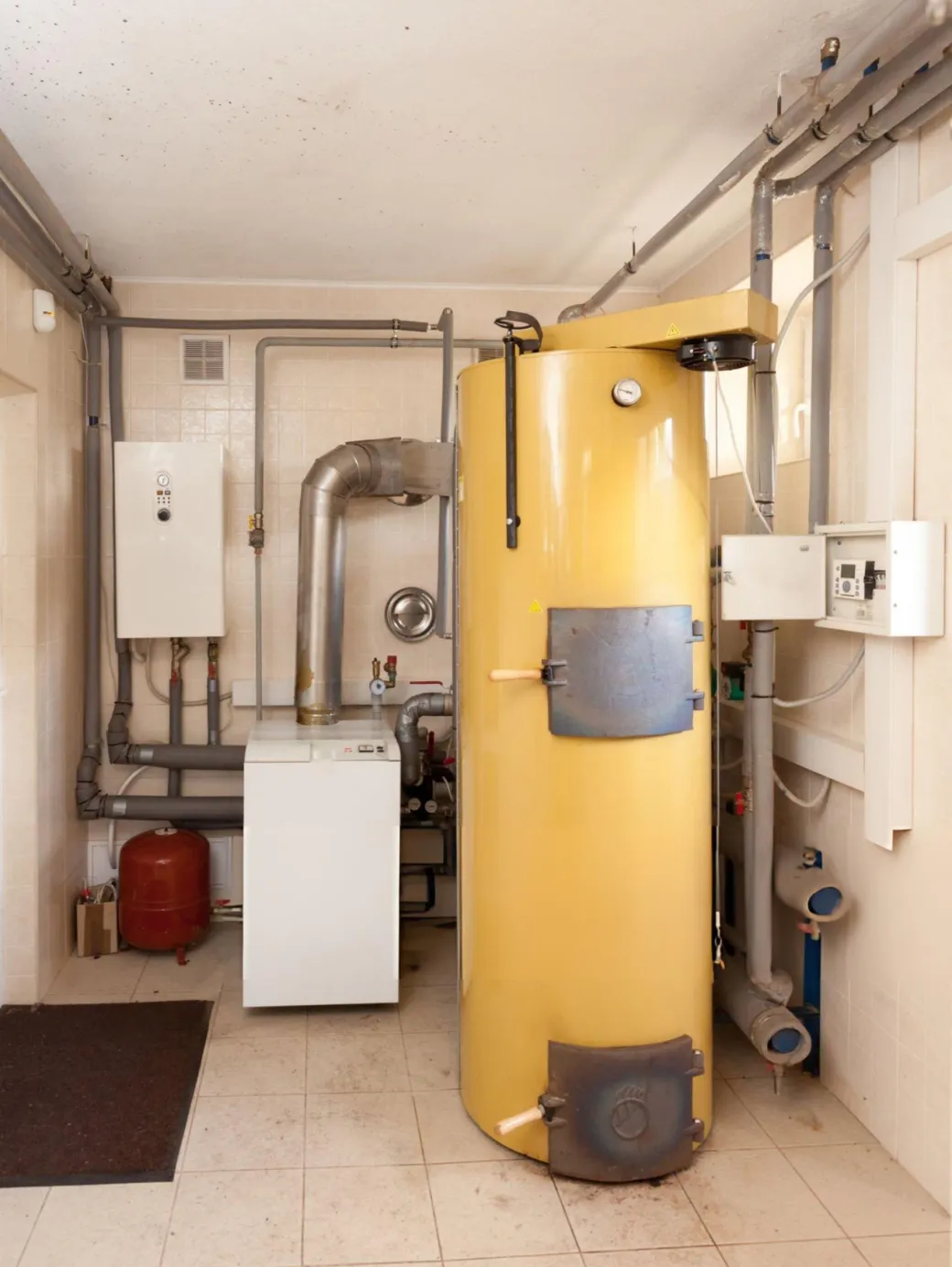
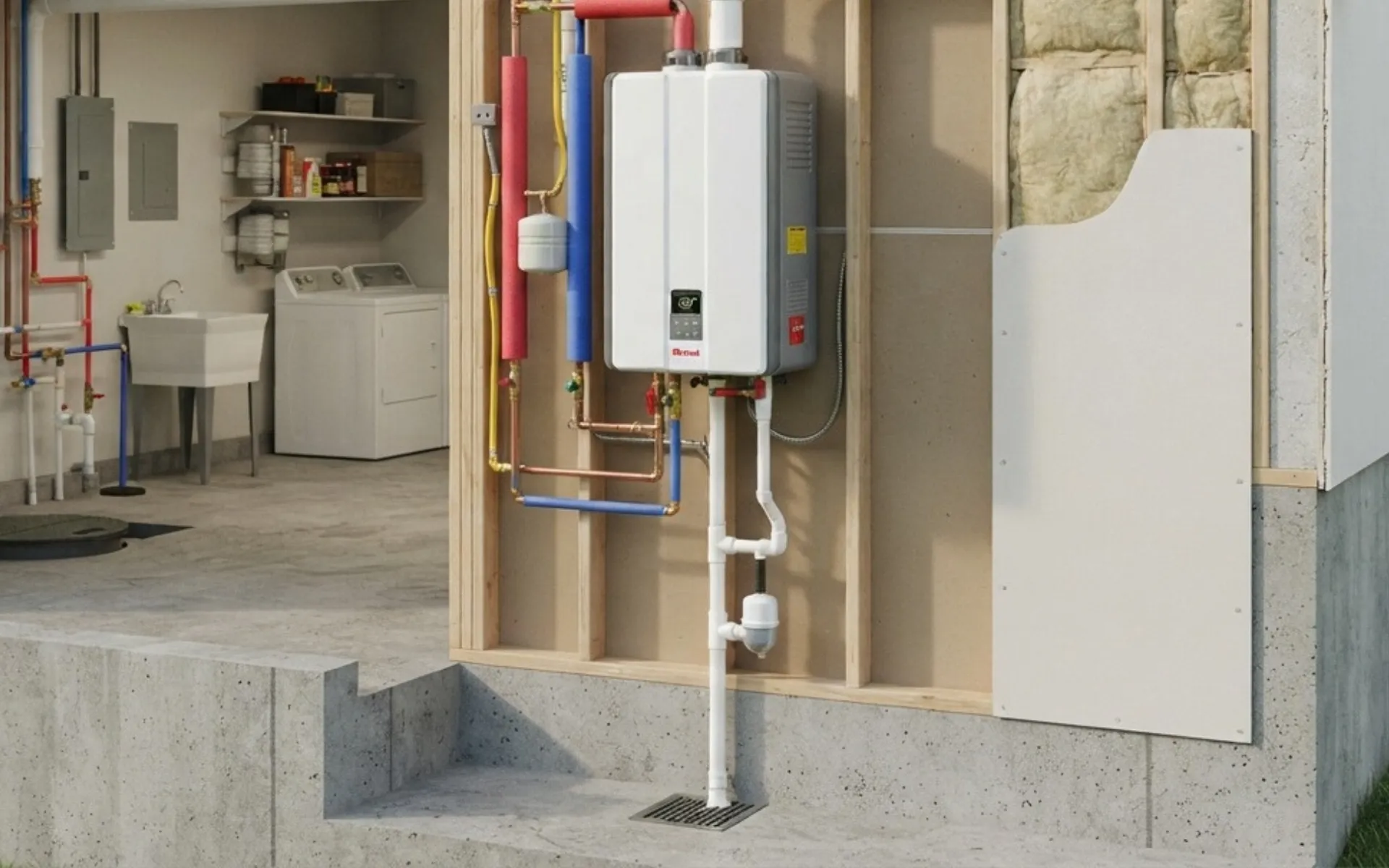
A gas water heater is a tall cylindrical tank, usually in a basement, garage, closet, or utility room, that heats water with a gas burner at its base. Storage units keep a large volume of hot water ready, while on-demand units are compact boxes mounted on a wall that heat water only when a tap opens. Residential tanks typically hold up to 80 gallons, and gas models are commonly sold in sizes from 30 to 95 gallons. Either style connects to a cold supply line, a hot outlet, a gas supply, and an exhaust path to the outdoors.
You can spot a gas model by its visible hardware. A vent pipe rises from the top of the tank or runs out the side through a wall. Near the bottom, a burner compartment sits behind a small access door, and a gas line with a shutoff valve feeds a control unit that holds the temperature knob. A pilot light, or an ignition button on newer units, may be visible through a small window or opening. These features are what set the unit apart from electric heaters, which lack combustion parts entirely.
Telling gas from electric is simple once you know what to look for. Electric heaters have an electric cable or panel feeding the tank and side access panels covering heating elements. They have no gas line and no burner compartment. Gas heaters, by contrast, have a top vent pipe and a gas connection. If you are unsure, trace the pipes and cables leading to the tank rather than relying on its appearance alone. A quick identification checklist follows.
What Is Inside a Gas Water Heater?
Inside a gas water heater are a steel tank, a burner, a gas control valve, a thermostat, a pilot or igniter, a flue, and several protective parts. The tank has a porcelain enamel glass lining that guards against corrosion, acids, alkalines, and thermal shock, and thick non-CFC polyurethane foam insulation wraps it to hold heat. The burner sits centered under the bottom head, so heat reaches the water through that head and through the flue running up the middle. The table below links each part to its job and the trouble it can cause.
| Part | Function | Related problem |
|---|---|---|
| Thermocouple | Holds gas valve open | Pilot won’t stay lit |
| Anode rod | Resists tank corrosion | Rust, leaks |
| Dip tube | Directs cold water down | Sediment buildup |
| T&P valve | Relieves pressure | Dripping, no flow |
Control and safety parts work as a chain. The front knob sets the desired temperature, and when the control calls for heat, the main valve opens and lets gas flow to the burner. The pilot flame ignites that gas, and a thermocouple or thermopile converts pilot heat into a small current that holds the valve open. If the flame goes out, the current stops and the valve closes, which prevents raw gas from flowing into the room. Electronic ignition models replace the standing pilot with a spark or hot surface igniter.
Water-side parts protect the tank and efficiency. The dip tube is self-cleaning, injecting incoming cold water at the bottom to limit sediment, and a top-mounted anode rod corrodes in place of the steel. The temperature and pressure relief valve releases excess tank pressure, acting much like a car radiator cap, and a drain valve lets you flush the tank. A flue baffle slows exhaust so more heat transfers to the water before gases leave. Heaters of this type are built to UL 174 requirements and meet federal efficiency standards.
How Does a Gas Water Heater Work?
A gas water heater works by burning fuel under a tank whenever the water temperature drops below the setting, then venting the exhaust outside. Cold water enters through the dip tube at the bottom, the thermostat senses the drop, and the gas control valve opens so the burner can fire. Heat passes into the water through the bottom head and the central flue, and the heated water rises to the top, where it exits to faucets and appliances. The steps below follow one full cycle.
- Cold water enters through the dip tube.
- Thermostat calls for heat.
- Gas valve opens; burner ignites.
- Heat transfers to water.
- Exhaust leaves through the flue.
Between heating cycles, the tank sits in standby, and its insulation slows heat loss until the thermostat calls for the burner again. Because gas heats quickly and recovers fast, a tank can keep up with a family’s showers, laundry, and dishes without long waits. Tankless units skip storage altogether. A heat exchanger warms water as it passes through, typically about 2 to 5 gallons per minute. That means very large simultaneous demand can outpace a single unit.
Do Gas Water Heaters Need Electricity?
Not always. Traditional gas tank heaters can heat water without electricity, but some models need power for ignition, controls, or a blower fan. A standing-pilot unit uses the thermopile’s own current to hold the gas valve open, so it needs no outlet and keeps running during a blackout. This is a real advantage in areas with frequent outages, where an electric heater simply stops heating. Check your model rather than assuming, because designs vary.
Power becomes necessary when a feature depends on electronics or forced air. Electronic ignition replaces the pilot with a spark and needs current to light the burner. Power vent models use a small fan to push exhaust through plastic pipe and need a nearby regular outlet, so they stop during an outage. Tankless and condensing units rely on fans, sensors, and controls, so they also depend on electricity. The list below sorts the common types.
- Standing pilot: no power needed
- Electronic ignition: power needed
- Power vent: outlet and fan
- Tankless, condensing: power needed
The practical lesson is to match the heater to your outage risk. Atmospheric vented heaters burn room air and let exhaust rise through a chimney and draft hood without any electricity. If you want a sealed or high-efficiency system, plan for a power source or a backup, since those designs trade outage independence for venting flexibility and efficiency. Even a powered gas heater uses far less electricity than an electric resistance heater would to produce the same hot water. Electricity there runs controls and fans, not the heating itself.
What Gas Do Water Heaters Use?
Gas water heaters use either natural gas or propane, also called liquid propane or LP gas, and each unit is built for one of them. Natural gas arrives through a utility pipe, so the home needs a gas line. Propane is delivered and stored in a tank on the property. The two fuels burn at different pressures, so burner components differ between models. That is why you should confirm the fuel type on the data label before buying or installing.
Natural gas is one of the least expensive options, though it is inconsistent in price and among the less eco-friendly choices, and it requires a gas line to the home. Operating costs are often lower than electricity in many regions, which can offset the higher purchase price over time. Burning it produces emissions that affect a home’s carbon footprint, although it is more efficient than some other fuels. Local rates decide how much you actually save.
Propane is mostly mined domestically, so it costs less to transport and is unaffected by tariffs, but it costs more than natural gas. It suits homes beyond the reach of utility gas lines, such as rural properties, where a tank fills the role of the pipeline. Product lines include both natural gas and propane residential models for all home types. Efficiency and usage patterns drive consumption, and newer models with good energy ratings tend to use less gas.
Conversion is possible in some cases. Switching a natural gas unit to propane requires a conversion kit unless the unit already includes one. Because this work involves gas pressure and burner orifices, it belongs with a licensed professional. Fuel type therefore matters twice: it determines which heater you can purchase and how it must be installed. Switching a home from one fuel to another also affects gas lines, storage, and costs.
Types of Gas Water Heaters
Gas water heaters are classified by how they store water, tank or tankless, and by how they vent and how efficiently they burn fuel. Storage models keep a large volume hot and ready, while tankless units, also called on-demand, heat water only when needed and may be more energy efficient. Both burn natural gas or propane, and both must send combustion byproducts outside. The choice between them affects cost, space, and how well the heater handles busy mornings.
The second classification is venting and efficiency. Atmospheric models rise through a chimney or roof flue, power vent models use a fan and plastic pipe, and direct vent models draw outside air for combustion. Condensing models capture extra heat from exhaust and reach up to 96% efficiency, according to the U.S. Department of Energy. Each category changes where the heater can sit and whether it needs electricity. Subsections below compare these in detail.
Other water heater types sit alongside gas options, including heat pump, hybrid, solar, boiler-based, and indirect systems. They differ in fuel and equipment rather than in basic purpose, which is simply to deliver hot water to the home. Electric units are the second most popular option nationally, while gas is used in over 50% of American homes. Understanding these categories helps you compare like with like before you shop.
Tank vs Tankless Gas Water Heaters
Tank gas heaters store pre-heated water for steady, high demand, while tankless gas heaters heat water on demand and save space but usually cost more upfront. A tank keeps water at the set temperature around the clock, so it loses some heat in standby. A tankless unit has no standby loss and improves energy efficiency over storage heaters by about 8% to 14% on average. The table compares them on shared criteria.
| Criterion | Tank | Tankless |
|---|---|---|
| Hot water | Stored reserve | On demand, 2-5 GPM |
| Space | Larger | Compact |
| Upfront cost | Lower | Higher |
| Lifespan | 10-15 years | 20+ years |
| Warranty | 6-10 years | 15 years |
Capacity is the main difference in daily use. Tankless units heat about 2 to 5 gallons per minute and may fall short when several outlets run at once. Tanks supply a large reserve, then recover quickly because gas heats faster than similarly sized electric units. Tank sizes of 30 to 95 gallons cover most households, and a tank gives a low initial investment and easier installation. Tankless gives continuous hot water as long as flow stays within its rating.
Longevity and warranties also differ. Storage tank heaters last 10 to 15 years, while tankless heaters last 20 or more, and warranties reflect this. Traditional gas tank models carry limited warranties of 6 to 10 years, and gas tankless models carry 15-year limited warranties. Tankless units demand significant investment that may take years to repay, so they suit buyers who will stay put better than budget-focused buyers or those selling soon. Match the choice to household demand and available space.
Venting Types: Atmospheric, Power Vent, Direct Vent and Condensing
Venting type determines how exhaust leaves a gas water heater and where combustion air comes from, which sets placement options and electricity needs. Atmospheric units burn room air and let gases rise through a draft hood and chimney, ending vertically through the roof. Power vent units use a fan to push exhaust through plastic pipe that can run up to 40 feet sideways through a wall. Direct vent units use separate intake and exhaust pipes in a sealed setup.
| Vent type | How it works | Best fit |
|---|---|---|
| Atmospheric | Room air, chimney | Existing flue, outages |
| Power vent | Fan, plastic pipe | Basements, no chimney |
| Direct vent | Sealed, outside air | Tight homes |
| Condensing | Two heat exchangers | High efficiency |
Direct vent models draw outside air for combustion and exhaust it back outside, which suits newer, tight homes. A fan-powered version also allows plastic pipe up to 40 feet long. Condensing models add a second heat exchanger to capture exhaust heat, and vapor condensing releases extra heat for up to 96% efficiency. Vent material and sizing are set by local code and the manufacturer, so they are handled during installation. The trade-off is more electricity and cost for greater flexibility.
Gas vs Heat Pump and Other Water Heater Types
Gas suits homes with an existing gas line and high demand, while alternatives win on efficiency or fuel flexibility when conditions allow. Heat pump water heaters are extremely efficient because they move existing heat, but they need significant upfront investment, strict installation requirements, and may underperform in colder climates. Hybrid units switch between electricity and heat pump modes and offer no gas option. Gas, by contrast, performs consistently regardless of weather.
- Heat pump: efficient, strict installation
- Hybrid: electric and heat pump modes
- Solar: backup needed
- Indirect: needs boiler and tank
Solar heaters collect sun energy with efficiency comparable to heat pumps, usually with electricity or gas backup. Indirect heaters use an existing boiler or furnace and are often more efficient with a high-efficiency boiler, but they require a storage tank. Choose a heat pump when electricity is affordable and the space is suitable, and indirect when a good boiler is already in place. Keep gas when you already have a line and want fast recovery.
Gas vs Electric Water Heaters: Which Is Better?
Neither is universally better. Gas usually heats faster and costs less to run where gas is cheap, while electric costs less to buy and install and is generally more efficient. Local utility rates decide the winner, since high electricity prices can offset electric’s efficiency gains. Gas also keeps working during power outages, while electric units shut down. Infrastructure matters as well, because electric can go anywhere with power, but gas needs a line and venting.
Electric heaters use resistance elements and convert nearly all power into heat, which gives them higher Energy Factor ratings, whereas gas loses some energy through venting. Gas costs more initially because of gas lines, ventilation, and inspections, and it needs regular checks for leaks and ventilation, along with burner and pilot cleaning. Electric units burn no fuel, so gas leaks and carbon monoxide are not concerns. The table compares both on key criteria.
| Criterion | Gas | Electric |
|---|---|---|
| Upfront cost | Higher | Lower |
| Recovery | Faster | Slower |
| Outage | Often works | Stops |
| Efficiency | Some vent loss | Higher |
To decide, start with what your home already has. If a gas line and vent are in place and gas is cheaper than electricity locally, gas is a strong candidate. If you lack gas service, or electricity is inexpensive, electric avoids installation expense and combustion concerns. Outage-prone areas and large households lean toward gas for its fast recovery and independence from the grid. Emissions and long-term sustainability goals add a further reason to weigh options carefully.
Pros and Cons of Gas Water Heaters
Gas water heaters offer fast heating and low running costs in many areas, but they cost more upfront and require venting and regular safety checks. Their strengths include quick recovery, a steady hot water supply, operation during outages with a pilot light, and gas that often costs less than electricity. Their drawbacks center on combustion, since byproducts such as carbon dioxide, carbon monoxide, and nitrogen oxide must be vented outdoors. Installation is also more complex where gas is not already available.
Households with high hot water demand and existing gas service benefit most, particularly those with large families, multiple bathrooms, or frequent outages. Those who prefer minimal maintenance or lack gas access may find electric or heat pump options simpler. Annual checks of gas connections and burner cleaning keep a gas unit safe and efficient. Weigh immediate cost and comfort against long-term environmental impact.
Is a Gas Water Heater Dangerous? Safety Features and Risks
A gas water heater is safe when properly installed and maintained with regular inspections, but it carries real risks if neglected. The main hazards are carbon monoxide from incomplete combustion, gas leaks, backdrafting of exhaust into the room, scalding from overly hot water, and excess tank pressure. Proper venting is critical for safe combustion and indoor air quality. A gas smell without a clear leak can indicate incomplete combustion and warrants a professional check.
Built-in safeguards address most of these risks. The thermocouple or thermopile shuts the gas valve if the flame goes out, and the T&P relief valve releases excess pressure or temperature. Setting water at 120°F or below lowers scalding risk. If you suspect a gas leak, turn off the gas, ventilate, avoid electrical devices and sparks, and call a professional. Never ignore a persistent odor or soot around the burner.
Common Gas Water Heater Problems and Troubleshooting
Most gas water heater problems trace to a few causes: gas supply, ignition, thermostat settings, sediment, or leaks, and each has a typical fix. If the pilot will not stay lit, check the pilot light and thermocouple. Hold the control as directed, usually 30 to 60 seconds, before releasing it. If the heater will not turn on, check the gas supply and thermostat settings. Reduced performance, slower heating, and less hot water can signal an aging unit.
| Symptom | Cause | Fix |
|---|---|---|
| Pilot goes out | Thermocouple, draft | Relight, replace part |
| Little hot water | Sediment, thermostat | Flush, adjust |
| Gurgling noise | Sediment | Flush tank |
| Gas odor | Leak, poor combustion | Shut off, call pro |
Noise points to sediment. Sediment reduces heating efficiency and causes gurgling or bubbling noises, and flushing the tank usually helps. Leaks need prompt attention, and odors should be treated seriously, since gas smells require shutting off the supply and calling a professional. Homeowner tasks include relighting the pilot, adjusting the thermostat, and flushing. Gas valve, burner, and vent repairs belong to licensed technicians.
The table summarizes common symptoms with likely causes and actions. Use it as a first pass, not a replacement for professional diagnosis, especially where gas or exhaust is involved. A problem that repeats after a simple fix often signals a failing part such as a thermocouple or valve. Age matters too, so consider the unit’s years of service.
Why Is a Gas Water Heater Not Working?
Work through the likely causes in order, starting with the simplest: gas supply, pilot or igniter, thermocouple, gas control valve, and thermostat. Confirm the gas valve is open and the thermostat is set properly, then check whether the pilot is lit and the thermocouple is working. A pilot that lights but will not stay on often points to a worn thermocouple. The steps below give the sequence.
- Check gas supply valve
- Check thermostat setting
- Inspect pilot or igniter
- Test thermocouple
- Call pro for gas valve
Homeowner checks end where gas components begin. Relighting a pilot and adjusting the temperature knob are reasonable, but replacing a gas control valve or repairing burner and vent parts is professional work. To turn off gas, set the gas control valve to OFF, and a lever valve is off when perpendicular to the pipe. If you smell gas at any step, stop and call a professional. Electronic ignition models may also need power checked.
What Causes a Gas Water Heater to Leak?
A gas water heater leaks from loose fittings, the T&P valve, the drain valve, condensation, or tank corrosion, and only the first few are usually repairable. Fittings on the supply lines can loosen and drip, and the drain valve may seep after a flush. The T&P valve can drip if pressure runs high or the valve is worn. These are generally fixable without replacing the heater.
Test the T&P valve by lifting its handle slightly to confirm water flows through the overflow pipe. If no water flows, consider replacing the valve. Condensation can appear on condensing or cold-water-fed tanks and may look like a leak without being one. Wipe the area dry and watch whether moisture returns. Persistent pooling points to a real leak.
- Loose fittings
- T&P valve
- Drain valve
- Condensation
- Tank corrosion
Tank corrosion is the serious cause. Once the steel tank leaks from inside, it cannot be repaired and the heater must be replaced. Rust-colored water and leaks near the base suggest the anode rod may be spent and corrosion has progressed. Water quality and maintenance shape how soon this happens. Age plays a role too, since typical life is 8 to 12 years.
When a leak appears, set the gas control valve to OFF and shut the cold supply. Then drain the tank by attaching a hose to the drain valve and opening it. Stopping the gas and water limits damage while you assess the source. A fitting or valve leak can be repaired, but a tank leak means replacement. Call a professional if you are unsure where the water originates.
Gas Water Heater Maintenance and Extending Its Life
Regular maintenance, including sediment flushing, anode rod checks, and burner and vent inspection, extends a gas water heater’s life, which typically runs 8 to 12 years. To flush, set the pilot control, shut the cold supply, open a hot faucet, connect a hose to the drain valve, drain the tank, and refill. Water may be discolored, so refill and drain a second time if sediment remains. Water quality strongly influences how fast sediment and corrosion build up.
| Task | Purpose | Frequency |
|---|---|---|
| Flush tank | Remove sediment | Annually |
| Inspect anode rod | Prevent corrosion | Every 1-2 years |
| Test T&P valve | Confirm relief | Routine |
| Check burner, vent | Safe combustion | Annually |
Test the pressure relief valve, check for gas leaks, and keep the temperature at 120°F or below for safety and savings. Annual sediment flushing and burner and venting inspection are recommended, and a powered anode rod can help prevent internal corrosion and extend lifespan. A table gives a quick schedule. Skipping these tasks shortens life and raises operating cost.
Do Gas Water Heaters Have Anode Rods?
Yes, gas tank water heaters have an anode rod, a sacrificial rod mounted at the top that attracts corrosive elements so the steel tank does not rust. Standard rods corrode over time instead of the tank, and a powered anode rod offers added protection against internal corrosion. Tankless units have no storage tank to protect in the same way. Its job is simple but vital to tank life.
Check the rod every 1 to 2 years and replace it when heavily corroded. A depleted rod leaves the tank exposed, and rust, leaks, or discolored water can follow. Hard or aggressive water wears rods out faster. Replacing an inexpensive rod is far cheaper than replacing a rusted tank.
When to Repair or Replace a Gas Water Heater
Repair a gas water heater when it is young and the fault is minor, and replace it when it is old, leaking from the tank, or costly to fix. Tank leaks cannot be repaired, so they mean replacement. Typical life is 8 to 12 years, and tank heaters can last 10 to 15 years with good care. Signs of failure include reduced performance, slower heating, less hot water, rusty water, and rising bills. Warranty coverage may lower the cost of a repair if the unit is still protected.
Compare repair cost with the price of a new unit and its efficiency. Newer models with good energy ratings tend to use less gas and lower bills. An aging heater needing a major part may be a poor investment. The list below summarizes decision criteria. If several factors point to replacement, replacing is usually the wiser move.
- Age near 8-12 years
- Tank leak
- High repair cost
- Lower efficiency
- Warranty status
How to Choose the Right Gas Water Heater
Choose a gas water heater by matching its capacity, fuel, venting, and efficiency to your household and home, then comparing models and installers. Tank size and recovery rate should match demand, and high-efficiency or tankless gas models can lower energy costs. Confirm natural gas or propane compatibility and which vent type your space allows. Follow the steps below to narrow your options.
- Estimate household demand
- Confirm fuel type
- Check venting options
- Compare efficiency, warranty
- Hire qualified installer
When comparing brands and models, look at the first-hour rating, efficiency rating, warranty length, and features rather than price alone. Rebate eligibility may depend on a UEF of 0.82 or higher, or thermal efficiency of at least 90%, so check ratings. Warranties for gas tanks run 6 to 10 years, and for gas tankless 15 years. Local utility rebates exist only in limited geographical areas.
Installer qualifications matter because gas, venting, and permits are involved. Hire licensed professionals who work on gas water heaters and follow local code. Condensing tank models suit large homes with multiple bathrooms and large tubs, with up to 129 GPH first hour rate versus a baseline of 41 GPH for standard units. Space also counts, since tankless saves room and tanks need floor area and clearance. Good installation protects both safety and efficiency.
What Size Gas Water Heater Do I Need?
Size a gas water heater by household size and peak usage, using first-hour rating for tanks and flow rate in gallons per minute for tankless. The first-hour rating measures how much hot water a tank can deliver in an hour starting full, and it matters more than gallons alone. Tank sizes of 30 to 95 gallons are available, so a larger family needs a higher rating. Think about when your household uses the most water at once.
Tankless units are sized differently. They heat about 2 to 5 gallons per minute, so add up the outlets that may run together, such as showers and a dishwasher. If simultaneous demand exceeds the rating, hot water can fall short. Condensing tank models reach up to 129 GPH first hour, compared with 41 GPH for a standard baseline. A family of four can use showers, laundry, and dishes without long recovery times when sized well.
Undersizing causes lukewarm showers, while oversizing wastes fuel and space through standby heat loss in a tank. Recovery rate should match demand, so fast recovery helps smaller tanks serve busy households. A professional can run a precise load calculation. The table lists the main sizing criteria.
| Criterion | Tank | Tankless |
|---|---|---|
| Key metric | First-hour rating | Gallons per minute |
| Range | 30-95 gallons | 2-5 GPM |
Gas Water Heater Cost, Installation and Incentives
Total cost combines the unit, installation, venting, gas line, permits, and removal of the old heater, and gas typically costs more upfront than electric. The gas line and venting drive much of the difference, especially where gas is not already installed. Operating cost depends on efficiency, usage patterns, the model, and local gas prices. Natural gas is often cheaper than electricity, which can lower long-term costs.
Licensed plumbers or gas-qualified contractors typically install these units, since gas connections, venting, and permits require expertise and code compliance. Switching fuel, such as moving from electric to gas, adds line and vent work and may add cost. Tankless units may cost more upfront but can pay back over time. Annual checks keep operating costs down.
Incentives vary by date and location, so confirm current offers before buying. Eligibility often requires a UEF of 0.82 or higher, or thermal efficiency of at least 90%. Local utility rebates are available only in limited areas. The table lists the cost factors to budget for. Compare quotes that itemize each item to see what drives the total.
| Cost factor | Dimension |
|---|---|
| Unit | Tank or tankless |
| Venting | Vent type |
| Gas line | New or existing |
| Permits, removal | Local rules |
Frequently Asked Questions
Here are the questions homeowners most often ask about how gas water heaters work, along with direct answers.
Why does my gas water heater have a pilot light that stays on all the time?
A standing pilot light burns continuously so it’s always ready to ignite the main burner the instant the thermostat calls for heat. This design doesn’t require electricity, which is part of why atmospheric vent gas water heaters continue working during a power outage, unlike many electronic ignition or power vent models.
What does the thermocouple actually do on a gas water heater?
The thermocouple is a safety sensor positioned next to the pilot flame. As long as the pilot stays lit, the thermocouple generates a small electrical current that keeps the gas valve open. If the pilot goes out, that current stops and the valve automatically closes, preventing unburned gas from continuing to flow.
What’s the difference between atmospheric, power vent, and direct vent water heaters?
Atmospheric vent models rely on natural draft, letting hot exhaust rise through a vertical flue without any fan or electricity. Power vent models use an electric blower to push exhaust out, often horizontally, offering more installation flexibility. Direct vent models seal the combustion chamber entirely, drawing air from outside and venting exhaust outside as well, without using any indoor air.
Can a gas water heater work during a power outage?
An atmospheric vent model with a standing pilot light generally continues working during a power outage, since it doesn’t rely on electricity for ignition or venting. Power vent and electronic ignition models typically require electricity and will not operate without it.
Why does my gas water heater make a whooshing sound when it turns on?
That sound is typically the gas valve releasing gas into the burner, which is then ignited by the pilot flame or an electronic igniter. It’s a normal part of the ignition process rather than a sign of a problem, though a sudden change in the sound is worth having checked.
How do I know if my gas water heater’s venting is working properly?
Signs of a properly venting system include no soot buildup near the draft hood or vent connections and no lingering burning smell in the room. Signs of a problem, like backdrafting, include visible soot, a persistent odor, or warm air felt near the draft hood while the unit is running, and any of these should be checked by a licensed professional promptly.
Need help with water heaters?
Explore the relevant services available from Anaheim Plumbing.