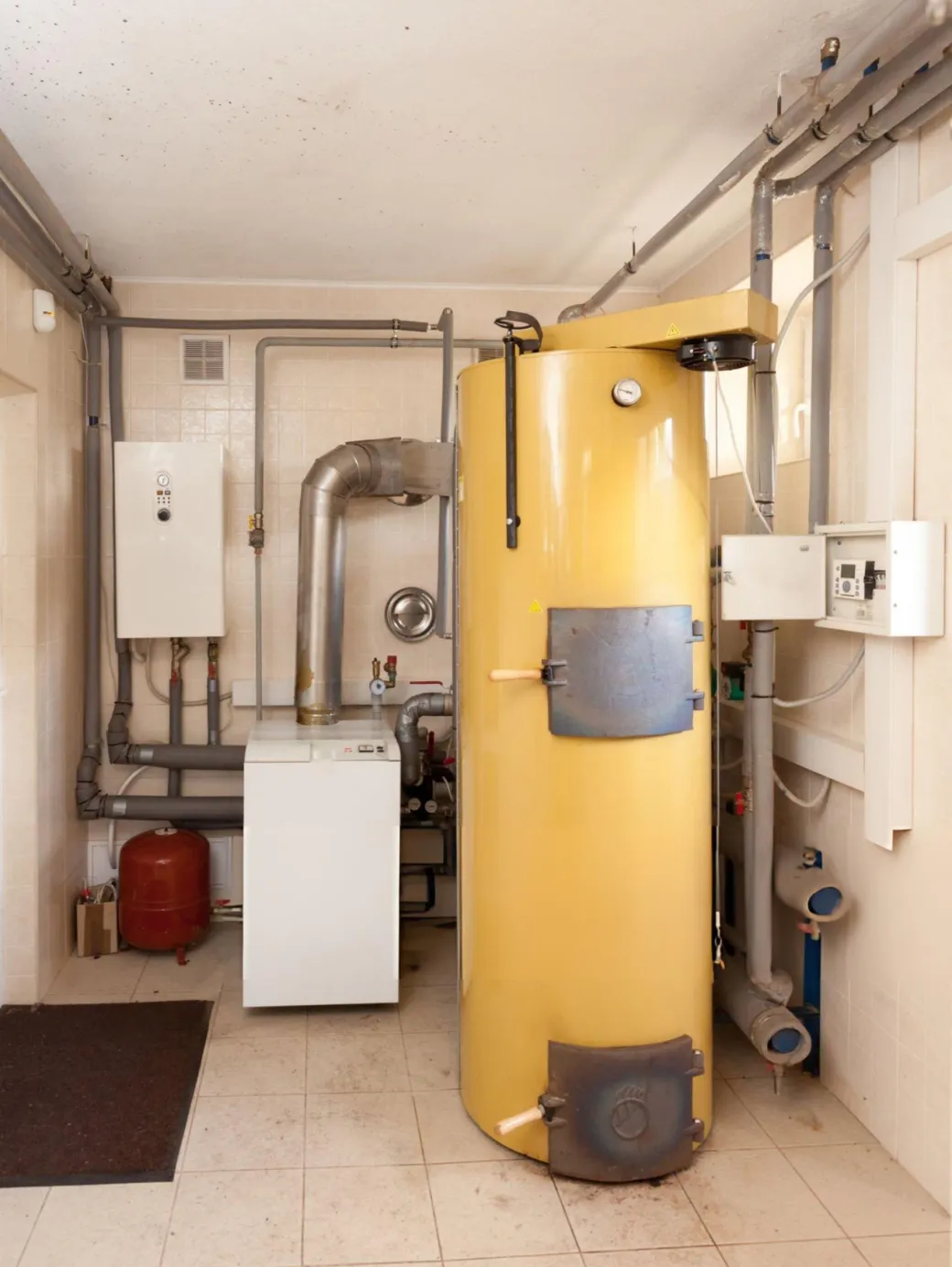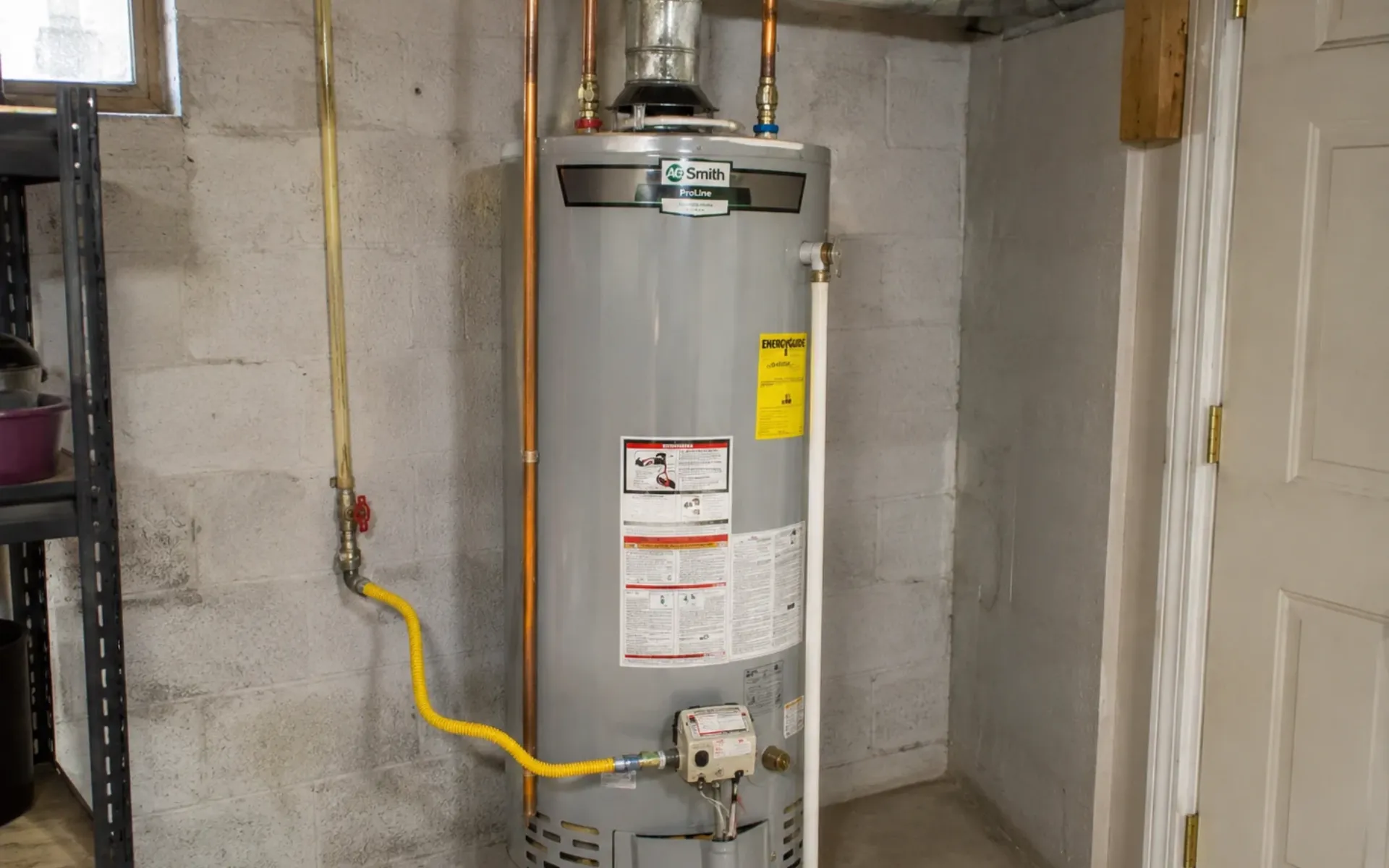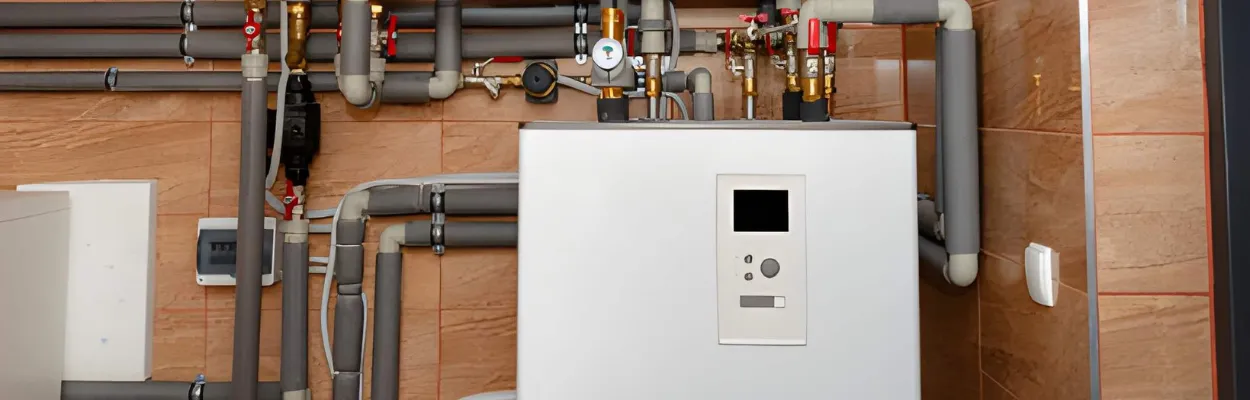
A condensing water heater is a gas-fired appliance that captures heat from its exhaust, which a conventional unit would simply vent outdoors. It comes in storage tank and tankless forms. Because the exhaust leaves much cooler, it carries moisture and needs different handling. Instead of hot flue gas rising through a metal vent or chimney, the unit sends cool exhaust through plastic pipe.
The key distinction is against non-condensing heaters, which use one heat exchanger and let leftover heat escape. Condensing models use a second exchanger to reclaim it, producing liquid condensate that must be drained. It is also not the same thing as a condensing boiler, which heats living spaces, or a heat pump water heater, which moves heat from surrounding air.
What Does Condensing Mean in a Water Heater?
Condensing means water vapor in combustion gases cools until it turns back into liquid. Burning natural gas or propane creates water vapor, and that vapor holds latent heat, the energy released when vapor becomes liquid. A conventional heater sends this vapor and its energy up the vent. A condensing unit pulls the gas across a second heat exchanger, where the vapor condenses and its heat warms incoming water.
This matters because the extra heat is captured instead of wasted, which is why condensing designs can operate at up to 96% efficiency, with about 4% of energy lost. The principle applies to gas-fired units across tank, tankless and on-demand variants. Electric water heaters burn no fuel, so they produce no exhaust and do not condense.
Condensing Tank vs. Condensing Tankless Models
A condensing tank model stores heated water in an insulated tank, while a condensing tankless model heats water on demand as it flows. Both use the same condensing principle to recover exhaust heat. Tank versions commonly place the burner at the top and pass hot gases through a heat exchanger that moves heat into the stored water.
They come in 34, 40, 50 and 75 gallon sizes and reach a 95% AFUE rating. Tankless versions use two stainless steel heat exchangers to supply endless hot water without reheating stored water, and the second exchanger preheats incoming cold water.
Listings may say hot water heater, boiler, gas or natural gas unit, but all describe the same idea. Sizing differs: a 34 gallon tank may suit two to three people, and a 50 gallon tank three to four. Tank models also need a standard outlet for the built-in fan, plus a drain for condensate.
How Condensing Water Heaters Differ from Condensing Boilers
A condensing water heater exists to heat domestic hot water, while a condensing boiler heats water that circulates through radiators or other space heating. Both rely on the same condensing principle, but their jobs differ.
In both, flue gas heat preheats water entering the appliance, and water vapor condenses so more energy is extracted. A conventional boiler loses that vapor, while a condensing design uses extra heat exchange elements and corrosion-resistant materials.
Terminology shifts by region. In places like the UK and Europe, condensing boilers are the standard term and combi boilers, which supply both heating and hot water, overlap with water heater functions. Condensing technology is mandatory in Europe to meet regulations and emission limits.
Boiler efficiency depends on return water temperature, since condensing occurs at around 54°C and gains grow as return water falls below that. Water heaters mainly benefit from cold incoming water, which keeps the exhaust cool.
How Does a Condensing Water Heater Work?
A condensing water heater burns gas, passes the hot gases through two heat exchangers, and vents exhaust that has been cooled enough to produce condensate. The primary exchanger does most of the heating first.
The secondary stainless steel exchanger then pulls leftover heat from the exhaust and transfers it to incoming cold water. Exhaust often leaves below 100°F, compared with up to 400°F in non-condensing units. Key parts include a control panel, burner, stainless steel heat exchangers, a plastic vent and a drain.
There is no pilot light; an internal igniter fires when hot water is needed, and safety devices shut the unit down if vents are blocked. The stages below show the sequence from ignition to drain.
- Igniter lights burner
- Gas combusts
- Primary exchanger heats water
- Secondary exchanger preheats inlet water
- Cooled exhaust vents
- Condensate drains
Why Condensate Is Acidic and How a Neutralizer Handles It
Condensate is acidic because carbon dioxide from combustion dissolves in the water to form carbonic acid. A neutralizer raises the pH to a safe, near-neutral level before the liquid reaches a drain.
One manufacturer’s condensate measures pH 3 to 5. That is acidic enough to corrode some metals, which is why condensing heat exchangers use stainless steel and why condensate in conventional boilers can cause corrosion and failure.
A neutralizer kit contains media the condensate passes through on its way out. The media is used up over time, so it is replaced during routine maintenance. Without this step, long-term discharge could harm drain materials.
Drain lines should be PVC or CPVC, which resist corrosion. Common destinations include a laundry tub, utility sink or floor drain, and a condensate pump can cover longer distances. Always follow local codes.
Condensing vs. Non-Condensing Water Heaters: Key Differences
The main difference is that condensing heaters use two heat exchangers and vent cool exhaust, while non-condensing heaters use one exchanger and vent hot exhaust through metal CAT III venting, the traditional standard. The trade-off is efficiency against installation needs.
Condensing units save energy but cost more, need a drain and require annual maintenance; non-condensing units are cheaper, smaller, lighter and simpler, but lose unused heat through the flue. Non-condensing fits replacements of existing non-condensing units or homes where a condensate drain is hard to add. Condensing fits new homes and additions where flexible plastic venting and higher efficiency matter. The table compares them across shared criteria.
| Criterion | Condensing | Non-condensing |
|---|---|---|
| Heat exchangers | Two | One |
| Exhaust | Under 100°F | Up to 400°F |
| Efficiency | Over 90% | About 80% |
| Vent | PVC, CPVC, PP | Metal |
| Drain | Required | Not needed |
How Efficient Is a Condensing Water Heater, and Is It Worth It?
Condensing gas water heaters reach efficiency ratings above 90 percent, against roughly 80 to 85 percent for many conventional gas models. Recovering exhaust heat means less gas for the same hot water. Savings depend on hot water usage, climate, gas price, incoming water temperature and household size.
Estimates include 10 to 15 percent off water heating bills, and average domestic savings of $40 to $100 per year, varying with region and gas type. Over a 10 to 15 year life, savings usually exceed the added cost for the average family, though that is not guaranteed.
Low-use households may take longer to recover the higher price. High UEF models may qualify for tax credits and rebates. Pros are efficiency, lower running costs, flexible plastic venting and durable stainless exchangers. Cons are higher upfront cost, condensate management, more complex installation and annual service.
- Pro: lower gas use
- Pro: flexible venting
- Con: higher upfront cost
- Con: condensate drain needed
How Do You Vent and Drain a Condensing Water Heater?
Vent a condensing water heater with plastic pipe such as PVC, CPVC or polypropylene, and route condensate through a dedicated drain. Cooler exhaust cannot rise through a chimney, so metal CAT III venting is unnecessary. These units cannot share venting with other appliances or use a chimney.
Drain lines should slope away from the unit toward the drain, with the neutralizer placed in the condensate path before discharge. Follow local codes. Plastic venting allows flexible runs, including through walls. Pressure-monitoring devices shut the heater off if the vent or intake is blocked. Because gas, venting and wiring are involved, a licensed professional should install it. Venting options include these types.
- PVC
- CPVC
- Polypropylene
Installation, Replacement and Maintenance Considerations
Replacing a non-condensing unit with a condensing one usually means changing the vent to plastic, finding drain access, confirming the gas supply and sizing the unit properly. Retrofits can add to installation cost. Maintenance centers on descaling about once a year, checking or replacing the neutralizer and keeping the condensate drain clear.
Annual technician service protects efficiency and warranty. There is no pilot light, and improper venting risks carbon monoxide. Rentals, such as conventional venting from $25.87 per month or direct venting from $42.43, include 24/7 support. Buyers pay for the unit and installation, plus repairs, but may qualify for rebates. Use this checklist before installing.
Is a Condensing Water Heater Right for Your Home?
A condensing water heater suits homes with high hot water demand, a workable vent and drain path, and a budget for higher upfront cost. It pays back fastest where the unit runs often.
Check hot water use, home layout, venting feasibility, budget and fuel type. Condensing models run on natural gas or propane; electric heaters do not condense. Older rural homes may need gas or venting upgrades.
New construction and additions fit best because plastic venting is flexible. Replacements fit when venting and drainage are workable. Cold climates, such as Minnesota winters, mean colder incoming water and more work for the unit. Small households may prefer non-condensing. Use this decision list.
- High demand: condensing
- New build: condensing
- No drain access: non-condensing
Frequently Asked Questions
Can a condensing water heater be electric?
No, condensing technology only applies to gas and propane water heaters, since it works by recovering heat from combustion exhaust. Electric water heaters don’t produce flue gas, so there’s no exhaust heat available to capture.
Do condensing water heaters need a drain?
Yes, condensing water heaters produce acidic condensate that must drain away from the unit, usually through a dedicated line with a neutralizer cartridge. This is a standard part of the design, not an optional feature.
Is a condensing water heater worth the extra cost?
It depends on household hot water use and how long the unit will stay in service, since the higher upfront cost is offset over time by lower fuel bills. Households with consistent, higher hot water demand typically see the fastest return on that extra cost.
What’s the difference between condensing and high-efficiency?
“High-efficiency” is a broader term that can include condensing units, heat pump water heaters, and other technologies designed to use less energy than standard models. “Condensing” specifically refers to units that recover heat from exhaust gas through a secondary heat exchanger.
Can I vent a condensing water heater with PVC pipe?
In most cases, yes — condensing water heaters cool their exhaust enough that PVC, CPVC, or polypropylene venting is typically acceptable, unlike standard units that usually require metal venting. Always follow the manufacturer’s specific venting instructions and local code requirements.
Do condensing water heaters last as long as standard ones?
Manufacturers generally build condensing units with similar or comparable warranties to standard high-efficiency models, often supported by stainless steel heat exchangers designed for durability. Actual lifespan still depends on water quality, maintenance, and how consistently the condensate system is serviced.
Does a condensing water heater need more maintenance than a standard one?
It needs a bit more attention specifically around the condensate neutralizer and drain line, in addition to the standard maintenance any gas water heater requires. Regular annual service keeps both the standard and condensing-specific components working correctly.
Need help with water heaters?
Explore the relevant services available from Anaheim Plumbing.