An electric water heater is an appliance that uses electricity to heat the water a household uses for showers, sinks and appliances. It needs no gas line, burner or flue, so its only energy connection is an electrical supply that must be sized for the unit. That makes it installable in many places, from basements and closets to garages, and it also means the appliance stops working when power is lost. Electricity can heat water through resistance elements, and heat pump models move heat instead, which broadens what the term covers.
The main distinction is between storage tank models, which keep a full tank of hot water ready, and tankless models, which heat water only as it flows. A tank stores heat in advance and loses some of it while waiting, whereas a tankless unit avoids that loss but needs a large burst of power. Heat pump water heaters are a third route, using much less electricity than resistance heating in suitable conditions. Which design fits best depends on how much hot water your household uses at once, the space available and the capacity of your wiring.
What is an electric water heater?
An electric water heater is a household appliance that converts electrical energy into heat and delivers hot water to taps, showers, dishwashers and washing machines. Homes use it for everyday needs, and larger buildings such as hotels, offices, hospitals, schools, gyms and factories rely on bigger versions for showers, kitchens and sometimes space heating. Unlike gas units, it does not burn fuel, so there is no combustion, exhaust or flue involved. Its heating method is typically an electrical resistance element controlled by a thermostat, though heat pump designs achieve the same result differently.
Electric does not automatically mean tankless, and that is a common misunderstanding. The most common electric type is the conventional storage heater, in which elements warm a tank that stays heated at all times, and tank size sets how much hot water is available. Tankless electric units use coils to heat water only on demand and can serve a whole house or a single point of use. In the United States, roughly 57 million electric resistance units are installed, making them the second most common type after natural gas.
How does an electric water heater work?
An electric water heater works by drawing in cold water, warming it with electrical resistance and sending the hot water out to your fixtures. Current passes through a heating element, which resists the flow and gives off heat in the water, a process known as the Joule effect. A thermostat senses the water temperature, cuts power to the element when the set temperature is reached and switches it back on when the water cools. A pressure safety valve releases excess pressure if it ever climbs dangerously inside the tank.
The two main designs differ in when they heat. A storage heater keeps water at a constant temperature day and night, using power to offset heat that slips away even when nobody is using hot water. An instantaneous or tankless heater runs at full power only while water is flowing, passing cold water through a heat exchanger and heating it as it reaches the tap. One trades ready availability for standby losses, while the other trades those losses for a high momentary electrical demand.
What parts are inside a tank-style electric water heater?
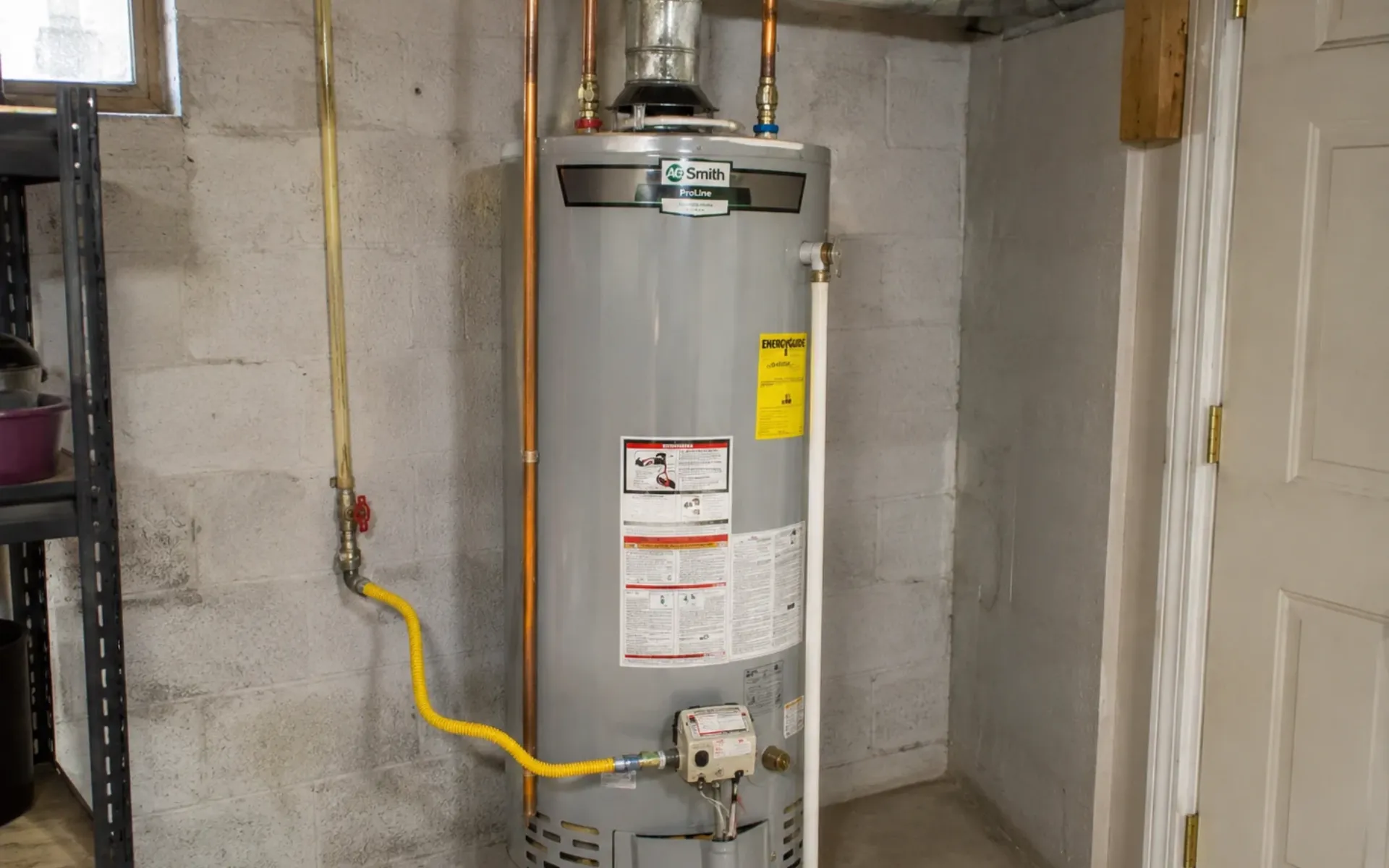
A tank-style electric water heater contains an insulated tank, two heating elements, two thermostats, inlet and outlet pipes, a dip tube, an anode rod, a pressure relief valve and a drain valve. There is no pilot light, flue or chimney because nothing burns inside. Power arrives through the home’s electrical wiring at the voltage the unit is designed for, and the thermostats control each element separately. Understanding these parts makes maintenance and troubleshooting far easier later on.
- Tank and insulation: store heat
- Elements and thermostats: heat and regulate
- Anode rod: protects against corrosion
- Relief and drain valves: safety, flushing
Each component has a specific job, and together they keep water hot safely and protect the tank. The insulation limits heat loss, the dip tube sends incoming cold water to the bottom, and hot water leaves from the top, where it sits under constant pressure. The anode rod attracts corrosive elements so the steel tank corrodes less, while the pressure relief valve opens if pressure becomes too high. The drain valve lets you flush sediment, and one element sits near the top of the tank with another near the bottom.
How does the heating cycle run from cold inlet to hot outlet?
The heating cycle begins when cold water fills the tank through the dip tube and ends when heated water leaves from the top outlet. Because incoming water is replaced at the bottom, hot water is always drawn from the top, where it is warmest. Cold supply temperatures vary by region and season, so the same heater works harder in winter. The sequence below shows how the tank moves from filling to standby and back to reheating.
The upper and lower elements share the work, each controlled by its own thermostat. Water is heated from the lower set point up to the upper set point, and the thermostats switch the elements on and off to hold the chosen temperature. Typically the upper element warms the hot zone first, then the lower element finishes heating the rest of the tank. After a draw, cold water refills the tank and the thermostats call for heat again until the set temperature returns.
Between uses, the heater enters standby, and this stage carries a hidden cost. Heat gradually escapes through the tank walls, so the thermostat periodically restarts an element just to maintain temperature, even when nobody draws any water. This standby heat loss is why insulation matters, and why a water heater blanket, a lower temperature setting or a timer can reduce energy use. Heavy back-to-back use makes reheating slower, which is the main practical limit of tank models.
What types of electric water heaters are there?
Electric water heaters fall into four broad types: storage tank, tankless, heat pump or hybrid, and point-of-use or compact units. They are classified by how they produce heat, either through resistance elements or by moving heat from the surrounding air, and by whether they store hot water in advance. Solar water heaters use electricity alongside solar heat, but they are not traditionally grouped with electric heaters. The table gives a quick comparison before the detailed sections that follow.
| Type | How it heats | Storage | Typical use |
|---|---|---|---|
| Storage tank | Elements | Yes | Whole home |
| Tankless | Coils on demand | No | Whole home or one outlet |
| Heat pump | Moves heat | Yes | Warm spaces |
| Point-of-use | Small element | Small or none | One sink or shower |
Storage tanks are the most familiar choice, with sizes typically running from 20 to 80 gallons and a reserve kept at the set temperature. Tankless units drop the reserve and heat water on demand, and they can be central units serving the whole home or small units at one outlet. Heat pump models use electricity to move heat into a tank, which makes them more efficient than resistance heating. Point-of-use heaters are small tank or tankless units serving one sink or shower, and costs add up if you install several.
These categories overlap, so a point-of-use heater can be tankless or a small tank, and a hybrid is still a storage tank. Choosing between them comes down to demand, climate, space and wiring rather than one clear winner. Point-of-use units are not effective for whole-house hot water, while heat pump units suit warmer settings better. Each type is explained below in terms of operation and trade-offs.
How do storage tank electric water heaters work and what are their trade-offs?
A storage tank electric water heater keeps a reserve of heated water ready, so hot water is available instantly whenever you open a tap. Elements inside an insulated tank warm the water, and thermostats hold it at the set temperature. Its greatest strength is simplicity: it is typically cheaper upfront, needs no venting and serves several outlets at once, even where water pressure is not constant. Typical tank sizes run from 20 to 80 gallons.
The trade-offs come from storing heat. Keeping a large volume hot around the clock causes standby heat loss, and the tank takes up significant space. If a household uses more hot water than the tank holds, the supply runs out and recovery is slow. A 40-gallon tank suits small to medium households with moderate use, while an 80-gallon tank better serves larger families or simultaneous daily use.
Insulation, a lower temperature setting and timers can reduce the standby cost, and good care lets a unit last up to 15 years. The pros and cons below summarize the practical balance for most homes. Because the tank keeps water hot, it also handles busy mornings well, provided its capacity matches demand. Sizing carefully matters more than almost any other choice with this type.
How do tankless electric water heaters work and what are their trade-offs?
A tankless electric water heater activates its elements when water flows and heats it instantly, so it never stores a reserve. Cold water passes through a heat exchanger and is heated on its way to the tap. Because it avoids standby heat loss, it can lower running costs, especially when hot water use is unpredictable. Such units can last up to 20 years since no full tank is kept hot. Performance depends on the balance between flow rate and temperature rise.
The faster water flows, or the colder it enters, the harder the unit must work to reach the set temperature. Several outlets running at once can overwhelm it, and winter consumption is higher because it draws maximum power to warm cold incoming water. These units need high electrical power, which may require wiring or panel upgrades and can be unsuitable for homes with power limits. Whole-house units serve the entire home, while point-of-use or instant units sit near one fixture and heat a small volume.
Tankless models are more expensive to buy and install, though savings on utility bills can be greater over time. They are compact, with no storage limit on how long hot water lasts. The list below summarizes the balance. A much higher power rating also makes them hard to run on a regular 3 kW meter. Check available electrical capacity before choosing one. Compact, space-saving designs appeal where floor area is tight. Planning the wiring first avoids costly surprises.
What is a heat pump (hybrid) electric water heater?
A heat pump water heater, also called a hybrid, moves heat from the surrounding air into the water instead of generating it with resistance elements. Because moving heat takes less electricity than creating it, these units are more energy efficient than conventional electric models. Manufacturer Rheem states they can use up to 60% less electricity than other water heater types, and heat pumps can cut energy use by up to 50% versus a standard element. They also tend to cost less to run than other electric options.
The trade-off is that a heat pump draws heat from its environment, so it works best in warm climates and is less effective in colder ones. It needs space and suitable installation conditions, and depending on the installation it can also cool the room it sits in. Costs are typically higher upfront than for conventional tanks. Cold garages or basements may reduce its advantage.
Lifespan is competitive, with heat pump units lasting up to 15 years on average. Their lower electricity use can offset higher purchase prices over time. Energy Star models can save an average four-person house over $5,000 across their lifetime compared with a standard conventional electric heater. That figure applies to Energy Star models generally, not to every heat pump.
Incentives can soften the price. Federal tax credits for electric, heat pump and solar water heaters expire Dec. 31, 2025, and some states offer rebates for efficient appliances such as heat pump water heaters. Eligibility depends on the model qualifying, so confirm the details before purchasing. Combined with lower operating costs, these offsets can make the extra upfront investment easier to justify.
Tank vs. tankless electric water heater: which is better?
Neither design is better for every home, because the right choice depends on household size, usage pattern and wiring capacity. Tanks suit homes with several simultaneous uses and limited electrical capacity, while tankless units suit modest or unpredictable demand and homes with strong electrical service. Tankless models avoid standby loss and can last up to 20 years versus up to 15 for electric storage. Tanks cost less upfront and need no major electrical upgrade.
| Criterion | Tank | Tankless |
|---|---|---|
| Efficiency | Standby loss | No standby loss |
| Power | Moderate | High draw |
| Space | Bulky | Compact |
| Lifespan | Up to 15 years | Up to 20 years |
The table compares the shared criteria side by side. Read it as a set of trade-offs: a tank buys simplicity and ready volume at the price of standby loss and space. A tankless unit buys efficiency and compactness at the price of power draw and upfront cost. Your own usage and wiring decide which trade matters most.
Electric vs. gas water heaters: how do they compare?
Electric and gas water heaters differ mainly in installation, safety and running cost, and local energy prices often decide the winner. Electricity usually costs more per unit than natural gas, so an electric bill rises and a gas bill falls when you switch, depending on local prices. Electric units convert most of their energy into heat and lose less through ventilation, with efficiency up to 99% under the right conditions. Gas heats water faster, while electric tanks hold heat longer thanks to insulation.
| Criterion | Electric | Gas |
|---|---|---|
| Venting | None | Required |
| Lifespan | Up to 15 years | 8–12 years |
| Heating speed | Slower | Faster |
Installation favors electric. Without gas lines, vents, flues or chimneys, electric units fit in more locations and are often cheaper upfront. They produce no direct emissions and carry no gas leak or carbon monoxide risk, and they run almost silently. Gas models typically last 8 to 12 years, while electric storage units can last up to 15.
Electric also pairs well with solar panels and wider home electrification. Efficiency savings can offset slower heating over time, especially with renewable energy. The downside is dependence on power, since an outage stops an electric heater. Compare local gas and electricity rates before deciding.
What size electric water heater do you need?
The right size depends on household size and peak demand: tank capacity for storage heaters, flow rate for tankless ones. Roughly 26–36 gallons suits one or two people, 36–46 gallons suits two to four, and 46–56 gallons suits three to five. For five or more people, add 10 gallons per additional person. A professional can assess usage, especially with heavy laundry or long showers.
| Household | Tank size |
|---|---|
| 1–2 people | 26–36 gal |
| 2–4 people | 36–46 gal |
| 3–5 people | 46–56 gal |
| 5+ people | Add 10 gal each |
Correct sizing limits electricity costs, because an oversized tank wastes energy and an undersized one runs out. Small compact units serve limited needs such as offices or small guest bathrooms, where a point-of-use heater avoids long pipe runs. Tankless sizing instead depends on how many outlets run at once and how much the water must be heated. Assess daily habits and peak use before picking a unit.
Installation fit matters as much as capacity. Power rating, voltage, breaker size and wire gauge must match the unit, and high-draw tankless models may need an electrical upgrade. Check the appliance’s rating plate and your panel’s spare capacity before buying. An electrician can confirm what your home supports.
How much does an electric water heater cost to buy and run?
The total cost combines the unit, installation, ongoing electricity use and eventual replacement, and each varies with type and size. Conventional electric tanks are typically cheaper upfront than gas units, while tankless models cost more to buy and install and may require electrical upgrades. Heat pump units usually cost more to buy but less to run than other electric options. Prices vary by market, so get local quotes.
| Factor | Effect |
|---|---|
| Type | Changes purchase and running cost |
| Electricity rate | Drives bills |
| Incentives | Offset price |
Operating cost depends on local electricity rates, household hot water use, temperature setting, insulation and unit efficiency. Lowering the setting to 120°F from the factory default of 140°F can reduce energy bills, and timers can shift heating away from peak hours. Incentives can offset costs: federal credits for electric, heat pump and solar water heaters expire Dec. 31, 2025, and some states offer rebates. Energy Star models can save an average four-person household over $5,000 across their lifetime versus a standard conventional electric heater.
What are the benefits and drawbacks of electric water heaters?
Electric water heaters offer simple installation, no combustion and flexible placement, but they depend on electricity prices and stop during outages. Without gas lines or vents, they can go in basements, closets, garages or under counters, and they are typically cheaper upfront than gas. They run almost silently and pose no carbon monoxide risk, and they pair well with solar. Up to 99% efficiency is possible under the right conditions.
The drawbacks are running cost and recovery speed. Electricity usually costs more per unit than natural gas, and heavy back-to-back use means slower refill and reheating. They work best for homes without gas, with normal hot water demand and tighter upfront budgets. Homes with high electricity rates or heavy use may find tankless or gas better.
How do you maintain an electric water heater and fix common problems?
Maintaining an electric water heater means a few simple routine tasks, and most units last 10 to 15 years with regular care. Drain a few gallons every six months to clear sediment, test the temperature and pressure relief valve annually, and inspect the anode rod every 2–3 years, replacing it if heavily corroded. Set the thermostat to 120°F, wrap the tank in a blanket in cold spaces and use timers to match heating to occupancy. In hard or acidic water, an expert inspection of the elements may help.
Common problems have identifiable causes. No hot water often points to a failed element, thermostat or tripped breaker, while a repeatedly tripping breaker can signal a faulty element or wiring. Leaks, rusty water and knocking sounds often relate to corrosion or sediment. Rising bills may indicate sediment buildup or a failing component.
Call a professional for leaks, electrical faults, repeated breaker trips or any work involving wiring and the relief valve. Power must be off before touching elements, and the tank should be full before power is restored. Routine care saves money and extends life. The checklist and table summarize tasks and likely causes.
| Problem | Likely cause |
|---|---|
| No hot water | Element, thermostat, breaker |
| Noise | Sediment |
| Leak | Corrosion, valve |
When should you replace an electric water heater?
Replace an electric water heater when it leaks, shows heavy rust or fails repeatedly, especially beyond 10 years of age. Most units last 10 to 15 years, so an older unit with growing problems often costs more to keep repairing than to replace. Repairs such as an element or thermostat make sense on a younger unit. A leaking tank cannot be repaired.
When replacing, consider whether to stay with a tank or switch to tankless or heat pump, based on demand, wiring and incentives. A licensed plumber or electrician should install it, since the work involves water, pressure relief and electrical connections. Warning signs include rusty water, pooling, knocking sounds, inconsistent hot water and rising bills. Act early to avoid water damage.
Are electric water heaters right for your home?
Electric water heaters are right for homes without gas, with normal hot water demand and tighter upfront budgets. They install easily, run safely and quietly, and fit nearly any location. The main caution is higher electricity prices compared with natural gas. Tankless or gas may suit homes with high electricity rates or heavy hot water use.
- Tank: steady demand
- Tankless: strong wiring
- Heat pump: warm space
Match the type to your circumstances. A storage tank suits steady, multi-outlet demand and modest budgets, a tankless unit suits modest or unpredictable demand with strong electrical service, and a heat pump suits warm spaces. Check your panel capacity and sizing first. The list gives a quick guide.
Whichever you pick, lower temperature settings, insulation and timers cut costs, and incentives may offset the price. Consider lifespan too, with up to 15 years for storage and heat pump units and up to 20 for tankless. A professional can size and install correctly. That makes the decision less about a single winner and more about fit.
Benefits of an electrElectric water heater
An electric water heater delivers hot water without burning fuel, which simplifies installation and removes combustion risks from the home. It needs no gas line, flue or chimney, so it can go where venting is impossible. It runs almost silently and carries no carbon monoxide risk. Most units last 12 to 15 years and are highly reliable.
Efficiency is another advantage, since electric units convert most energy used into heat and lose less through ventilation. Tankless and heat pump models improve efficiency further, and heat pumps can use much less electricity than resistance heaters. Users can also heat continuously or only during the utility’s designated peak hours to help reduce costs. Lowering the setting to 120°F also trims bills.
Reliability means little maintenance is typically required. Flushing sediment, checking the anode rod and testing the relief valve cover most needs. They also pair well with solar and home electrification. Together these traits suit many households.
Choosing the right size and type helps limit electricity costs and ensures comfortable supply. Assess household habits, wiring and local energy prices first. Incentives may reduce upfront cost where available. With that groundwork, an electric heater can serve a home reliably for years.
Frequently Asked Questions
Here are the questions homeowners most often ask about how electric water heaters work, along with direct answers.
Why does my electric water heater only heat half the tank?
This usually means the lower element or lower thermostat has failed, since the upper element heats the top portion first and the lower one handles the rest. If only the top half is getting hot, the unit is likely stuck partway through its normal heating sequence rather than completing it.
Can both heating elements run at the same time?
No, not in a standard residential design. The upper and lower elements are wired so that only one draws power at a time, with the upper element taking priority until its thermostat is satisfied, at which point control switches to the lower element.
Is it safe to reset the high-limit switch myself?
Resetting it once, after confirming the water isn’t dangerously hot, is generally considered a safe homeowner-level step. If it trips repeatedly, that’s a sign of an underlying problem, like a failing thermostat, and continuing to reset it without addressing the cause isn’t a real fix.
Why does my electric water heater need its own breaker?
A dedicated circuit ensures the water heater gets a stable, appropriately sized supply of power without competing with other appliances, and it allows the breaker to protect that specific circuit correctly. Sharing a circuit can lead to nuisance tripping or, in a worst case, overheated wiring.
What size heating element does my water heater need?
The correct wattage is specific to your model and listed on the unit’s rating plate, most commonly 3,500, 4,500, or 5,500 watts. Installing a mismatched wattage isn’t interchangeable and can affect performance or damage the unit, so always match the replacement to the original specification.
Is an electric water heater cheaper to run than a gas one?
It depends on local utility rates rather than the technology itself. Electric units waste less energy at the point of use since there’s no exhaust venting heat away, but electricity often costs more per unit of energy than natural gas in many markets, so the actual monthly cost comparison varies by location.
Need help with water heaters?
Explore the relevant services available from Anaheim Plumbing.