More guides in this subject
Choose a guide to explore a specific question, component or repair.
- Commercial Water Heaters: Types, Sizing, Installation, and Replacement Guide
- Gas Water Heaters: How They Work, Common Problems, Repair, and Replacement
- What Is a Condensing Water Heater and How Does It Work?
- What Is a Heat Pump Water Heater | How Does It Work? and What to Know
- What Is a Point-of-Use Water Heater? Benefits, Types, and Installation Guide
- What Is a Solar Water Heater? System, Cost, Pros and Cons
- What Is a Tank Water Heater? How It Works, Parts, Types, and Common Problems
- What Is a Tankless Water Heater?
- What Is an Electric Water Heater and How Does It Work? Tank vs. Tankless
A residential water heater is an appliance that heats water and either stores it for later use or delivers it on demand. Homes can choose among gas, electric, solar-powered and hybrid models, and each one reaches the same goal through a different heating method. The four main residential types are storage-tank, tankless, heat pump (hybrid) and solar thermal units, with condensing designs adding efficiency to gas-fired options. Your choice shapes comfort, energy bills and installation work for many years.
Three factors drive most decisions: fuel type, energy efficiency and heating capacity. Fuel type decides which models are practical, since a gas unit needs a gas supply and venting while an electric unit needs suitable wiring. Efficiency affects what you pay every month, while capacity determines whether a shower, dishwasher and laundry can run without the water turning cold. Understanding how each type works makes those trade-offs much easier to weigh.
What Are the Main Types of Water Heaters?
Storage tank and tankless units are the two basic water heater designs, separated by whether the appliance holds heated water or heats it as it flows. Storage tank systems keep a reserve ready at all times, while tankless systems warm water only while a tap is open. Heat pump (hybrid), solar thermal and condensing models are best seen as variations or add-on technologies built on those two foundations. Most guides list storage-tank, tankless, heat pump and solar thermal as the four main types.
Classifying by storage versus on-demand heating helps because it predicts how a unit behaves in daily use. A tank offers plenty of hot water at once but loses some energy to its surroundings, whereas a tankless unit avoids that loss but is limited by how much water it can heat per minute. Heat pump and solar models usually pair a tank with a different heat source, and condensing technology squeezes extra heat from gas exhaust. The table below gives a quick reference.
| Type | Basic approach |
|---|---|
| Storage tank | Heats and holds water |
| Tankless | Heats on demand |
| Heat pump | Moves ambient heat |
| Solar | Collects sunlight |
How Does a Water Heater Work?
A water heater works by letting cold water in, raising its temperature with a burner or heating element, and sending hot water out to your taps. The details differ by type, but the cycle is the same everywhere: intake, heating, temperature control and delivery. A thermostat governs the process by switching the heating element or burner on and off, so water stays near the temperature you set. Safety controls back this up so a fault does not let temperature or pressure climb unchecked.
In a storage tank, cold water enters through a dip tube at the bottom, where the heat source warms it. Because heated water rises, hot water collects at the top of the tank, and that is where the outlet pipe draws it when you open a faucet. As hot water leaves, fresh cold water enters at the bottom, and the heater switches on again to restore the set temperature. The steps below follow that sequence.
Tankless heaters follow the same logic without the reservoir. When a tap opens, flow starts through the unit, and a gas burner or electric heating element warms the cold water rapidly as it passes through. There is no stored volume to maintain, so the unit does not reheat water while no one is using it. That difference explains most contrasts in output, energy loss and installation between tank and tankless designs.
- Cold water enters.
- Burner or element heats it.
- Thermostat regulates temperature.
- Hot water reaches the tap.
What Are the Main Parts of a Water Heater?
The main parts of a storage water heater are the tank, heat source, thermostat, anode rod, drain valve and safety controls. Electric units use heating elements immersed in the water, while gas units use a burner at the bottom of the tank. Gas units also rely on a thermocouple that senses the pilot flame, and tankless and condensing designs use a heat exchanger to transfer heat to flowing water. A control panel or dial lets you set temperature.
Some parts fail more often than others. The thermocouple, anode rod and drain valve are the usual trouble spots, so they deserve attention during maintenance. A pilot light that keeps going out may point to a thermocouple that needs cleaning or replacement. The anode rod helps prevent rust inside the tank by corroding in its place, so check it every few years.
- Tank and thermostat
- Heating elements or burner
- Thermocouple, anode rod, drain valve
How Do Storage Tank Water Heaters Work?
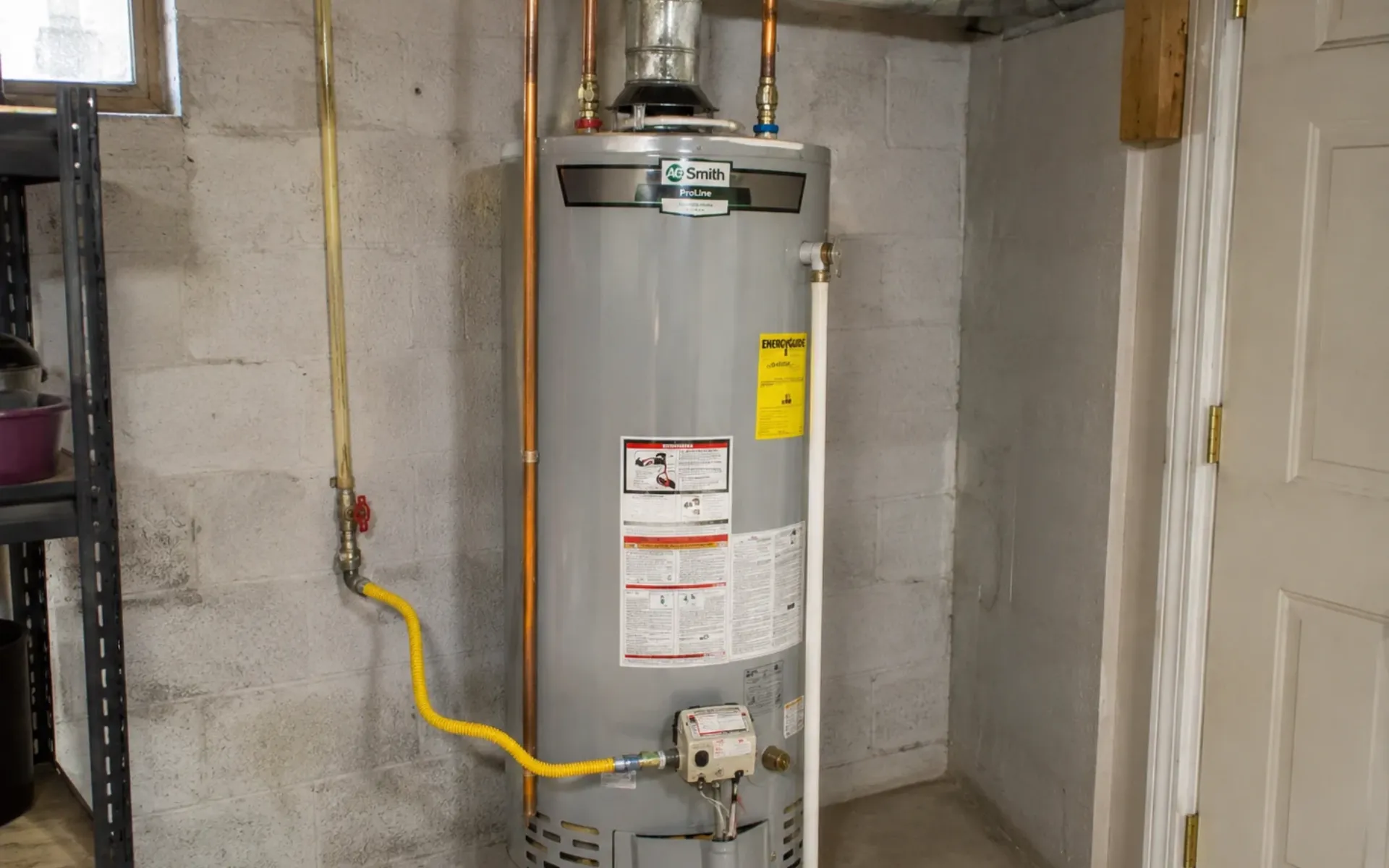
A storage tank water heater heats water in an insulated tank and keeps it hot until you need it. These tanks typically hold 30 to 80 gallons, and a burner or electric elements warm the water while a thermostat holds the set temperature. Since hot water is already waiting, several fixtures can run at once until the supply is used up. After that, you wait for the tank to reheat.
Two ideas matter most in daily use: recovery rate and standby heat loss. Recovery rate describes how quickly the unit reheats a tank after hot water has been drawn off. Standby heat loss is energy escaping from the stored hot water into the surrounding space, which means the heater uses fuel even when no one is showering. Insulation reduces that loss but cannot eliminate it.
Storage tanks tend to be simple to install and cost less up front than many alternatives, though gas models need proper venting. Their trade-off is higher running losses and a limited reserve, since a large household can empty the tank. Expected lifespan is 8-12 years, which is shorter than tankless and solar systems. Rust inside the tank is a common reason for eventual replacement.
- Capacity: 30 to 80 gallons
- Lifespan: 8-12 years
Gas vs Electric Storage Tanks
Gas storage tanks heat water faster than electric models, while electric tanks are simpler and cheaper to buy and install. A gas burner delivers heat quickly, so recovery is faster after a long shower or a load of laundry. Electric elements take longer to heat large volumes, which slows recovery when demand is high. Gas units cost more upfront than electric ones.
Venting is the practical dividing line. Gas models send combustion exhaust outdoors through a flue or chimney and need a gas supply, while electric models need no venting because nothing is burned. That makes electric tanks easier to place in apartments, closets and small homes. Gas units usually need more installation planning and must meet local venting rules.
The best fit depends on the fuel already available at your home and on local energy prices. If natural gas or propane is on site and affordable, a gas tank gives quicker recovery for larger households. If a gas line is absent, an electric tank avoids the cost of adding one. Check local rates and any regulation changes before you buy.
| Factor | Gas | Electric |
|---|---|---|
| Heating speed | Faster | Slower |
| Upfront cost | Higher | Lower |
| Venting | Required | Not needed |
How Do Tankless Water Heaters Work?
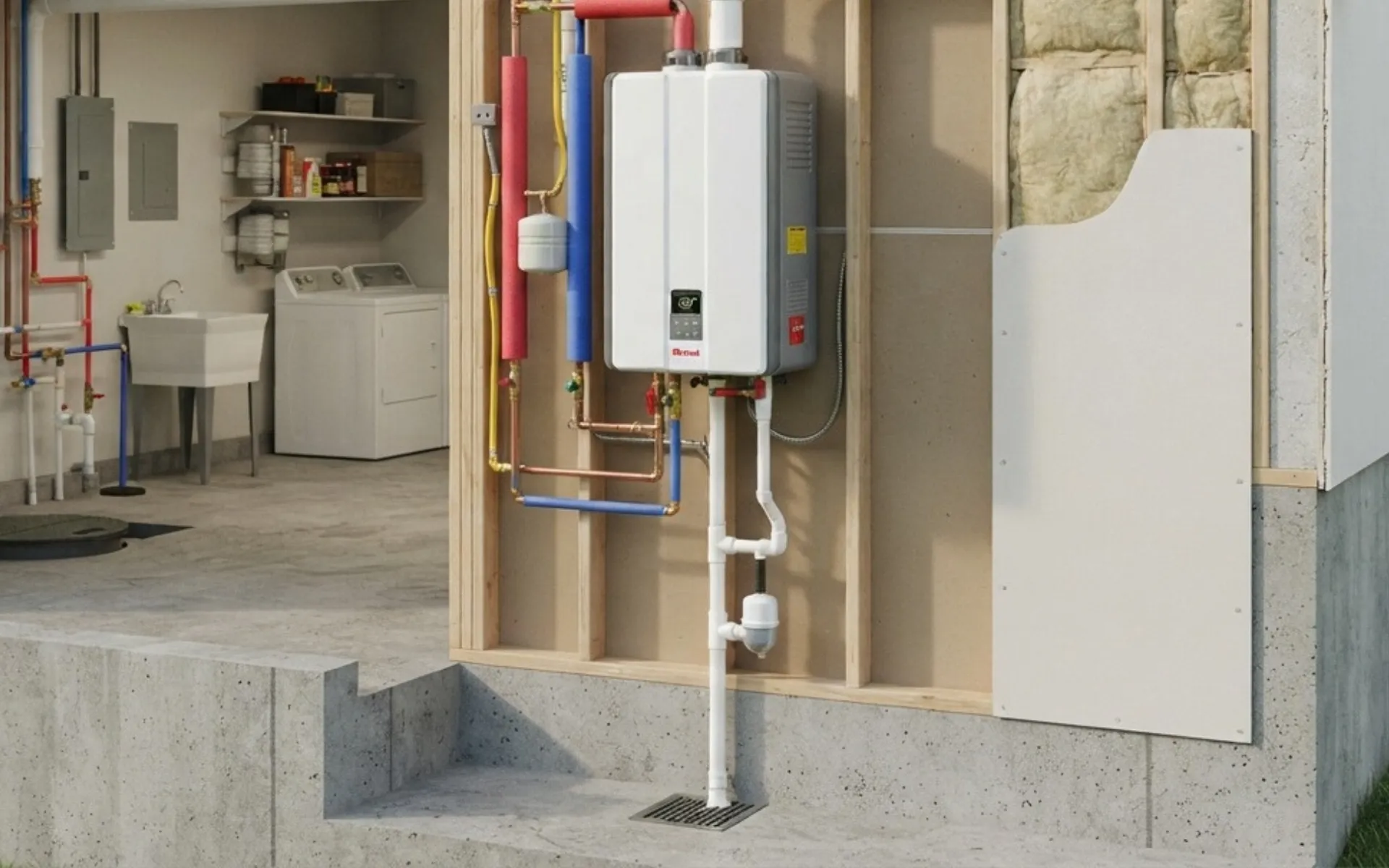
A tankless water heater warms water on demand, using a gas burner or electric heating element as soon as a tap opens. A flow sensor detects moving water and signals the controls, and cold water passes through a heat exchanger and leaves hot. Because nothing is stored, there is no standby loss and the unit is compact. The limit is output: it can only heat so much water per minute.
Tankless units are sized by flow rate, from 2 to 11 gallons per minute (GPM). Models of 6-8 GPM suit two simultaneous showers, and gas units generally deliver higher flow than electric ones. Installed cost runs $800-$2,000, with gas tending higher because of venting, and cold incoming water reduces effective flow. Tankless units also need electricity, so they cannot supply hot water during a power outage.
- Flow rate: 2-11 GPM
- Installed cost: $800-$2,000
How Do Heat Pump (Hybrid) Water Heaters Work?
A heat pump water heater moves heat from surrounding air into the water instead of generating heat directly. Hybrid models add backup electric elements for periods of heavy demand. Its coefficient of performance (COP) is 2.0-3.5, meaning it delivers 2 to 3.5 times the heat energy per unit of electricity used. That is why it uses about 60% less electricity than standard electric water heaters.
Space and climate matter more here than with other types. The installation space should stay between 40°F and 90°F year-round, so the units suit regions with mild winters and warm summers. They need clearance for airflow and cost more upfront than conventional electric tanks. Expected lifespan is 10-15 years, and the unit also cools the surrounding air slightly as it works.
- COP: 2.0-3.5
- Space: 40°F to 90°F
How Do Solar Water Heaters Work?
A solar water heater uses roof-mounted collectors to capture the sun’s heat and transfer it to water stored in a tank. Most systems include a gas or electric backup for cloudy days and heavy use. Collector area is 20-80 ft2, typically two to six panels. The system and installation cost $2,500-$5,000.
Performance depends on local sunshine. In Georgia, solar may cover 50-80% of annual hot-water needs before backup, and other climates will differ. Expected lifespan is 15-20 years, with collectors often warrantied for 10-15 years. Because incentives and installation rules vary by location, confirm local details before committing.
- Cost: $2,500-$5,000
- Collectors: 20-80 ft2
What Is a Condensing Water Heater?
A condensing water heater is a gas unit that captures extra heat from its exhaust gases using a heat exchanger. Conventional gas heaters vent that heat outdoors, while condensing designs redirect it to warm the water. Condensing tankless units operate at an efficiency rating of 90% to 98%. That lowers operating costs, especially in high-demand households.
The efficiency comes with requirements. A condensing unit needs a gas line and a suitable gas setup, plus venting designed for cooler exhaust. Because the process produces condensate, the installation must also account for drainage. That adds to the already higher purchase price.
Condensing models make the most sense where gas is available and hot water use is steady. In that situation, the extra heat recovered can offset the premium over time. They are a poor fit for homes without gas service or where venting changes are impractical. Weigh the savings against installation work before choosing one.
What Is a Point-of-Use Water Heaters?
A point-of-use water heater is a compact, tankless unit installed near a specific fixture to deliver hot water quickly. Rather than serving the whole house, it heats water close to where it is needed, such as a distant sink or bathroom. This shortens the wait for hot water at that fixture. It also suits small spaces.
These units are ideal for remote locations where running hot water from the main heater is slow. Because they heat only what passes through, they offer limited output and work best for a single fixture. They do not replace a whole-home heater for showers, laundry and dishwashing at once. Think of them as a targeted addition.
A point-of-use unit can also work alongside a main heater. It supplies a far-off sink while the primary heater covers the rest of the home. Installation requirements depend on the model and the available electrical supply. Match the unit to the fixture’s demand.
How Do Boilers and Multiple Water Heaters Fit In?
A boiler heats water mainly for space heating, while a water heater supplies domestic hot water for taps and appliances. Homes with boilers may use an indirect water heater, a storage tank fed by the boiler. This lets one heat source serve both needs. It avoids running a separate burner or element just for hot water.
Two heaters can also work together to add capacity. They may be connected in series or parallel, or a solar system can preheat water before a conventional unit finishes the job. This setup helps large households or homes with a high peak demand. A professional should design such arrangements so the pairing works safely and efficiently.
How Do Water Heater Types Compare?
Water heater types differ most in lifespan, upfront cost, efficiency, space needs and installation complexity. Storage tanks last 8-12 years, tankless units 15-20 years, heat pump units 10-15 years and solar systems 15-20 years. Tankless units last longer partly because there is no tank to corrode. Solar collectors are often warrantied for 10-15 years.
The table gathers the supplied figures in one place. Beyond lifespan, tankless installed cost is $800-$2,000 and solar costs $2,500-$5,000 installed. Heat pump models use about 60% less electricity than standard electric heaters. Condensing tankless units reach 90% to 98% efficiency.
Each type trades one strength for another. Tanks are familiar and affordable but lose standby heat, while tankless units save space but limit simultaneous use. Heat pump and solar systems cut energy use but depend on space and climate. Your priorities decide which compromise suits you.
| Type | Lifespan |
|---|---|
| Storage tank | 8-12 years |
| Tankless | 15-20 years |
| Heat pump | 10-15 years |
| Solar | 15-20 years |
How to Choose the Right Water Heater for Your Home
Choose a water heater by matching fuel type, household size, efficiency and installation costs to your home. The right choice involves fuel type, energy efficiency and heating capacity together. Fuel availability narrows the field first, since the unit must suit your existing gas, propane or electric service. The steps below put the decision in order.
Capacity comes next. Undersized tanks miss peak usage, leaving you with cold showers, while oversized tanks waste energy heating water you do not need. Tankless units are sized by flow rate instead. Then compare efficiency and operating cost against purchase price.
Finally, check practical limits. Heat pump units need adequate air space and mild conditions, tankless gas units need venting and sturdy gas supply, and solar needs sunny roof area. Local climate affects each type differently. Confirm that your space and local codes allow the model you prefer.
- Confirm available fuel.
- Estimate household demand.
- Compare efficiency and costs.
- Check space and installation needs.
What Type of Water Heater Is Best?
No single type is best for every home, because the right one depends on efficiency goals, space, household size and climate. A heat pump unit leads on efficiency, a tankless unit on space, and a storage tank on simplicity. Your situation decides which strength matters most. Use the points below as a guide.
Electric models are easier to install and maintain, so they often suit smaller homes or apartments. With no venting needed, placement is flexible. They heat large volumes more slowly than gas, which matters little where demand is modest. Gas tanks suit larger families that need quick recovery.
Tankless units save space and avoid standby loss, but they cost more up front. They also struggle in high-demand households where many fixtures run at once. A larger gas model can help, though cold incoming water reduces output. Consider peak use before choosing one.
Heat pump water heaters suit regions with mild winters and warm summers. Their large efficiency advantage needs a space that stays between 40°F and 90°F. In colder spaces, performance drops. Solar thermal works best where sunshine is reliable and backup is included.
- Small homes: electric tank
- Mild climates: heat pump
- Space-limited: tankless
How Do You Size a Water Heater?
Size a tank by household size and peak use, and size a tankless unit by flow rate and temperature rise. For tanks, 1-2 people usually need 30-40 gallons, 3-4 people 40-50 gallons, and 5 or more 50-80 gallons. First-hour rating is the gallons of hot water delivered in the first hour from a full tank. Compare it with your busiest hour.
Tankless units are rated by flow rate in gallons per minute (GPM). Add up the fixtures you run at the same time, such as two showers, and choose a unit that meets that flow at your local water temperature. Colder incoming water needs more heating, which lowers the flow a unit can deliver. A model of 6-8 GPM suits two simultaneous showers.
- Count people and peak use.
- Match tank gallons or GPM.
- Check first-hour rating.
Maintenance, Warning Signs and When to Replace
Regular maintenance extends a water heater’s life and catches problems early. Tank care includes annual sediment removal and anode rod checks, and keeping the temperature setting moderate. Watch for reduced output, odd noises, leaks and rust, which often signal a failing component or a tank nearing the end of its life. Repairs make sense when a part fails early.
Replacement becomes likely as a unit nears the end of its expected lifespan, such as 8-12 years for a storage tank. Rust and repeated leaks usually mean the tank itself is failing. Water pooling or a pilot light that keeps going out warrants a professional call. Gas and complex installations should always be handled by a qualified technician.
- Flush sediment annually
- Check anode rod
- Call a pro for pooling water
Frequently Asked Questions
Here are the questions homeowners most often ask about types of water heaters and how to choose one, along with direct answers.
Is tankless always better than a tank water heater?
Not necessarily. Tankless units generally offer better efficiency, a longer lifespan, and space savings, but they cost more upfront and may require electrical or gas line upgrades. A tank water heater is often the more practical and affordable choice for a straightforward replacement or a tighter budget.
What type of water heater is most energy efficient?
Heat pump water heaters are typically the most energy-efficient option among common residential types, since they transfer existing heat from the air rather than generating it directly. Tankless units are also more efficient than standard tank models because they eliminate standby heat loss, though they use a different mechanism to achieve it.
Can I switch from a gas water heater to an electric one?
Yes, but it typically requires additional work beyond a simple swap, such as running new electrical wiring and capacity to the location, and capping or removing the existing gas line and venting. A licensed plumber or electrician can assess what your specific switch would involve.
Do heat pump and solar water heaters work in cold climates?
Both perform best in warmer conditions. Heat pump water heaters rely on extracting heat from surrounding air, so their efficiency drops in cold spaces, though many models include backup electric elements for colder periods. Solar water heaters depend on sunlight and are typically paired with a backup system for cloudy days or winter months.
How do I know what size water heater I need?
Sizing depends on your household’s peak hot water demand, generally measured in gallons for tank models or gallons per minute (GPM) for tankless units, based on how many fixtures might run hot water simultaneously. A licensed plumber can calculate your specific demand and recommend an appropriately sized unit.
Is it worth paying more for a tankless or heat pump water heater upfront?
For homeowners planning to stay in the home for many years, the higher upfront cost of a tankless or heat pump unit is often offset over time by lower energy bills and a longer service life. For a shorter ownership timeline or a tighter immediate budget, a standard tank water heater may be the more cost-effective choice.
Need help with water heaters?
Explore the relevant services available from Anaheim Plumbing.