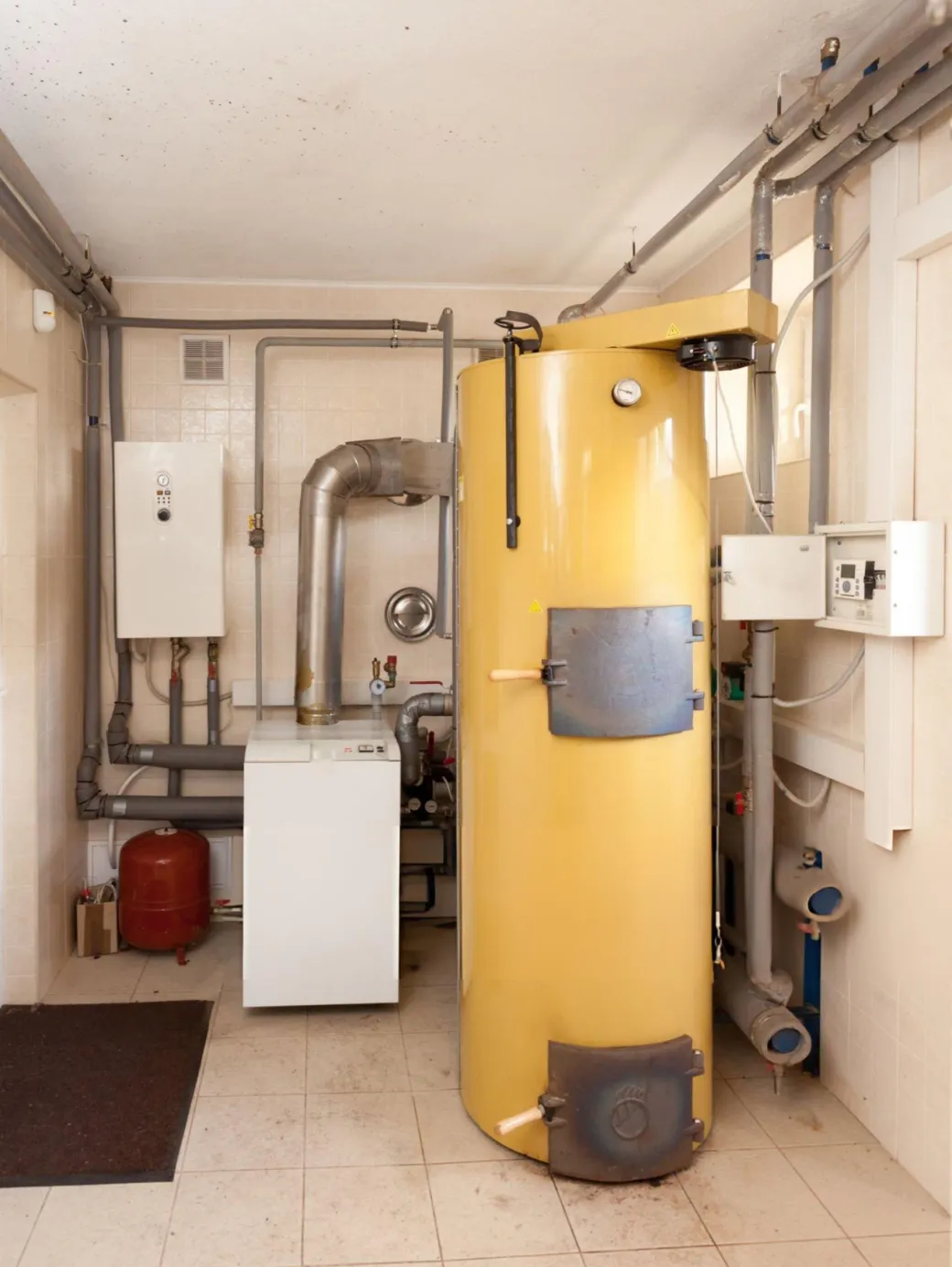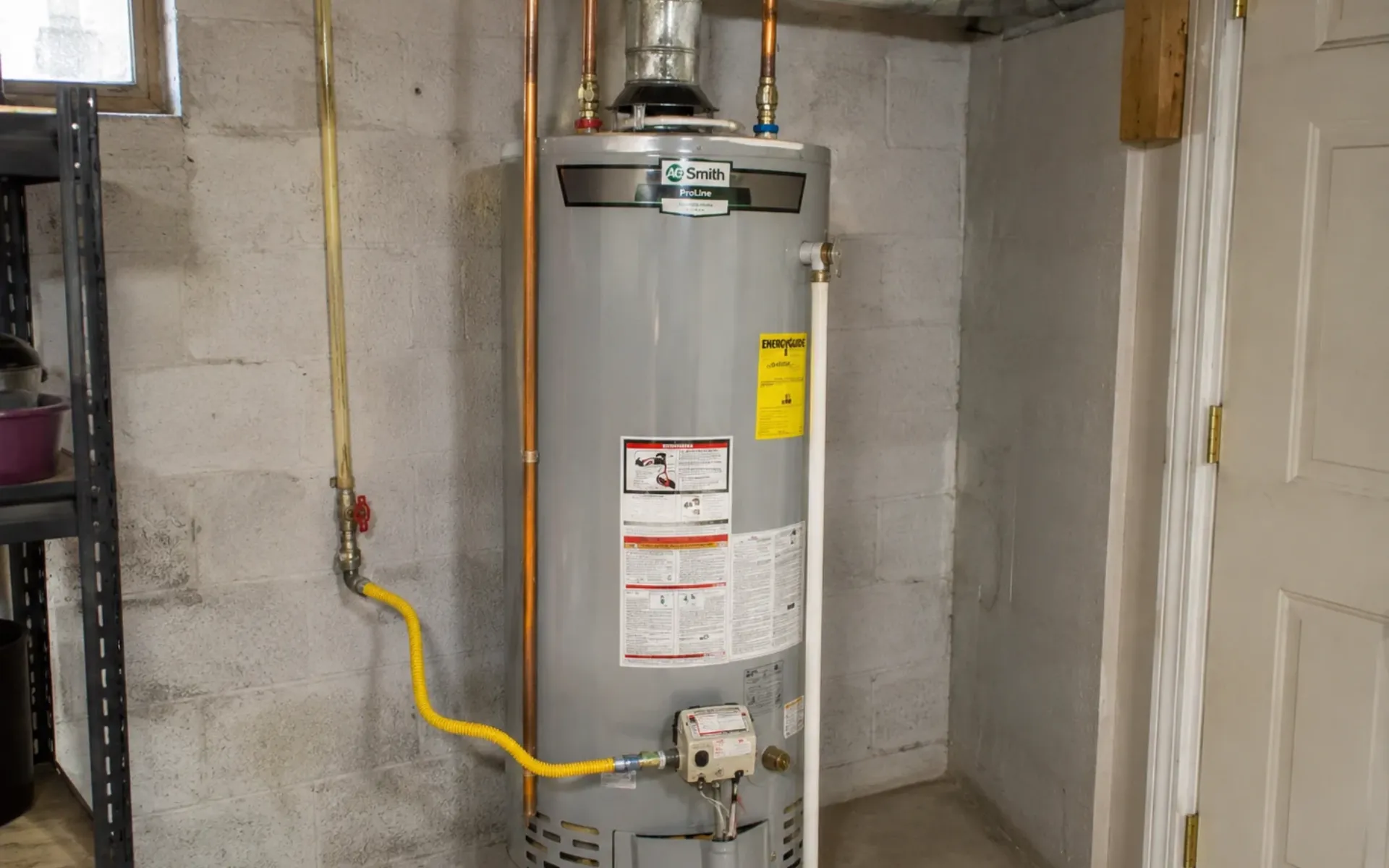
A tank water heater, also called a storage water heater, is an insulated tank that heats water and keeps a reserve ready for use. When you open a tap, hot water comes from that reserve immediately. The tank’s capacity sets the limit, because once the hot supply is used up, the household must wait. Most residential units hold roughly 30 to 80 gallons and heat the water with a gas burner or electric heating elements. The design is familiar and widely installed, which is why it is the benchmark other water heating systems are compared against.
The key distinction is stored supply versus heat-on-demand. A tankless heater warms water only as it flows, while a tank heater keeps a full reserve hot at all times. That constant readiness carries a cost: standby heat loss occurs continuously as the stored water cools and the heater reheats it. In exchange, storage tanks cost less upfront and are straightforward to install, and they can supply several fixtures at once until the reserve runs low.
How Does a Tank Water Heater Work?
A tank water heater works by drawing cold water into the bottom of the tank, heating it with a gas burner or electric elements, and delivering the hottest water from the top. A dip tube carries incoming cold water down to the base, so it does not mix with the heated water near the outlet. Because heated water is less dense, it rises and forms a hot layer at the top, a process called stratification. That layering means the first water to reach your fixtures is the hottest in the tank.
A thermostat monitors the water temperature and switches on the heat source when it drops below the set point. During tap use, hot water leaves through the top outlet while cold water enters at the bottom to replace it, which keeps the tank full. That fresh cold water pulls the average temperature down, so the thermostat triggers reheating until the tank returns to the set temperature. The time this takes is called recovery time, and it determines how soon the reserve is replenished after heavy use.
Do Tank Water Heaters Work Without Power?
Electric tank water heaters need power to heat, while gas models vary by design. Without electricity, an electric unit cannot energize its elements or controls, so it stops heating new water.
Gas heaters with a standing pilot and a simple thermostat valve may keep running because the burner does not depend on household current. Models with electronic ignition or powered blowers generally need electricity.
Either way, the hot water already stored in the tank remains available. You can keep drawing from it until it is used up, although the water slowly loses heat as it sits.
Careful use, such as keeping showers short, stretches that reserve during an outage. Specific outage performance depends on the model, so confirm its behavior in the manual.
What Are the Parts of a Tank Water Heater?
A tank water heater consists of a steel tank with a glass lining, surrounding insulation, a dip tube, an anode rod, a thermostat, a burner or heating elements, a drain valve, and a temperature and pressure relief valve.
- Tank, insulation, dip tube
- Anode rod, thermostat, drain valve
- Burner or elements, relief valve
The tank holds the water and the insulation limits heat escaping into the room. The dip tube sends cold water to the bottom, while the thermostat controls when the burner or elements run. Gas units heat from the tank base through a central flue, and electric units use one or two immersion elements.
The drain valve at the base lets owners empty the tank for flushing or service. The relief valve is required on every tank-style unit and vents the tank if pressure rises above 150 psi or temperature above 210°F, preventing dangerous overpressure.
What Is the Anode Rod and Why Does It Matter?
The anode rod is a sacrificial metal rod inside the tank that corrodes in place of the steel. Water attacks the most reactive metal first, so the rod absorbs the damage.
Tank-style heaters contain one or two rods made of magnesium or aluminum. As long as the rod still has material left, it shields any exposed steel from corrosion.
Once the rod is consumed, the tank itself begins to corrode, which is why the rod’s condition is closely tied to the heater’s lifespan. A leaking tank cannot be repaired.
Magnesium rods suit soft water, while aluminum is recommended for hard water. A common recommendation is to inspect the rod every two to three years and replace it when worn.
What Is a Water Heater Expansion Tank?
A water heater expansion tank is a small, separate tank near the heater that absorbs the pressure created when heated water expands. It is not the main storage tank and does not hold your hot water supply.
Its job is to give the expanding water somewhere to go. It is needed in closed plumbing systems, such as those with a backflow preventer or pressure-reducing valve, where expanding water cannot flow back into the supply line.
Expansion tanks are typically small, but the right size depends on the system, so confirm it for your specific installation.
What Types of Tank Water Heaters Are There?
Tank water heaters are classified by how they are heated: natural gas, propane, electric resistance, or heat pump hybrid. Gas and propane units burn fuel at the tank base and need a flue and a gas line.
| Type | Heat source |
|---|---|
| Gas or propane | Burner, flue |
| Electric | Resistance elements |
| Hybrid | Heat pump |
Electric models heat with internal elements and need only an electrical connection. Electric models are common in homes without natural gas lines.
Tanks also differ by size, from compact point-of-use units to standard home tanks. The fuel available at your home, the space for venting, and your hot water demand usually decide which type fits.
Gas vs Electric Tank Water Heaters
Gas tank heaters generally heat water faster and cost less to operate than electric ones, while electric models are simpler and cleaner to install. Natural gas or propane units need a gas line and a flue, so installation may be more complex.
| Feature | Gas | Electric |
|---|---|---|
| Heating | Faster | Slower |
| Install | Flue needed | No flue |
Electric models are described as clean, quiet, and easy to install, and they need no flue. The better fit depends on the utilities your home already has and on local energy prices.
Heat Pump (Hybrid) Tank Water Heaters
A heat pump, or hybrid, tank water heater moves heat from the surrounding air into the tank instead of generating it with resistance elements. Moving existing heat is more efficient than producing it electrically, though these units usually cost more upfront.
They work best installed where the space stays between 40°F and 90°F year-round, with enough room and airflow. Because they pull heat from the air, they discharge cooler air into the surrounding space, which matters in small or already cool areas.
Mini-Tank and Point-of-Use Water Heaters
Mini-tank and point-of-use water heaters are small storage heaters installed near a single sink or small area to supply hot water locally. Typical uses include under-sink spots, workshops, closets, and other tight spaces where a full-size tank would not fit. Many are plug-in units, which makes installation simpler than running a whole-house system. They shorten the wait for hot water at the fixture they serve, since the heater sits close to the tap.
These units are not designed for whole-house supply. Their small reserve limits how much hot water they can deliver in a single draw. Once that small volume is used, the user waits for the tank to refill and reheat. That limit makes them well suited to short, occasional tasks such as handwashing or rinsing. They also should not be confused with the standard home tank sizes covered elsewhere in this article.
Mini-tank heaters are also a different category from aquarium heaters, which warm fish tanks and are a separate topic. The term tank refers to a hot water storage vessel here, not to any container that needs warming. Search results can blur the two, so check that a product is made for potable hot water before buying. Capacity and electrical requirements vary by model, so confirm the specifications for any unit you consider.
Choosing a small unit comes down to the job it must do. A single sink or small workspace suits it. A bathroom group, kitchen, and laundry together call for a standard home tank instead. Placing a small heater where it is needed can reduce the waiting time for hot water at that fixture. It supplements the main water heater rather than replacing it, which helps explain its place among tank types.
What Size Tank Water Heater Do You Need?
The right tank size depends on household size, peak-hour demand, and fixture count. Around 30 gallons suits one or two people, and more than 80 gallons suits households of more than five. The most common home size holds about 50 gallons. Instead of capacity alone, look at the first-hour rating, the amount of hot water a heater can deliver in a busy hour.
- Household size and peak demand
- First-hour rating
- Recovery rate by fuel
- Space and weight
Tank capacity differs from recovery rate, and gas and electric models recover differently. A smaller gas tank may keep pace with a larger electric one. Check the physical dimensions and weight of any model, since the unit must fit your utility space.
Tank Water Heater vs Tankless: Which Is Better?
Neither is better overall; a tank heater suits large households and tight budgets, while a tankless heater suits those who want to avoid standby loss. The best choice depends on demand and home setup. Tank units cost less upfront and deliver hot water immediately from the reserve.
| Criterion | Tank | Tankless |
|---|---|---|
| Upfront cost | Lower | Much higher |
| Standby loss | Yes | No |
Tankless units pass water through a heat exchanger, so delivery is less immediate than tank supply. Tankless heaters avoid standby loss but have a much higher upfront cost. Electric tankless units often cannot keep up with whole-home demand and need electrical upgrades. Gas tankless models may need gas line changes, so retrofit complexity matters. Households with simultaneous use often find a tank simpler.
How Long Do Tank Water Heaters Last?
The lifespan of a tank water heater varies with water quality, anode rod condition, maintenance, and usage, so no single number fits every unit. Check the manufacturer’s documentation for the expected life of your model. Hard water and neglected maintenance generally shorten it. A warranty is not a promise of lifespan; it covers specific parts for a set period and may end well before the heater does. The tank lining protects the steel from the water inside, so the unit’s life depends on keeping that lining intact.
Corrosive particles settle on the tank lining and may lead to leaks over time. This interior corrosion is the usual way tanks wear out. A working anode rod slows the damage, and flushing out sediment reduces the buildup that can harm the lining. Usage matters as well, because a heater that runs hard for a large household cycles more often. These factors explain why two identical units can last very different lengths of time.
Several signs point to an aging tank. Rust-colored water, rumbling noises, and moisture around the base all suggest internal trouble. Rumbling often comes from sediment, which can be addressed by flushing when caught early. A leak from the tank body, however, signals corrosion that cannot be repaired. Treat these signs as a reason to plan ahead for replacement rather than wait for failure.
How Do You Maintain a Tank Water Heater?
Maintain a tank water heater by flushing sediment, checking the anode rod, testing the relief valve, and reviewing the thermostat setting. Draining a few gallons several times a year removes sludge and sediment.
- Shut off power or gas.
- Connect a hose to the drain valve.
- Drain a few gallons.
- Close the valve and restore power.
Hard water increases sediment buildup, so confirm the flush interval recommended for your model. An insulation jacket on an older tank can cut standby heat loss.
The relief valve’s discharge pipe should run down to within 6 inches of the floor. Turn off power or gas and let the water cool before starting work, since hot water can scald.
What Are Common Tank Water Heater Problems?
The most common problems are water that is not hot enough, a heater that will not work, and leaks. Not-hot-enough water often traces to the thermostat, a failed element or burner, sediment, or a tank that is too small for the household.
- Not hot enough
- Not working
- Leaking
A heater that will not work may have a pilot problem, a tripped breaker, or a reset that needs pressing. A leak can lose gallons of water daily and cause water damage, and repeated pilot outages call for a professional.
Can a Leaking Water Heater Tank Be Repaired?
A leaking tank body cannot be repaired and the heater must be replaced. It means corrosive particles have destroyed the lining, including at the bottom. Leaks from fittings, valves, or the drain valve can often be fixed because they do not involve the tank itself.
Shut off power or gas and the water before inspecting. The shut-off valve that stops water into the tank is separate from the heater. If water appears to come from the tank itself, plan replacement quickly, since the leak can lose gallons daily.
When Should You Replace a Tank Water Heater, and What Does It Cost?
Replace a tank water heater when it shows signs such as age, a tank leak, rust-colored water, or repeated repairs. A leaking tank body always means replacement. For lesser problems, weigh the repair cost against the unit’s age and condition.
- Age and repeated repairs
- Tank body leak
- Rust-colored water
Cost depends on the unit type, capacity, installation labor, venting, and code upgrades. Exact figures vary by location, so get local quotes. Tankless units have a much higher upfront cost than tank units, which keeps tanks the lower-cost replacement.
Pros and Cons of Tank Water Heaters
Tank water heaters are inexpensive to buy, install, and maintain, and they are simple to run. They supply simultaneous use up to the tank’s capacity. The drawbacks are standby heat loss, a limited reserve, bulk, and higher utility bills, because the tank heats stored water.
| Pros | Cons |
|---|---|
| Low upfront cost | Standby loss |
| Simple | Limited reserve |
Once the tank is depleted, refilling with hot water takes time. Space needs and a shorter lifespan than tankless are also factors. They suit large families needing simultaneous hot water and buyers with lower upfront budgets.
Frequently Asked Questions
Here are the questions homeowners most often ask about tank water heater advantages and disadvantages, along with direct answers.
Is a tank water heater cheaper than tankless in the long run?
Not usually. While a tank water heater costs less upfront, its standby energy loss and shorter lifespan mean it often costs more to operate and replace over a long ownership period compared to a tankless unit. For a shorter timeline or tighter immediate budget, though, a tank still tends to be the more affordable choice.
How much hot water can a tank water heater provide before running out?
This depends on the tank’s size, typically 20 to 80 gallons, and household usage patterns. Once the stored hot water is significantly depleted, water temperature can noticeably drop until the tank has time to reheat, which is different from a tankless unit that doesn’t rely on stored volume at all.
What’s the biggest disadvantage of a tank water heater?
Standby energy loss is generally considered the most significant drawback, since the tank continuously reheats stored water around the clock, even during hours when hot water isn’t being used. This ongoing energy use is the main reason tank models are typically less efficient than tankless alternatives.
Do tank water heaters work during a power outage?
Gas tank water heaters with a standing pilot light can often continue operating during an electrical outage, since they don’t rely on grid power to ignite the burner. Electric tank water heaters, however, will not function without power.
How often does a tank water heater need maintenance?
Most manufacturers recommend flushing the tank annually to remove sediment buildup and checking the anode rod periodically, since it typically needs replacement every few years depending on water quality. Skipping this maintenance can shorten the unit’s lifespan and reduce efficiency.
Can a tank water heater run out of hot water for a large family?
Yes, this is one of its more common limitations. If several fixtures draw hot water in a short period, especially with an undersized tank for the household, the supply can be depleted faster than the tank can recover, leading to a noticeable temperature drop.
Getting Help Deciding on a Tank Water Heater
If you’re weighing a tank water heater against other options, a licensed plumber can assess your household’s hot water demand, available space, and budget, then recommend the right size and type for your home.
Need help with water heaters?
Explore the relevant services available from Anaheim Plumbing.