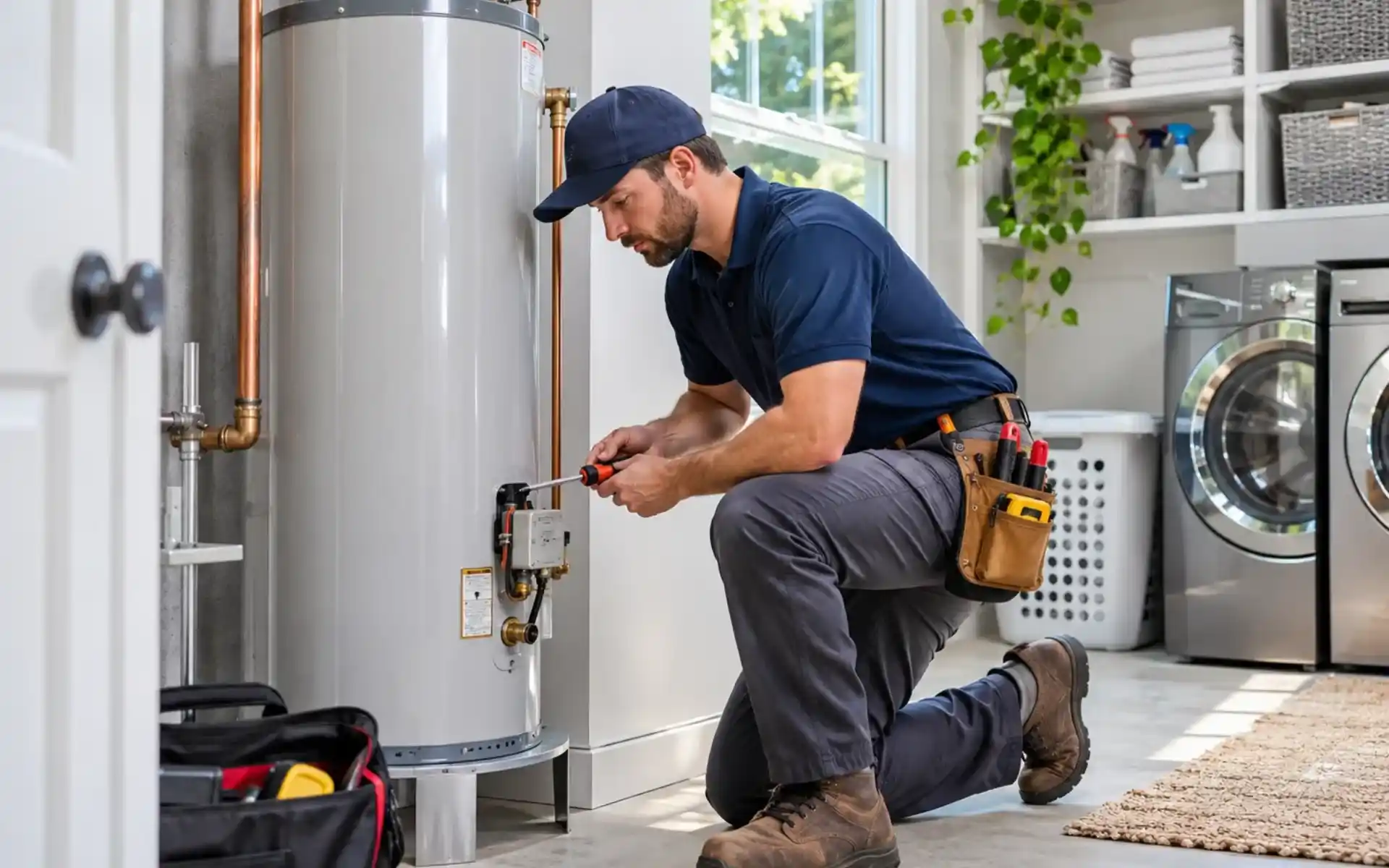
A leaking water heater means a connection, a valve, or the tank itself has failed, and the spot where water appears largely decides how serious the problem is. Fittings and valves can often be tightened or replaced for little money. Water escaping from the tank body usually means corrosion has gone through the shell, and replacement is the realistic answer.
Not every wet spot is a true leak, though. Condensation on a cold tank can look like dripping, and a relief valve may discharge water on purpose when it is doing its safety job. Telling these situations apart, and finding the exact source, keeps you from replacing a heater that only needed a tightened fitting or ignoring one that is about to fail.
What Should You Do First When a Water Heater Is Leaking?
First, shut off the heater’s power or gas, then close the cold water supply, then contain the water. Power comes first because water and electricity or a lit burner create hazards. Stopping the water feed next prevents the tank from refilling and feeding the leak.
- Turn off the breaker or gas supply so nothing heats the tank.
- Close the cold water shut-off valve on top of the heater, or the home’s main valve if none exists.
- Contain and mop up water around the unit.
- Drain the tank by hose if repairs will be delayed.
- Photograph the damage.
If the water is spraying or pouring, shut it off at once; for a slow drip, you can leave it on while you prepare. If help is not coming soon, you can drain the tank with a garden hose from the bottom drain valve to a floor drain or outside.
Photograph the leak and any damage for insurance claims. Place towels, buckets or a wet vacuum around the base to protect floors and belongings, and move anything stored nearby out of the way.
How Do You Shut Off Power to an Electric or Gas Water Heater?
For an electric heater, flip its dedicated breaker to off; for a gas heater, set the thermostat to off or pilot and close the gas valve. Power must be off before anyone touches a wet unit because water near live electrical parts is a shock and fire risk.
On a gas model, a burner firing on an emptying tank can also overheat components. On a gas line, turn the valve lever or control knob until it stops; counterclockwise closes the supply on many valves.
If you ever smell gas near the heater, leave the house immediately and call the gas company. Once power is confirmed off, you can safely continue with the water shutoff and inspection.
How Can You Tell a Leak From Condensation?
Condensation is a thin film of moisture that forms when cold water or cold surfaces meet warm, humid air, while a leak keeps producing water. Small amounts that evaporate are usually condensation. In electric heaters it often appears when cold incoming water chills a tank in a warm space, and it fades as the heater warms.
| Check | Leak | Condensation |
|---|---|---|
| Appearance | Drips or rivulets | Even film |
| Timing | Continues | Fades as unit warms |
| Persistence | Pools, returns | Evaporates |
Gas heaters can show it when cold water enters or the burner fires after sitting idle. Wipe the area dry and watch.
If an even film returns across the tank side, it is condensation; if drips or rivulets form, or water pools and keeps coming back, treat it as a leak and trace the source. Persistent moisture, puddles beneath the unit, or wetness that continues long after the heater has warmed up point to a real leak.
Where Is the Water Heater Leaking From?
Find the source by drying the area, watching where new water first appears, and tracing upward from the wettest spot. Water runs downhill, so the puddle may be far from the actual leak.
Drying everything first also helps rule out nearby pipes or fittings that merely drip onto the heater. Use a flashlight to check the relief valve, drain valve, connections and the tank bottom for drips, pooling or corrosion. Location is a strong diagnostic clue.
Top leaks often involve loose fittings, side leaks point toward the relief valve, and base leaks may signal internal tank failure, which is the most serious outcome. Matching the spot to its likely cause tells you whether a wrench will do or whether replacement is coming.
Is the Water Heater Leaking From the Top?
A top leak usually comes from the cold inlet or hot outlet connections, the relief valve, or the anode rod port, and fittings are often fixable. Loose cold or hot pipe connectors can be tightened gently with a wrench.
Overtightening can damage the fitting, so snug them rather than forcing them. A relief valve that is stuck partly open may also drip. A leak from a seam on top of the tank is different: it typically requires tank replacement, commonly about $1,000 to $2,500 installed.
If tightening does not stop the drip, a plumber can replace worn parts, and a failing valve can be replaced without changing the whole heater.
Is the Water Heater Leaking From the Side?
Side leaks usually come from the temperature and pressure relief valve or its discharge pipe, and sometimes from plumbing connections nearby. Valve discharge is typically caused by excess temperature or pressure, so the valve may be working rather than broken.
Water running from the tank wall itself is different and suggests seepage through the shell, which points to internal corrosion and likely replacement.
Is the Water Heater Leaking From the Bottom?
Water pooling at the base usually means the tank has corroded through, and the heater needs replacing, unless the source is the drain valve. Check the drain valve first.
A drip from the valve itself, caused by sediment or a worn washer, can often be fixed by tightening it carefully with a wrench or replacing it. If water seems to come from beneath the jacket, from the element area on electric units or the burner area on gas units, the internal tank is the likely culprit.
Those leaks are harder to spot because the shell is covered by two layers of material. Patching is rarely worthwhile; the leak will likely worsen, so shut off the water and power and plan for a new heater.
What Are the Most Common Causes of Water Heater Leaks?
Most leaks trace to connections and valves, excess pressure or temperature, or the condition of the tank. Pipe and connection leaks are more common than tank leaks, and they are generally cheaper to fix.
Tank leaks are the most serious and hardest to fix, usually resulting from rust or sediment deterioration inside. Heaters older than 10 years are more prone to leaks, and replacement may be more cost-effective near end of life.
| Cause | Typical location | Outcome |
|---|---|---|
| Loose fittings | Top | Repair |
| Drain valve | Bottom | Repair |
| Relief valve | Side/top | Repair |
| Corroded tank | Base/body | Replace |
Most water heaters last 8 to 12 years, depending on water quality and usage. The table groups the usual causes by location and by whether repair is realistic. Each cause is covered in more detail below.
Loose Inlet and Outlet Connections or Worn Fittings
Cold inlet and hot outlet connections at the top of the tank can loosen over time and drip. Repeated heating and cooling expands and contracts the pipes, which gradually works fittings loose.
Worn gaskets and seals have the same effect. Drips at the top connections are the usual sign, and the water often runs down the tank and appears lower than the real source.
Try tightening with a wrench first, gently, since overtightening can damage threads or the fitting itself. Replace any cracked parts. If the leak persists after tightening, call a plumber, who can replace the gasket, fitting or connector properly.
Loose or Damaged Drain Valve
The drain valve at the bottom of the tank can drip when it is loose, has a worn washer, or is clogged with sediment. Continuous use can loosen it. Try tightening it first, using a flathead screwdriver or pipe wrench without overdoing it.
If the valve will not close or leaks from the bottom, replace it, which requires draining the tank and sealing new threads with PTFE tape and joint compound. Annual flushing keeps sediment from fouling it.
Faulty Temperature and Pressure Relief Valve
A temperature and pressure relief valve is a safety device that opens to release water when the tank gets too hot or too pressurized. A discharge from it is therefore not always a fault.
A hot, steady stream from the discharge pipe means the heater is relieving high pressure, often from a high thermostat setting or high incoming water pressure. A malfunctioning valve shows as dripping at the valve or discharge pipe without those conditions.
It can stick partly open, or damage and sediment blockage can stop it from sealing. A small leak around the valve may mean it needs professional replacement.
Replacement is feasible without replacing the heater. Turn off the water and power, relieve pressure, drain the tank, remove the old valve and install a new one, which costs roughly $100 for the part.
High Water Pressure and Overheating
Excess pressure and heat stress the tank, connections and valves, forcing water through weak spots or out of the safety valve. Pressure rises when the thermostat is set too high or when the home’s incoming water pressure is excessive.
Heating water also expands it, and in a closed system that expansion has nowhere to go. Set the water temperature to 120 to 125 °F (49 to 52 °C).
Incoming pressure above 50 to 60 psi can cause relief valve leaks, and pressure consistently above 80 psi may warrant a pressure-reducing valve.
An expansion tank can divert excess pressure from the main tank. Lowering the thermostat may stop a leak temporarily, but a properly sized expansion tank is the lasting fix for thermal expansion.
Corrosion, Anode Rod Failure and Sediment Buildup
The sacrificial anode rod attracts corrosive elements so the tank does not. Once it is consumed, the steel tank itself begins to corrode, typically starting near the bottom.
Sediment and hard water minerals settle at the base, cause overheating and stress, and can crack the glass lining. Corrosion then progresses to pinholes and cracks. Replacing the rod, typically every 3 to 5 years, and flushing yearly slow this process.
Cracked Tank and Age-Related Failure
A cracked tank cannot be repaired and needs replacement. Cracks come from interior corrosion, sediment buildup, or stress from high pressure and overheating. Patching is only temporary, and the leak will likely worsen.
A tank that cannot hold water is beyond a plumber’s help, so replacing the water heater is the best option. Age matters.
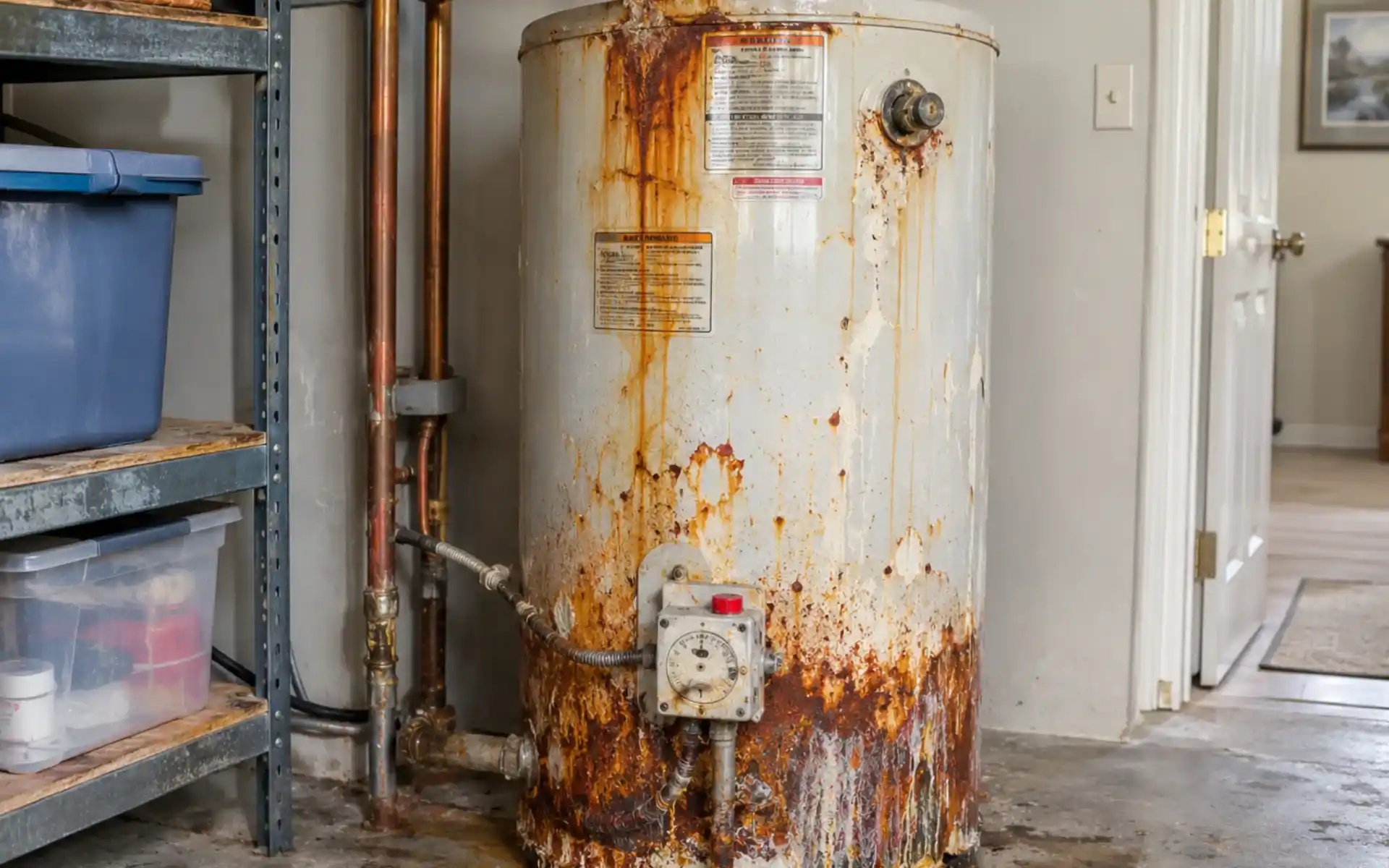
Most heaters last 8 to 12 years, and units over 10 years showing wear may be worth replacing before they fail. Rust outside the tank or rusty hot water indicates corrosion.
Other warning signs include rumbling or popping from sediment, cloudy or metallic-smelling water, and moisture at the base. A failure can release 40 to 80 gallons within minutes.
Why Do Tankless Water Heaters Leak?
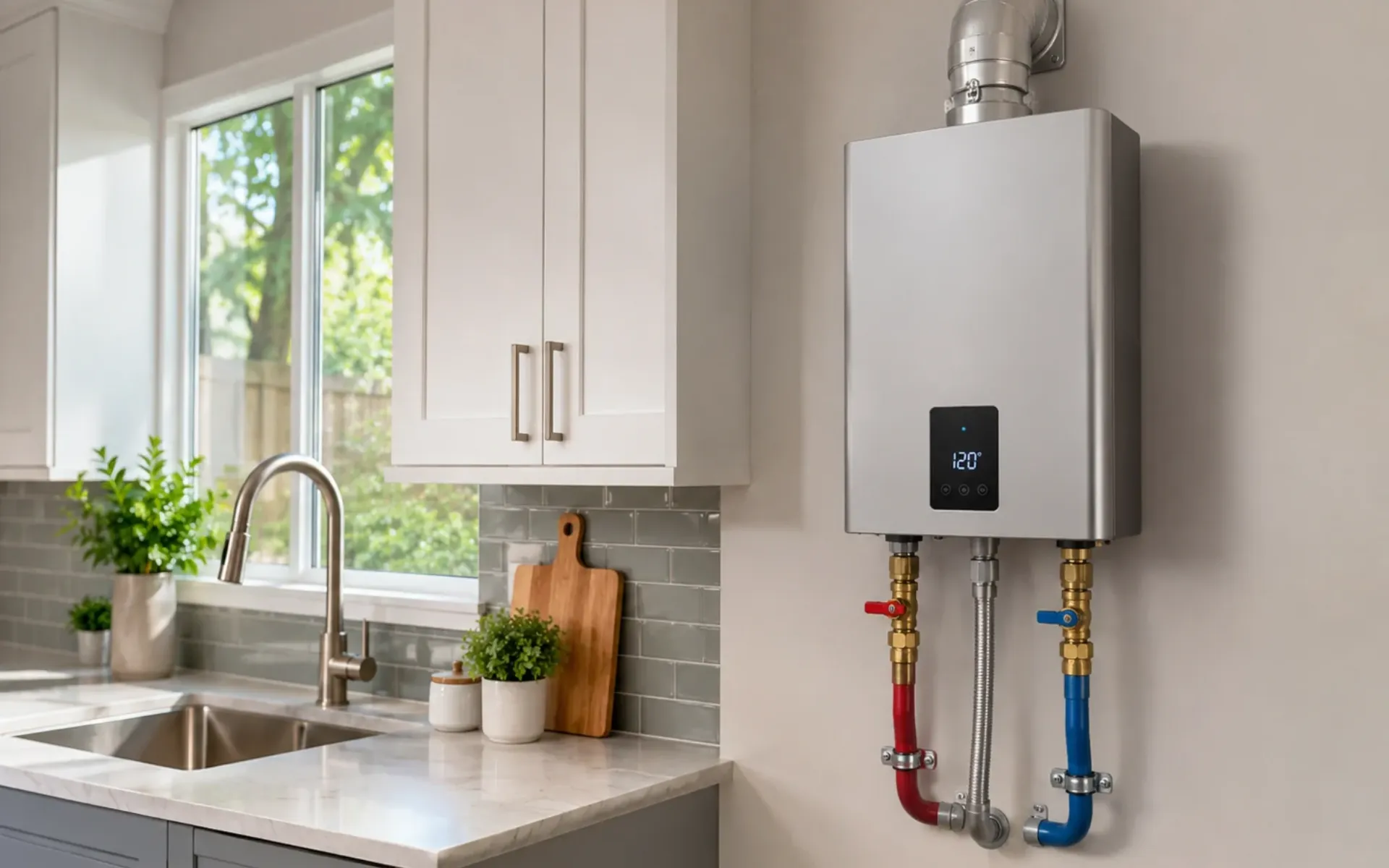
Tankless heaters leak less often than tank units because they have no storage tank, so leaks come from connections and internal components. Inlet and outlet connections can loosen, especially if not tightened properly at installation.
Mineral-laden water can corrode internal parts, more so in older units, and a leak from the unit body suggests internal corrosion. A plumber may replace the part or the whole unit if corrosion is widespread. High-efficiency models can also produce condensation.
How Do You Fix a Leaking Water Heater?
The repair depends on the cause: tighten or replace fittings, replace a failed drain valve or relief valve, and replace the heater if the tank leaks. Turn off power and water first, relieve pressure, and drain if needed.
| Cause | Fix | DIY |
|---|---|---|
| Loose fitting | Tighten/replace | Yes |
| Drain valve | Tighten/replace | Yes |
| Relief valve | Replace | Yes |
| Tank | Replace heater | Pro |
Fix the part, restore water, then check for drips for several hours. Common mistakes include overtightening and skipping thread sealant. Gaskets on heating elements or gas controls carry fire risk and are best left to a professional.
When Is a Leaking Water Heater Serious or Dangerous?
A leak becomes serious when it is a steady stream, comes from the tank body, shows rusty water, or recurs from the relief valve. Even small leaks can damage floors and walls, and mold can begin within 24 to 48 hours of water exposure.
Water near electricity is a fire hazard, scalding and pressure failure are risks, and a gas smell means leave immediately. Weigh age, leak location and repair cost against a new unit.
Old heaters with tank leaks are usually better replaced, while a leaking fitting or valve on a younger heater is worth repairing. A minor leak allows brief use while waiting for repair, but avoid running hot-water appliances.
When Should You Call a Plumber?
Call a plumber if the leak comes from the tank, the cause is unclear, you lack experience, or home safety is affected.
A professional diagnosis pinpoints the true source, tests pressure and the relief valve, and tells you whether repair or replacement makes sense. Prompt help limits water damage.
How Can You Prevent Water Heater Leaks?
Prevent leaks with regular inspection, yearly flushing, valve testing and timely anode rod replacement. Neglecting draining lets sediment build up, which causes overheating, cracks and bottom leaks and lowers efficiency.
Keep temperature at 120 to 125 °F, check pressure, and insulate supply and drain lines. Scheduling follows the parts’ lifespans: quick checks every few months, annual service, and rod replacement every few years.
Inspect valves, drains and connections every few months, open the relief valve once a year, and consider a yearly professional check.
Frequently Asked Questions
Here are the questions homeowners most often ask about leaking water heaters, along with direct answers.
How do I know if my water heater is leaking or just sweating from condensation?
Wipe the tank completely dry and check back in a few hours. Condensation tends to reappear diffusely across the tank’s surface, often after a large hot water draw, and doesn’t come from one consistent spot. A true leak reappears from the same specific location every time.
Is it dangerous if my TPR valve is leaking?
A TPR valve releasing a small, occasional amount of water can be normal operation, but a valve that drips constantly or won’t stop is a sign it’s failed or that pressure inside the tank is chronically too high, and either situation should be evaluated rather than ignored.
Can a leaking water heater be repaired, or does it always need replacing?
It depends entirely on where the leak is coming from. Leaks from the TPR valve, drain valve, inlet valve, or a loose fitting are generally repairable. A leak coming from the tank body itself means the steel has corroded through, which isn’t repairable and typically means the unit needs to be replaced.
Why is water coming from the bottom of my tank near the floor?
This is often not a true bottom-of-tank leak at all. Many water heaters route their TPR valve discharge through a tube that runs down the side of the tank and empties near the floor, so water pooling at the base can actually be a TPR valve issue rather than a drain valve or tank problem.
Should I keep using my water heater if it’s leaking?
If the leak is confirmed to be coming from a valve or fitting rather than the tank body, many homeowners continue using the unit briefly while arranging a repair, though shutting off the water supply when not in use is a reasonable precaution. If the leak is coming from the tank itself, it’s best to stop using it and arrange replacement rather than continuing to run a compromised tank.
How quickly does a water heater leak usually get worse?
This varies by cause. A loose fitting can remain a slow drip for a long time without changing, while a corroded tank wall tends to worsen gradually as the corrosion continues to spread, and can occasionally progress to a sudden, larger failure. Because of that unpredictability, a tank-body leak is generally worth addressing promptly rather than monitored indefinitely.
Need help with water heaters?
Explore the relevant services available from Anaheim Plumbing.