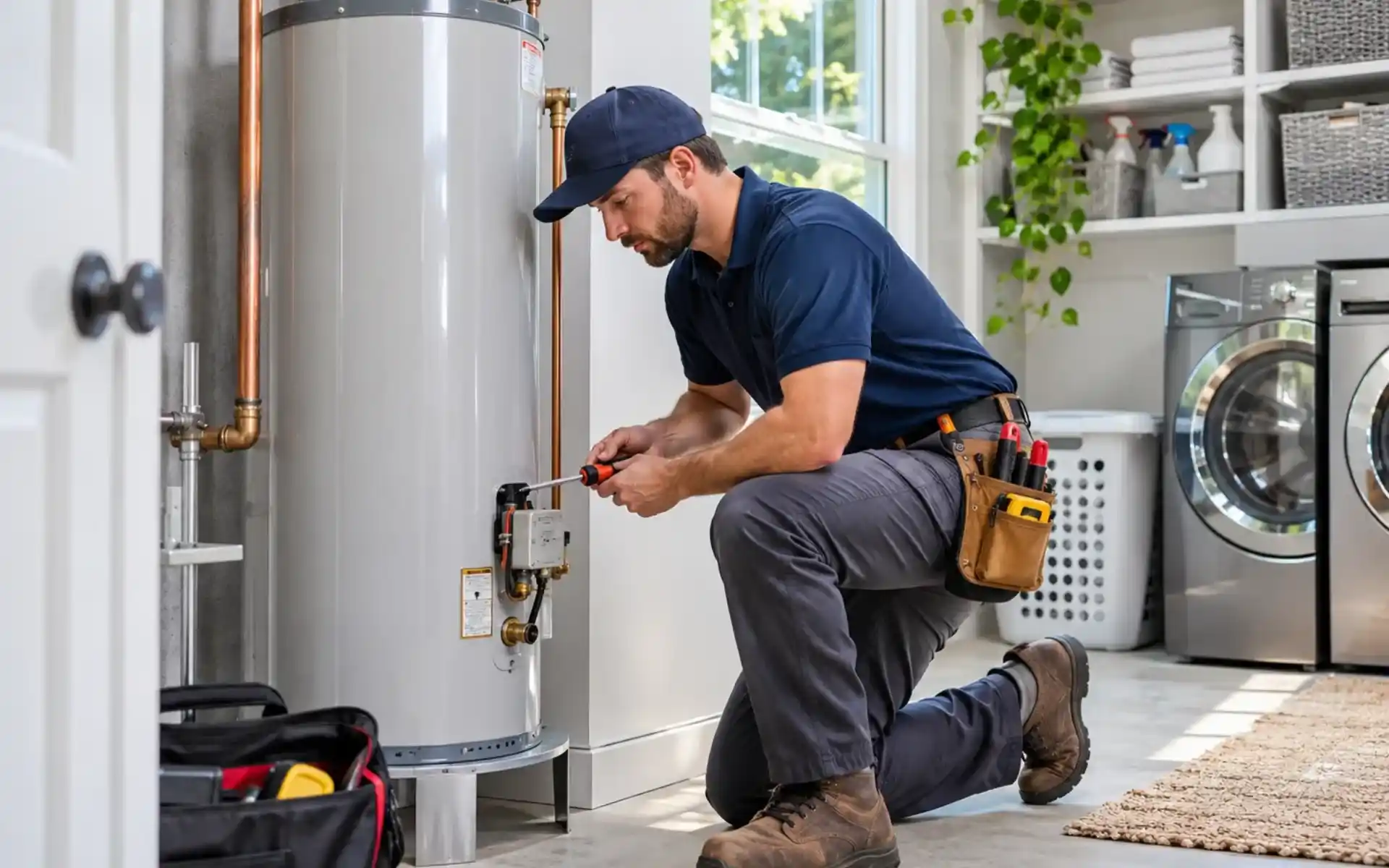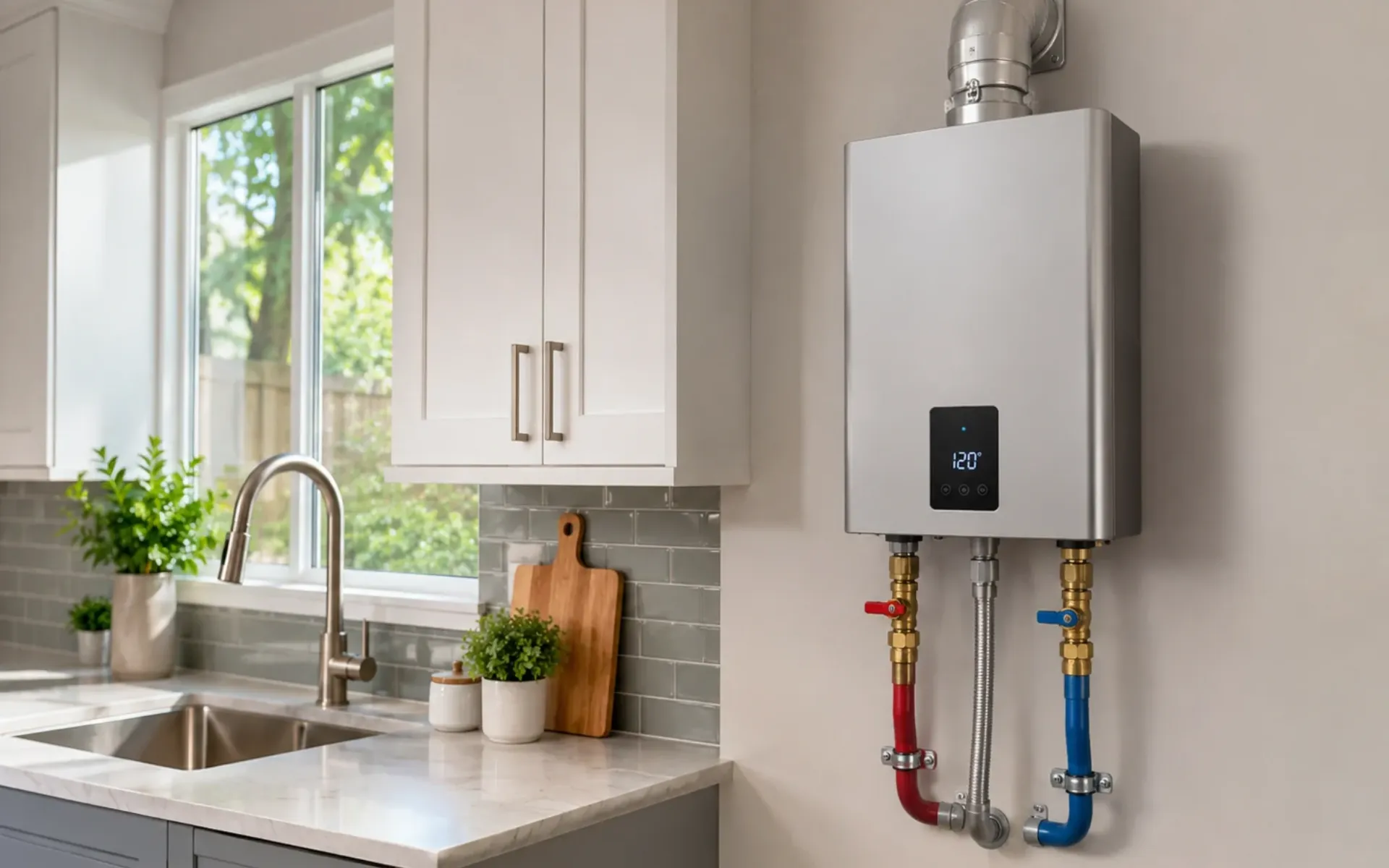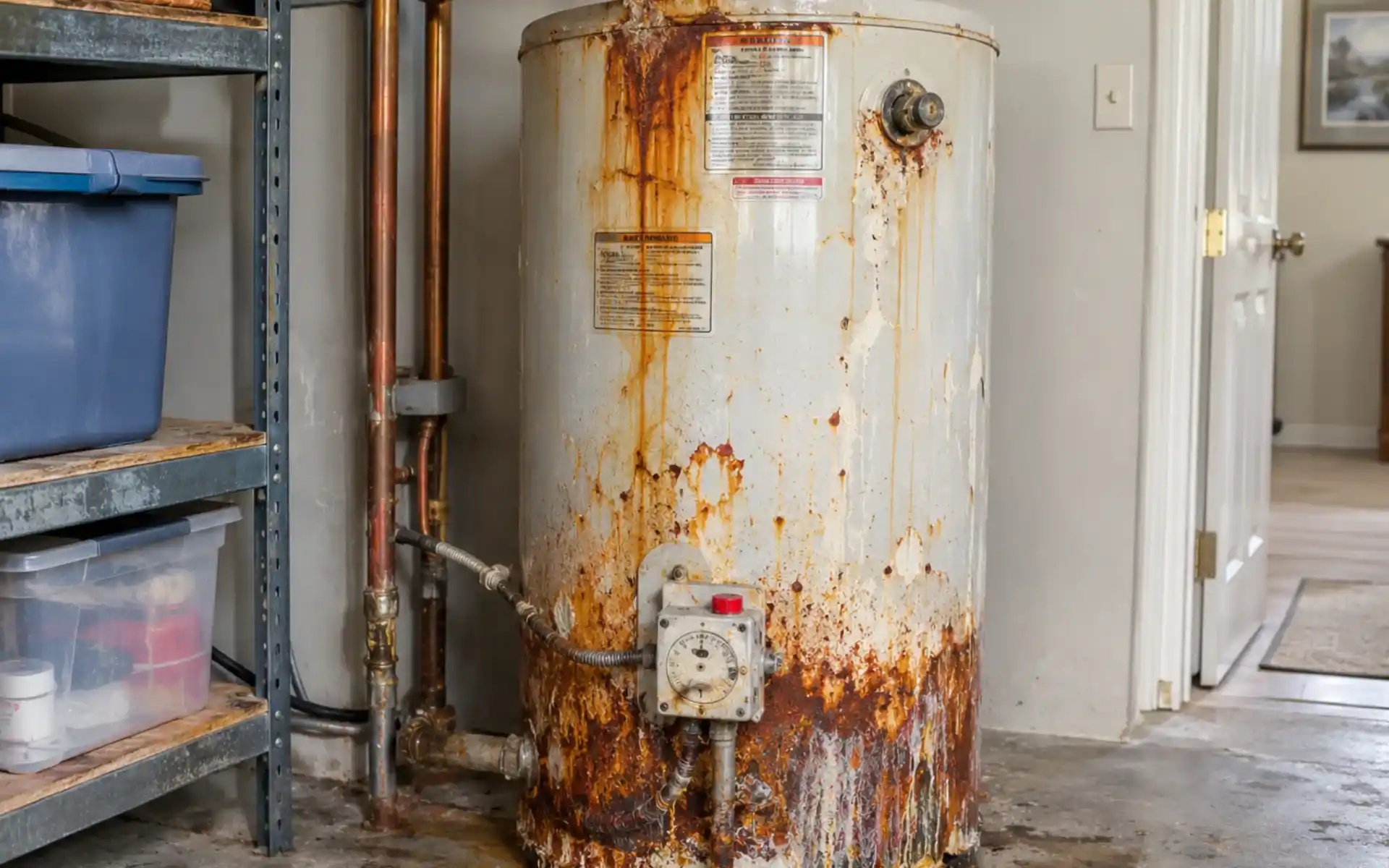
A water heater that is working but gives no hot water is running, humming, or showing lights, yet the taps deliver cold or lukewarm water. The cause usually falls into one of three groups: the unit is not generating heat, the heat is not reaching the fixture, or demand is exceeding what the unit can supply. Each group leaves different clues. A silent, fully cold tank points to lost power or fuel, while a single cold shower points to a fixture problem. Many causes can be checked safely in minutes, though gas and electrical faults have clear limits for homeowners.
The type of heater changes the most likely culprit. Electric tanks depend on breakers, high-limit switches, thermostats and heating elements, so power faults and failed parts lead the list. Gas tanks rely on gas supply, a pilot or electronic igniter, a thermocouple and a burner, so a flame that will not light or stay lit is common. Tankless units add flow-rate activation, scale buildup and error codes, and they struggle when several fixtures run at once. Knowing which system you own lets you skip irrelevant checks and focus on the faults that actually produce your symptom.
Why Does a Water Heater Seem to Work but Produce No Hot Water?
A heater can seem to work because the failure sits in only one part of the chain: heating, control, mixing, or distribution. The heating stage covers elements or a burner. The control stage covers thermostats, limit switches, pilot safety devices and gas valves, which may shut heating down while the tank still looks normal. Mixing and distribution cover dip tubes, mixing valves, cartridges and piping that carry hot water to your fixtures. Because the cold tap still flows normally, the appliance can look healthy even when no heat is being made or delivered.
The pattern of the symptom usually shows where the fault lies. If no fixture in the house gives hot water but cold water flows normally, the heater itself is the likely source. If only one faucet or shower is cold, the heater may be fine, and the cartridge, mixing valve, supply line or anti-scald setting deserves a look. Lukewarm water suggests partial heating, such as a weak element, sediment, a low thermostat setting or a broken dip tube. Hot water that runs out quickly suggests a capacity or recovery problem rather than complete failure.
Early warning signs often appear before the water goes fully cold. Lukewarm water, rumbling or popping from the tank, rusty water and a sudden rise in energy bills all suggest something is wrong. Sediment is a frequent contributor because minerals settle at the bottom and form a barrier between the water and the heat source. Water heater thermostat problems can also keep water from reaching the desired temperature, and a typical target is around 120 degrees Fahrenheit. A reading below 90 degrees Fahrenheit means essentially no usable hot water, so a very low setting can mimic a broken heater.
What to Check First Before Troubleshooting
Start with safety, then work from the easiest checks to the most involved. For electric heaters, turn off the breaker before touching anything, since components can stay live even when not heating. For gas heaters, set the gas valve to pilot or off before inspecting, and let the tank cool before opening panels or touching the relief valve. Hot water from that valve can scald, so keep clear of it. If you smell rotten eggs, stop, shut the gas supply and call a professional. Water pooling around the tank is another reason to stop and shut off the supply.
- Test several taps
- Check thermostat
- Check breaker or pilot
- Check supply valves
Follow this order: first run hot water at several taps to see whether the problem is whole-house or local. Next, confirm the thermostat setting, then check the breaker or fuse, the pilot light or display, and the supply valves feeding the heater. Open each tap long enough to clear cooled water from the pipes, and wait about an hour after any reset before retesting. If these checks change nothing, move to the type-specific sections below instead of opening wiring or gas components yourself.
Electric Water Heater: Causes and Fixes
An electric water heater with no hot water most often has lost power, tripped its high-limit switch, or developed a failed thermostat or heating element. A tripped circuit breaker is the most common reason an electric heater stops working, so the electrical panel is the first stop. Fully cold water points toward power, the limit switch or both elements. Lukewarm water or a short supply points toward one weak element, a thermostat fault or sediment. Electric tanks also heat more slowly than gas units, so a freshly reset heater needs time before judging the result.
Some steps are reasonable DIY work: checking the breaker, pressing the reset button, adjusting the thermostat setting and flushing the tank with power off. Testing and replacing elements or thermostats involves live circuits and wiring, so shut off the heater completely first and consider an electrician. Repeated breaker trips, loose or damaged wires, and grounded elements are electrical problems that call for a qualified professional. Avoid probing components until power is confirmed off, because the tank wiring stays dangerous even when no heating occurs.
Is a Tripped Breaker or Reset Button the Problem?
Yes, a tripped breaker, blown fuse or tripped red high-limit reset button commonly leaves an electric heater cold. A breaker that has tripped often sits in the middle position. Push it fully off, then back on, and replace a blown fuse with the correct rating. The red reset button sits behind the access panel. Turn off power first, press it, and listen for a click. If no click is heard or power does not return, the cutoff switch may need replacing.
- Switch breaker off
- Press red button
- Restore power
- Wait one hour
Repeated tripping signals a deeper fault rather than a nuisance. Causes include a short, loose wiring, a grounded heating element, or a faulty lower thermostat. The high-limit switch trips when water overheats, which is a safety response, so resetting it again and again only hides the underlying defect. If the breaker trips a second time, leave it off and contact a qualified electrician instead of forcing it back on. Once power is restored, allow about an hour for the tank to warm before testing.
A safe reset follows a set order. Switch the breaker off, remove the access panel, and confirm the power is off before touching anything. Press the red button firmly, replace the panel, then restore the breaker and wait for the tank to warm. Common mistakes include resetting with power still on, ignoring a button that trips again, and raising the thermostat past 140 degrees Fahrenheit to compensate. If the unit has a reset but no power returns, unplug it for a few minutes where it is plugged in, reconnect, and then reset the breaker.
How Do Faulty Thermostats and Heating Elements Cause Cold Water?
Faulty thermostats and failed heating elements cause cold or lukewarm water because electric tanks have an upper and lower element, each with its own thermostat. The upper element heats the top of the tank first, then hands off to the lower one, so a failure in either shortens the hot supply. A dead lower element often gives a short burst of hot water, while a dead upper one can leave none. Scale on elements may cause crackling or hissing. Mineral buildup clogs and damages elements, so annual descaling helps, especially in hard water areas.
| Symptom | Likely cause |
|---|---|
| Lukewarm | Weak element |
Testing starts with power off. Use a multimeter to check each element for continuity, inspect wiring for loose or damaged wires, and confirm thermostat settings. A defective element needs replacement, and the tank must be drained and power shut off completely before it is removed. Leaks around element gaskets call for new gaskets, or new elements if tightening fails. If the thermostat or element test is beyond your comfort, an electrician or plumber can finish the repair safely.
Gas Water Heater: Causes and Fixes
A gas water heater with no hot water usually has a problem with gas supply, the pilot or igniter, the thermocouple, the gas control valve or the burner. First confirm the gas inlet valve is open and correctly positioned. A blocked supply stops ignition and can put the pilot out. Blocked combustion air screens reduce burner performance, so clear them. A clogged burner needs yearly cleaning, and gas valve repair is professional work. In freezing weather, frozen lines must be thawed before the unit will heat.
Gas diagnosis differs from electric diagnosis because you check for a flame rather than power. No breaker, element or reset button is involved, though newer models may have electronic ignition. Sediment in a gas unit usually produces warm rather than no hot water, and it may be linked to an anode rod left unreplaced for a long time. Gas recovers in about half the time of a comparable electric model, so a slow rebound can signal trouble. If you smell rotten eggs, leave the home and call the gas utility from outside. Never inspect or repair a gas line yourself.
Why Won’t a Gas Water Heater Stay Lit?
A gas water heater will not stay lit when the thermocouple fails, the pilot flame is weak or blown out, the igniter malfunctions, or air and venting are disrupted. The thermocouple senses the pilot flame and cuts gas if it goes out. Dirt or misalignment can make it fail, and a plumber replaces it. Drafts or an interruption in gas supply can also blow the pilot out. Newer units use a glow plug or spark igniter instead of a standing pilot, and these can malfunction and need repair.
Relighting follows the instructions on the tank label. Conceptually, set the gas valve to pilot, hold the control while igniting the flame, and keep it held until the thermocouple warms. Then turn the valve to on and set the temperature. Confirm the gas valve is on and the supply is open before trying. If you smell gas at any point, stop, leave, and call the utility. Do not use switches or phones near a suspected leak. A pilot that was out may need hours to reheat the tank once relit.
- Check gas valve open
- Set to pilot
- Relight per label
- Wait hours
Venting and air supply matter because the burner needs combustion air and a clear path for exhaust. Blocked air screens reduce performance and can lead to ignition trouble. Check that nothing is stacked near the base and that screens are free of lint and dirt. Ignition failure can also come from a faulty ignition pack, so check gas supply and venting before suspecting parts. Persistent trouble after these checks means the unit needs a professional assessment rather than repeated relighting attempts.
Suspect the burner assembly or gas control valve when the pilot lights but the main burner stays off, flames look weak or uneven, or the unit heats poorly. A faulty gas control valve causes weak heating or no ignition, and a clogged burner needs cleaning. Valve repair is professional work, and a bad gas connection or burner can stop heating altogether. If the pilot repeatedly goes out after a new thermocouple, call a licensed plumber instead of experimenting with gas components.
Tankless Water Heater: No Hot Water or Weak Flow
A tankless water heater gives no hot water or weak flow when flow is too low to activate it, scale restricts it, the inlet filter clogs, or fuel, venting or an error code stops it. These units heat on demand, so a trickle may not trigger the burner or element. Mineral buildup narrows passages and reduces heat transfer. Gas models need outdoor venting and fuel, while electric models are compact, cheaper to install and suit smaller households or homes without natural gas. Check the display for error codes and clean the inlet filter.
Demand overload is not a failure. Undersized units struggle when showers, dishwashers and taps run together, so limit simultaneous use or upgrade capacity. Sudden cold bursts, called a cold water sandwich, come from demand swings. Steadier use or a model with a buffer tank can help. Distance matters too: fixtures such as a kitchen sink or an upstairs bathroom wait longer for hot water, and low flow there may not activate the unit. Common causes: low flow, scale, clogged filter, ignition failure and venting problems.
Why Is There No Hot Water at Only One Faucet or Shower?
No hot water at only one faucet or shower usually means the problem is at the fixture, not the heater. Likely causes are a worn cartridge, a faulty mixing valve, a clogged aerator, an anti-scald setting that limits temperature, or crossed hot and cold lines. If other taps run hot, the heater is producing heat and delivering it through the house. This contrasts with whole-house failure, where every fixture is cold while cold water still flows normally.
- Test another fixture
- Clean aerator
- Check cartridge
- Inspect supply line
Quick isolation tests narrow the cause. Run hot water at other fixtures, then compare hot and cold at the problem tap. Unscrew the aerator and look for debris, and check whether the cartridge or mixing valve moves smoothly. Inspect the supply line and its shutoff for a partial closure that restricts hot water. A single mixing valve problem can also cause lukewarm water at one shower while everything else runs normally.
Use this diagnostic order: test another fixture, clean the aerator, check the anti-scald adjustment, inspect the supply line, and then replace the cartridge or valve. Crossed lines are more likely after plumbing work, so a tap that gives hot water from the cold side points to that. Replacement of cartridges is routine, but hidden piping errors may need a plumber. If every fixture is affected, return to the heater checks.
Why Is the Water Only Lukewarm or Running Out Fast?
Water that is lukewarm or runs out fast usually means the tank is too small, sediment has built up, the thermostat is set too low, an element is failing, or a dip tube is broken. A broken dip tube lets cold water mix with hot at the top, producing lukewarm water. A small tank that suited two adults and a baby may run out with two adults and three teenagers. Aim for a thermostat setting in the 122 to 140 degrees Fahrenheit range, with 120 a common balance of speed, cost and safety. Never exceed 140 because of scalding risk.
Recovery time is how long the tank needs to reheat after use. Gas tanks need about 30 to 40 minutes, while electric tanks need about 60 to 90 minutes. Drawing hot water during recovery delays the process and may leave only warm water or a few minutes of hot water. Sediment slows heating, so draining a few gallons yearly helps. Cold weather lowers tank efficiency, and insulating the tank may help. Colder incoming water also takes longer to heat, so winter showers can feel shorter.
Can a Leak Cause No Hot Water?
Yes, a leak can cause no hot water, either as the cause or as a companion symptom. A leak in the supply feeding the heater may mean no water reaches the tank, and it can affect gas or electric units. Water on the ground at the base usually indicates a leaking tank, though you should check connections and valves first. Loose inlet and outlet fittings are the simplest fix, and a loose drain valve should be tightened, then replaced if it still drips.
Other sources include the T&P valve, which can leak from high pressure or thermal expansion. Water pressure should stay at 50 to 60 PSI, never above 80. Never cap the valve. A small or missing expansion tank lets pressure rise and can be added fairly inexpensively. If water pools, shut off the main supply and call a plumber. An internal tank leak from corrosion usually means full replacement. Water inside the tank compartment also often means replacement is needed.
Other Variations: RV, Immersion and Boiler-Based Systems
RV, immersion and boiler-based systems share the same logic but fail in different places. RV heaters often show lights but make no heat when the switch is on the wrong gas or electric mode. Immersion and boiler systems depend on timers and programmers, so hot water may appear only when the heating is on. A boiler supplying both heat and hot water can lose both together during an outage or gas interruption. Keep to symptom-level checks and call a specialist for gas or electrical work.
| System | Check first |
|---|---|
| RV | Mode switch |
| Immersion | Timer |
| Boiler | Programmer |
The table compares where to look first. It shows that the mode switch, programmer or fuel supply is often the cause, rather than the tank. For an RV, confirm the selected mode and that gas or power is available. For immersion heaters, check the timer and power. For boilers, check the programmer and whether heating itself is running.
When to Call a Professional or Replace the Heater
Call a professional when you smell gas, find pooling water, see repeated breaker trips, or still lack hot water after the basic checks. A rotten egg odor means leaving the home and calling the gas utility from outside. Gas smell and active leaks are emergencies. Avoid phones, switches, smoking or flames near a suspected leak, close gas valves if safe, and call the utility and police from a safe distance. No hot water alone is an inconvenience, not an emergency.
- Repair: newer unit, one part
- Replace: tank leak, age, repeat failures
Repair or replace based on age and repeat trouble. Water heaters typically last 8 to 12 years, though general guidance suggests replacement at seven to eight, varying with usage, climate, maintenance and installation. A worn tank with heavy sediment and rising repair costs often favors replacement. Corrosion leaks mean replacement, while a bad element, thermostat or thermocouple is usually worth repairing. A growing household may also outgrow its tank.
Use this decision list: repair when the unit is newer, the fault is a single part, and the tank is sound. Replace when the tank leaks, repairs recur, or the unit is aging. A licensed plumber can replace aging tanks, and an annual inspection by a licensed technician catches small issues early. Electrical repairs beyond simple checks belong with a professional.
How to Prevent Future Hot Water Loss
Prevent hot water loss with routine maintenance: flush the tank yearly, test valves, check the anode rod and keep the thermostat in a sensible range. Hard water minerals settle and harden into limescale, causing banging, slower hot water and element failure. A softener or water heater filter helps, and cleaning the tank removes existing scale. Tankless units should be descaled annually, especially in hard water areas.
- Flush yearly
- Check anode rod
- Test T&P valve
- Descale tankless
Flushing steps: shut off power or set the gas thermostat to pilot, close the cold inlet, wait at least two hours, then connect a hose to the drain valve. Drain until the water runs clear, refill, and restore power. Flush once a year, or twice in hard water areas. Check the anode rod every two to three years and replace it when heavily worn, or when more than 50 percent is gone. Lift the T&P valve lever to test it, and replace the valve if no water flows.
The maintenance checklist below keeps small faults from turning into outages. A plumber check every couple of years adds another layer of protection. Set the thermostat around 120 degrees Fahrenheit, tighten loose fittings, and install a water hammer arrestor if flow stops cause banging. Insulation blankets can help older tanks in cool or unheated spaces. Watch for early warnings such as rumbling or rusty water.
Frequently Asked Questions
Here are the questions homeowners most often ask about no hot water problems, along with direct answers.
Why does my electric water heater have no hot water but the breaker isn’t tripped?
If the breaker hasn’t tripped, the next most likely cause is a tripped high-limit reset switch on the upper thermostat, or a failed upper heating element. Both require opening the access panel to check, and a licensed electrician or plumber can confirm which one is actually at fault.
Can I relight a gas water heater’s pilot light myself?
Yes, this is generally considered a safe DIY step as long as you don’t smell gas beforehand and you follow the manufacturer’s specific instructions, usually printed on the unit itself. If the pilot won’t stay lit after a careful attempt, that points to a component issue better handled by a professional.
How long does it take an electric water heater to heat up after a reset?
This varies by tank size and how cold the water was to begin with, but many households see meaningfully hot water within 30 minutes to an hour after a successful reset. If there’s still no improvement after that window, the reset likely didn’t resolve the actual cause.
Is it normal for a water heater’s reset button to trip occasionally?
An occasional trip, especially after a power surge or fluctuation, isn’t necessarily alarming. A reset button that trips repeatedly within a short period is not normal and usually points to a failing element or thermostat that needs professional attention.
What should I do if I smell gas near my water heater?
Leave the home immediately without operating any light switches or appliances, and call your gas utility or emergency services from a safe location outside. Do not attempt to troubleshoot the water heater or investigate the source yourself.
Does a lack of hot water always mean the water heater needs to be replaced?
No. Many no-hot-water situations are resolved with a simple reset, a relit pilot, or a minor part replacement rather than a full unit replacement. Replacement typically becomes necessary when the tank itself is leaking or has failed structurally, not from a power, ignition, or thermostat issue alone.
Need help with water heaters?
Explore the relevant services available from Anaheim Plumbing.